
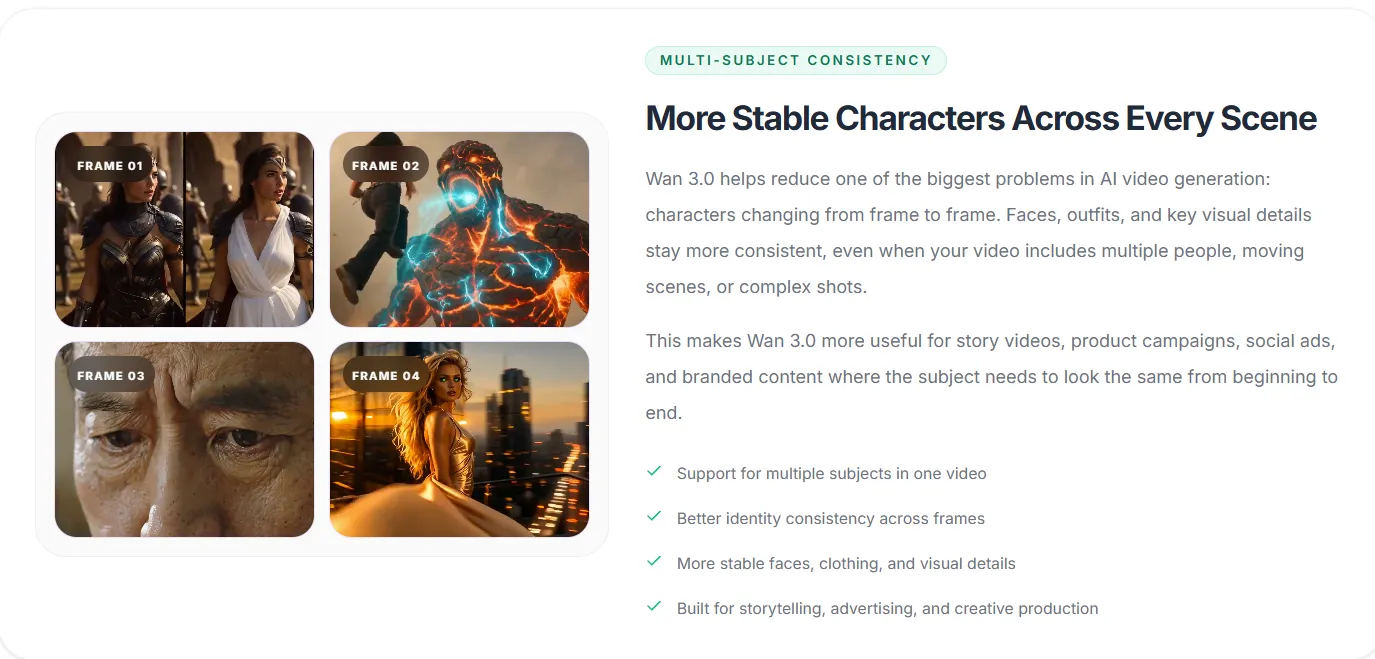
AI video tools are increasingly being designed around reference images, keyframes, and camera guidance.
The announced capabilities of Kling 4.0, for example, include multi-keyframe planning and reference-guided generation. Its product information describes these features as ways to influence important visual moments and maintain consistency. Their practical reliability and availability still need to be verified.
The interesting idea is not that creators should add as many references as possible.
It is that every reference should answer a particular question.
A product photograph might establish the object's appearance. A separate image might indicate the desired framing. A storyboard drawing could show where an important action begins.
If several references contradict one another, adding more information may make the creative brief harder to interpret rather than clearer.
A useful reference set is selective. It communicates what must remain consistent and what is allowed to change.
A Simple Review Method
Before accepting a generated scene, watch it once with the sound turned off.
Then ask three questions.
Can I identify the main action?
The viewer should be able to tell what is happening without relying entirely on a caption or voiceover.
Does the important object remain recognizable?
If a product changes shape, a character's clothing suddenly changes, or an object moves without explanation, the scene may lose credibility.
Is the camera helping the action or distracting from it?
A dramatic camera movement can be visually impressive. It can also hide the exact detail the audience was supposed to notice.
After that, review the video with sound and check whether timing, dialogue, and effects support the same story.
These questions do not require sophisticated production software. They require a clear understanding of the intended message.
Sometimes the Best Fix Is a Smaller Scene
When an AI video does not work, the instinct may be to add more instructions.
More camera directions. More visual references. More descriptive adjectives.
But complexity is not always the answer.
A difficult sequence involving several characters and camera movements might work better when divided into two shorter shots.
An elaborate product reveal may become clearer with one fixed camera angle.
A character reaction might need an extra second rather than another visual effect.
These are ordinary storytelling decisions. They matter regardless of whether a video is generated by AI, filmed on a phone, or produced in a studio.
The Real Test Comes After the Generation
AI video has made it easier to explore visual possibilities. That does not remove the need to decide which possibilities are worth keeping.
A useful video needs more than movement, detail, or atmosphere. It needs actions that connect, images that remain understandable, and a reason for the viewer to keep watching.
The next time a generated clip looks impressive, try describing what actually happens in it.





Responses (0)