
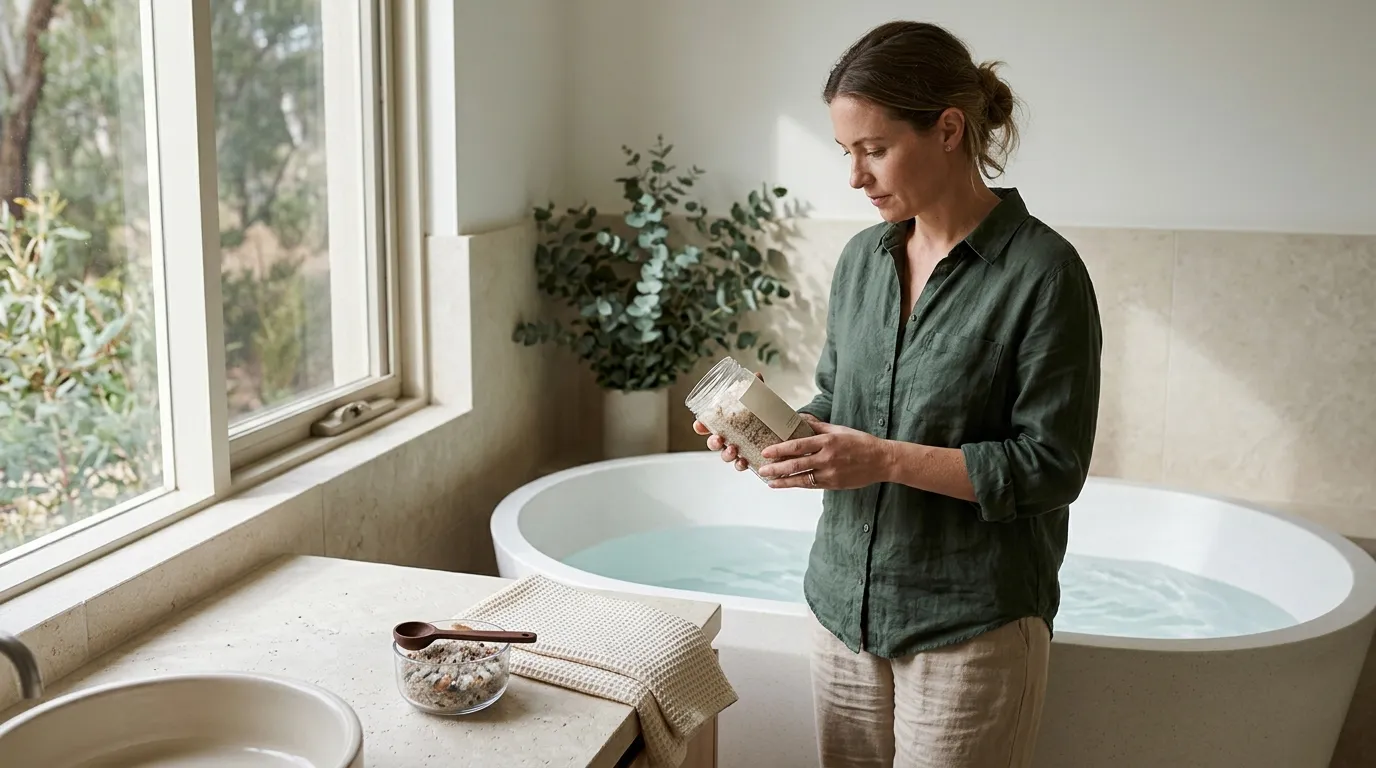
Why Do Dead Sea Bath Salt Products Have Different Directions?
Products made with Dead Sea minerals are not necessarily identical. They may contain different concentrations of salt, additional ingredients, fragrances, or essential oils, and they may be designed for different parts of the body. Some are intended to dissolve in a full bath, while others are formulated for a smaller foot bath. The product's format and intended use matter just as much as the main ingredient. This is why a Dead Sea salt bath should be prepared according to the directions for the particular product rather than a general routine found online.
The instructions are there to explain how much product to use, how to prepare the water, and how long to soak. For example, one product may recommend a measured amount for a 15-minute soak, while another may suggest a different quantity and a longer bathing time. These differences do not automatically mean one product is stronger or better. They simply show that the products have their own directions. Even if you have used another Dead Sea salt product before, check the new container before using it.

Is the Product Made for a Full Bath or a Foot Soak?
The first thing to check is the intended bathing area. A product labelled for a full bath is designed to be added to bathwater, while a foot-soak product may have directions based on a smaller amount of water. These uses are not automatically interchangeable. A foot-bath formula may be suitable for soaking feet but may not have instructions for use across the whole body. Likewise, a product intended for a full bath should not be assumed to have the right concentration or directions for a small basin.
The differences become clearer when you compare individual product instructions. Juman Dead Sea Bath Salt recommends adding approximately one to two handfuls to a warm bath, allowing the salts to dissolve and soaking for 15 to 20 minutes before rinsing with lukewarm water. Another Dead Sea salt product page gives directions for a foot bath, while a separate bath salt listing recommends one to three tablespoons in warm water for around 15 minutes. These examples show why copying the quantity or timing from another product can lead to incorrect use. Follow the instructions supplied with the product you actually have.
What Should You Check Before Measuring the Salts?
Start with the recommended amount. It can be tempting to add an extra scoop because the water looks too clear or because you want a stronger experience. However, using more than the stated amount does not guarantee a better result. The recommended quantity is based on the product's intended use, so avoid estimating by eye when the directions provide a measurement. If the container gives a specific amount for a full bath or foot soak, use that guidance rather than borrowing measurements from another brand or product.
Next, check the water temperature, soaking time, and any instructions about rinsing afterwards. Warm water is generally a sensible choice for a comfortable bath, particularly if your skin tends to feel dry. Dermatologists also recommend keeping baths relatively short and using warm rather than hot water when managing dry skin. After bathing, gently pat the skin dry instead of rubbing it with a towel. These small details matter because a long, hot soak can leave dry skin feeling more uncomfortable.
Do Added Ingredients Change How You Should Use a Bath Product?
Some bath salts contain only mineral salts, while others may include fragrance, colourants or essential oils. If you have sensitive skin, take time to read the ingredient list rather than focusing only on the product name. A fragrance or botanical oil that suits one person may not suit another. If you already know that a particular ingredient irritates, check whether it appears on the label. Do not assume that a product described as natural or mineral-rich will automatically be suitable for every skin type.
It is also important to distinguish bath salts from other types of mineral skincare. Someone searching for Sulphur for a bath may come across sulphur soaps or other sulphur-based products, but a cleansing bar is not automatically a bath additive. For example, the directions for a sulphur soap describe applying it to damp skin, lathering gently, and rinsing it off. Those instructions are different from dissolving bath salts in water. Never crumble a cleansing bar into bathwater or use another product as a bath soak unless its own label specifically says that it is intended for that purpose.
How Should You Care for Your Skin After a Soak?
Follow the product's rinsing instructions rather than assuming every bath salt needs to be removed in the same way. Some directions recommend rinsing with clean water, while others may give different aftercare advice. When you finish, pat your skin dry with a soft towel and apply a suitable body moisturiser while it's still slightly damp. This helps support skin comfort after bathing, especially if you regularly experience dryness. If your skin feels tight or uncomfortable, avoid adding strong exfoliating products or fragranced treatments right away.
A bath routine can also be a useful reminder to care for areas that are often overlooked, such as the hands and nails. If your cuticles feel dry after frequent washing or contact with water, Cuticle oil for nails can be used as a separate step to condition the skin around the nails. Apply a small amount to each cuticle and massage gently until absorbed. It is not a replacement for body moisturiser, and it does not need to be mixed with bath salts. Keeping these routines separate makes it easier to choose the right product for each area.

Conclusion
Do not use a product if you know you are sensitive or allergic to one of its ingredients. Check any warnings about eye contact, swallowing, storage, and use around children. Avoid applying bath products to broken or severely irritated skin unless a healthcare professional has advised that the particular product is suitable. If you have a persistent skin condition or are unsure whether a mineral soak is appropriate, ask a qualified healthcare professional rather than relying on general online advice.
During use, pay attention to how your skin feels. If you notice unusual itching, burning, stinging, or increasing redness, stop the soak and rinse the affected area with clean water. Do not repeat the treatment simply because the product is described as gentle or natural. The best approach is to use the correct amount, follow the stated soaking time, and respect the product's intended purpose. Reading the label first may seem like a small step, but it helps make a bath routine more comfortable, sensible, and predictable.






Responses (0)