
Choosing pendant lights for a dining room sounds simple. You find a design you like, check its size, and hang it above your dining table. But good dining room lighting needs more thought than that.
The wrong light can make a beautiful dining table look out of place. It can also make a dark room feel even darker or make your furniture and wall colors look less balanced. On the other hand, the right pendant light can bring the whole dining area together.
One of the biggest decisions is choosing between glass and ceramic pendant lights. Both materials look beautiful, but they create very different effects. Glass adds detail and lets light pass through the shade. Ceramic brings a softer look and creates a more focused feel.
So, which one should you choose?
Let's look at both options and how to match them with your dining table, furniture, wall colors, and other details in your home.
1. Start With Your Dining Table, Not the Light
Before choosing a pendant light, look at your dining table and the furniture around it. The table often takes up the most visual space in the dining area. Your light should work with it, not compete with it.
A dark wooden dining table, for example, creates a different look from a white, marble, or light oak table. Each one needs a different lighting approach.
Dark Wood Dining Tables
Dark walnut, brown oak, and other deep wood finishes bring warmth to a dining room. They also create a strong visual base.
If you have a dark dining table, be careful when choosing a light with a dark shade. A smoked brown glass pendant can look beautiful with dark furniture, but too many dark elements in one area can make the room feel heavy.
Think about balance.
A clear glass pendant with brass details can be a good choice. It adds a lighter visual touch while the brass brings warmth. You can also choose a white ceramic pendant if you want a stronger contrast.
The goal is not to match every color. The goal is to make the room feel connected.
White and Light Wood Dining Tables
White dining tables, light oak furniture, and natural wood finishes give you more freedom.
A white ceramic pendant can blend beautifully with a light dining room. It creates a soft look without adding too many colors.
If you want more detail, a patterned glass pendant with brass can add contrast. It can also help the dining area feel less plain, especially when the rest of the furniture has simple lines.
Marble and Stone Dining Tables
Marble and stone tables already have natural patterns and texture. You do not always need another bold design above them.
For a clean look, choose a pendant with a simple shape. A white ceramic shade can work well with a light marble table. If your marble has darker veins, brass and patterned glass can add a warm contrast.
2. Glass vs. Ceramic Pendant Lights: What Is the Difference?
Glass and ceramic are two very different materials. Your choice will affect the look of your dining room and the way the light works in the space.
Glass Pendant Lights: More Detail and a Lighter Look
Glass pendant lights work well when you want to show the bulb and create a sense of openness.
Clear glass allows light to pass through the shade. It also lets you see the shape and details of the fixture even when the light is switched off.
Patterned glass adds another layer of interest. It can create attractive reflections and shadows when you turn on the light.
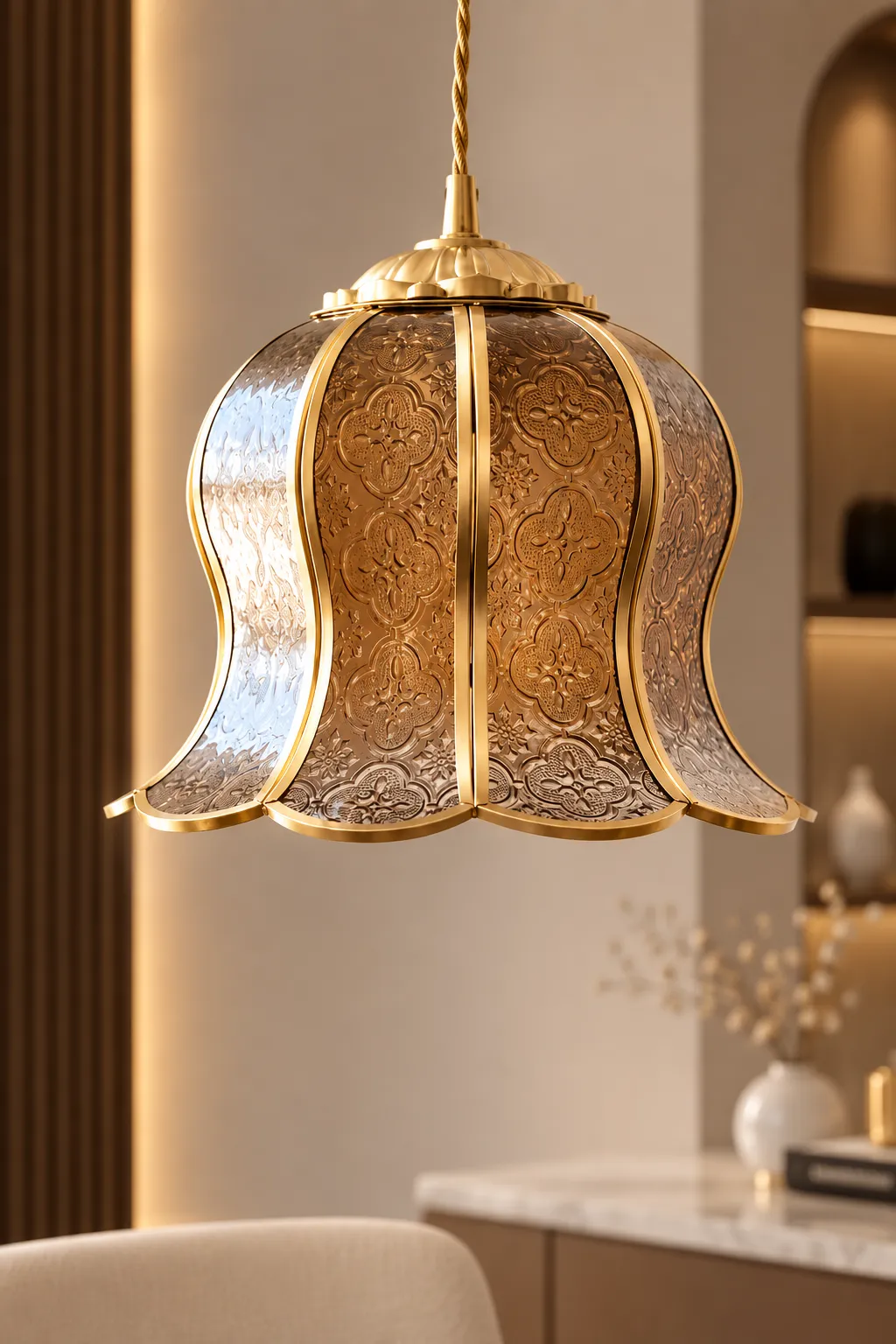
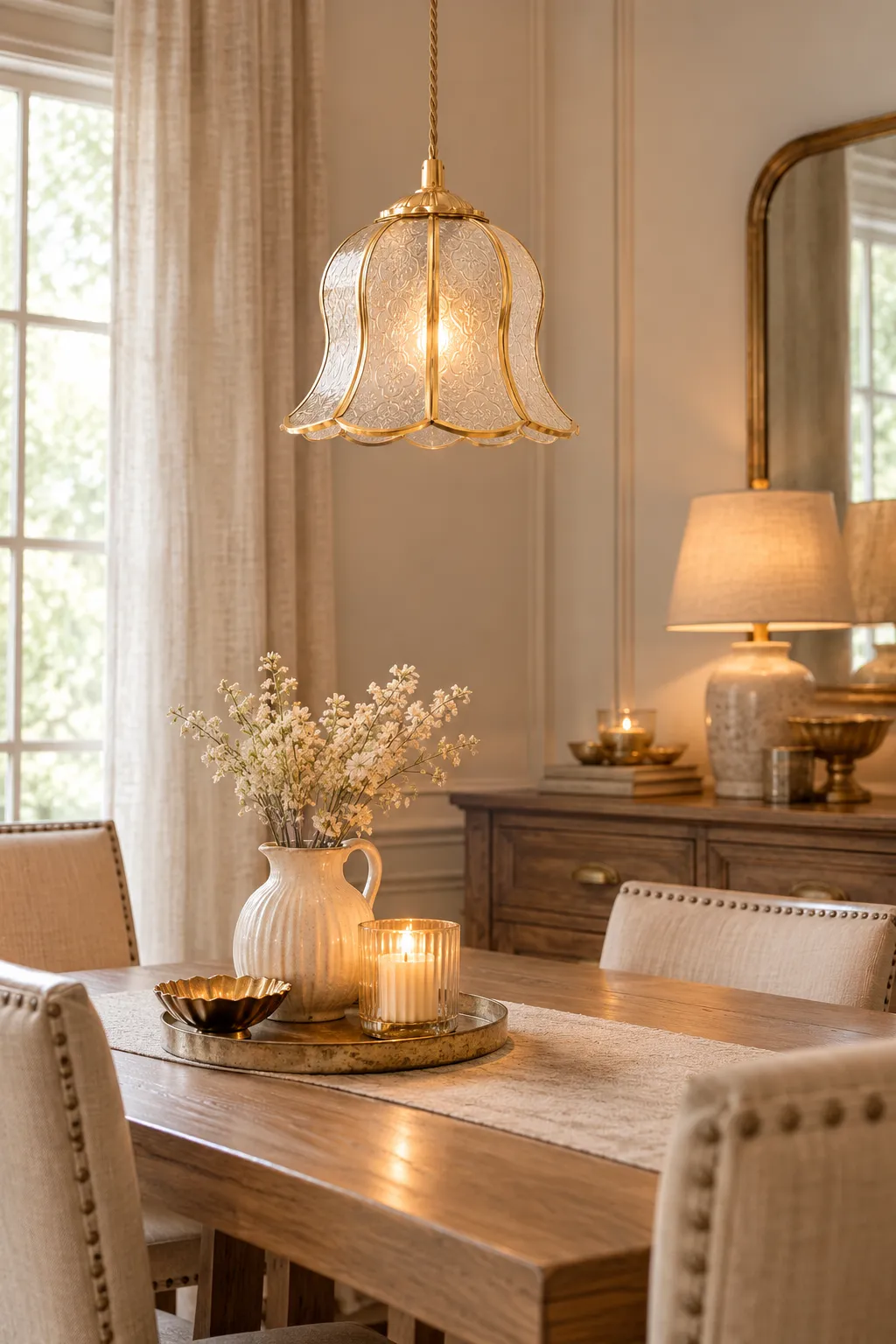
For example, a vintage caged brass pendant with clear and brown patterned glass brings together several details. The curved glass panels, decorative pattern, and brass frame create a more traditional look.
It works well in dining rooms that have:
- Dark wooden dining tables.
- Brass cabinet handles or other brass details.
- Warm wall colors.
- Vintage or farmhouse furniture.
- Traditional interiors with modern touches.
If you like this style, take a look at the Vintage Caged Brass Pendant Light with Clear and Brown Patterned Glass.
What About Smoked Brown Glass?
Brown or smoked glass can look especially good in a warm dining room. It adds color without making the fixture look too bright or plain.
However, you should think about the room's overall lighting before choosing a darker glass shade.
If your dining room already has dark walls, dark flooring, and a dark wooden table, adding too many brown elements can make the space feel closed in.
You do not have to avoid brown glass. Just balance it with lighter details.
White walls, light curtains, a lighter rug, or brass accessories can help break up the darker colors.
Also, remember that the glass tint and bulb both affect the final lighting effect. If you need strong light for everyday dining, choose a suitable bulb and check the fixture's specifications before buying.
Ceramic Pendant Lights: Soft, Simple, and Easy to Match
Ceramic pendant lights offer a different look.
Unlike clear glass, an opaque ceramic shade does not allow you to see through the material. It creates a solid shape above the table and directs more of the light downward.
This makes ceramic a good choice when you want a softer, more focused look over your dining table.
White ceramic is especially easy to work with. It can match white walls, light furniture, natural wood, and many modern farmhouse interiors.
A wavy or ruffled ceramic shade also adds texture without using a strong color.
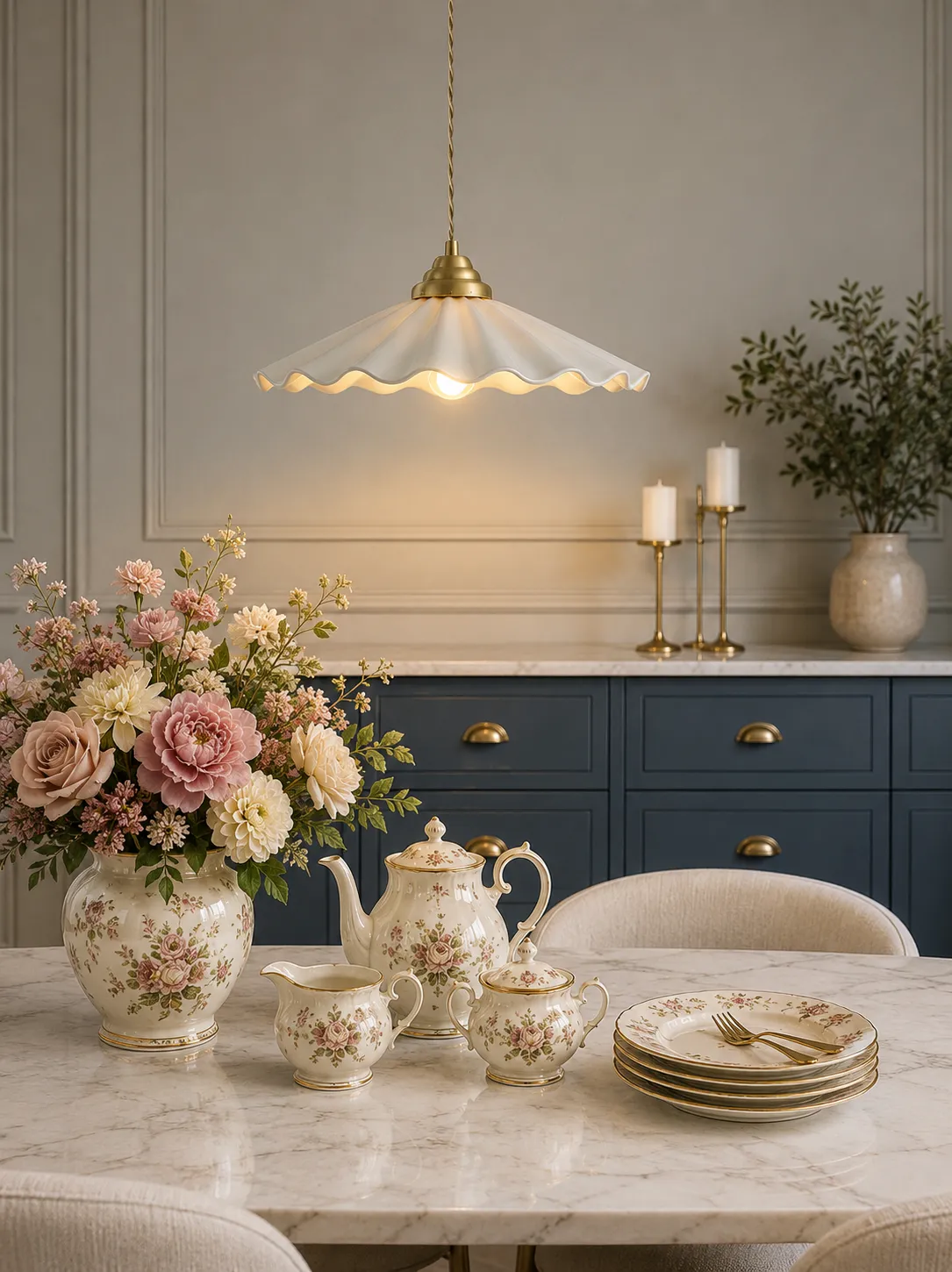
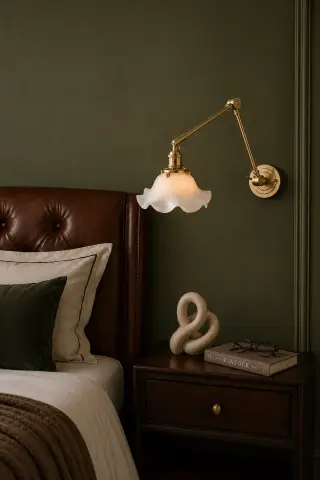
For example, the Wavy White Ceramic Pendant Light with Brass Details brings together a white ceramic shade, brass socket, and brown cord.
It works well with:
- White and cream dining tables.
- Natural oak and light wood furniture.
- Beige and warm neutral walls.
- Modern farmhouse interiors.
- Simple dining rooms that need a little more character.
Why White Ceramic Works So Well
White ceramic can help balance darker furniture and warm wood finishes.
Imagine a dining room with a dark walnut table, brown chairs, and a white wall. A white ceramic pendant can create a clear contrast above the table. It keeps the space from looking too dark and adds a softer detail.
You can also repeat the white color through your tableware, curtains, or other small accessories.
You do not need to make everything white. A few matching details are enough.
3. Match Your Pendant Light With Wall Paint and Furniture
A common mistake is choosing a pendant light without thinking about the wall color.
Your walls, furniture, and lighting should work together. They do not need to match exactly, but they should create a balanced look.
White Walls
White walls give you plenty of choices.
You can use a patterned glass pendant to add detail and contrast. Brass details also look beautiful against white backgrounds.
If you prefer a simpler room, choose a white ceramic pendant. It keeps the space calm and works well with light wood furniture.
Beige and Cream Walls
Warm neutral walls work well with both glass and ceramic.
Brown glass can bring out the warm tones in beige paint. Brass details can also connect the light with wooden furniture and warm metal accessories.
White ceramic creates a softer contrast and keeps the room from looking too brown or yellow.
Dark Green, Charcoal, or Deep Brown Walls
Dark walls need a little more care.
If you already have dark paint and dark furniture, avoid choosing a pendant that makes the whole dining area look too heavy.
A clear glass pendant can help because it keeps the fixture visually open.
A white ceramic pendant can also create a strong contrast and stand out against a dark background.
Think about the amount of natural light in the room before making your final choice.
4. Do Not Forget Your Other Brass and Metal Details
Small details can make a big difference in interior design.
Look at your cabinet handles, dining room hardware, door handles, furniture legs, and other metal finishes.
If you already have brass details around your home, a brass pendant can help connect everything.
For example, a patterned glass pendant with a brass frame can work beautifully with brass cabinet handles and warm wood furniture.
A white ceramic pendant with a brass socket can create a simpler version of the same look.
You do not need every brass item to have exactly the same finish. New brass and antique brass can have different tones. They can still work together when you repeat the finishes naturally around the room.
The important thing is to avoid adding too many unrelated metal colors without a clear reason.
5. How to Avoid Choosing a Pendant Light That Makes Your Dining Room Too Dark
This is one of the most important things to consider.
A beautiful pendant light is not always the right choice for every room. You also need to think about how much light it provides.
Look at the Shade Material
Clear glass allows light to pass through the shade. It can make a fixture feel more open.
Brown or smoked glass may reduce the amount of light that passes through compared with clear glass. The final result depends on the glass, bulb, and fixture design.
Ceramic shades usually block light through the material and direct it through the opening. This can create a focused pool of light over the table.
Neither material is automatically better. It depends on how you use the room.
Think About the Bulb
Do not choose a bulb based only on how it looks.
Check the fixture's maximum wattage and bulb compatibility. Then choose a bulb that provides enough brightness for your dining area.
Warm white light can create a comfortable dining atmosphere. If you need more brightness for everyday activities, consider a suitable higher-output bulb within the fixture's specifications.
Use More Than One Light Source
A single pendant does not have to light the entire dining room.
You can combine it with wall lights, ceiling lights, or other suitable lighting around the space.
This gives you more control and helps prevent dark corners.
For example, you can use a statement pendant above the dining table and add wall lighting to brighten the surrounding area.
6. Choose the Right Size and Hanging Height
Even a beautiful pendant can look wrong if you choose the wrong size.
A small light above a large dining table may look lost. A very large fixture can take over the entire room.
Think about the table width, ceiling height, and the space around the dining area.
One Pendant or Two?
A single pendant can work well above a smaller dining table.
For a longer table, two matching pendants can create a more balanced look. You can also use three smaller fixtures if the table and ceiling have enough space.
Do not choose the number of lights based only on appearance. Make sure they provide suitable coverage and leave enough room around them.
How High Should You Hang a Pendant?
As a general starting point, hang a pendant around 30 to 36 inches above the dining table when you have a standard 8-foot ceiling.
You may need to adjust this height for a taller ceiling, a larger fixture, or a different table size.
Make sure people can see each other comfortably across the table. The light should not block the view or hang too low.
7. Which Pendant Light Should You Choose for Your Dining Room?
Now that you understand the difference between glass and ceramic, the choice becomes easier.
Choose Glass If You Want:
- More visible detail and pattern.
- A traditional or vintage look.
- Brass and glass together.
- A fixture that keeps an open visual feel.
- A statement piece above a dark wooden table.
The vintage caged brass pendant with patterned glass is a good example. Its curved glass panels and brass frame add detail without relying on a large solid shade.
Choose Ceramic If You Want:
- A simple and clean look.
- A white shade that works with many colors.
- A modern farmhouse style.
- A softer shape above the dining table.
- A contrast with dark furniture or warm wood.
The wavy white ceramic pendant offers a different approach. Its curved shape adds interest, while the white shade keeps the overall look simple.
Explore the Wavy White Ceramic Pendant Light.
8. A Few Common Dining Room Lighting Mistakes to Avoid
Before buying your next pendant light, keep these points in mind.
1. Do not choose a light just because you like its design.
Think about your dining table, wall colors, furniture, and room size first.
2. Do not ignore the glass color.
Clear and brown glass can create different lighting effects. Think about the room's natural light and your brightness needs.
3. Do not use too many dark finishes in one small room.
Dark furniture and dark lighting can look beautiful together, but you need lighter details to balance them.
4. Do not forget the metal finishes.
Look at your cabinet handles, door hardware, and other brass items before choosing a new fixture.
5. Do not ignore the hanging height.
A pendant that hangs too low can make dining uncomfortable. Always check the ceiling height and fixture dimensions.
6. Do not buy a fixture without checking its specifications.
Look at the shade size, bulb compatibility, maximum wattage, cord length, and installation requirements.
Final Thoughts: Choose a Light That Works With Your Home
A dining room should feel comfortable and welcoming. Your pendant light plays an important part in creating that feeling.
Glass and ceramic both have their own place in interior design. Glass brings pattern, detail, and an open look. Ceramic adds shape, texture, and a softer style.
If you have a dark wooden table and want a more detailed vintage look, a brass and patterned glass pendant may be the right choice.
If you prefer a simple farmhouse dining room or want to balance dark furniture with something lighter, a white ceramic pendant can work beautifully.
Do not rush the decision. Look at your furniture, wall paint, other metal finishes, and the natural light in your room. When all these details work together, even one well-chosen pendant can change the way your dining room feels.






Responses (0)