
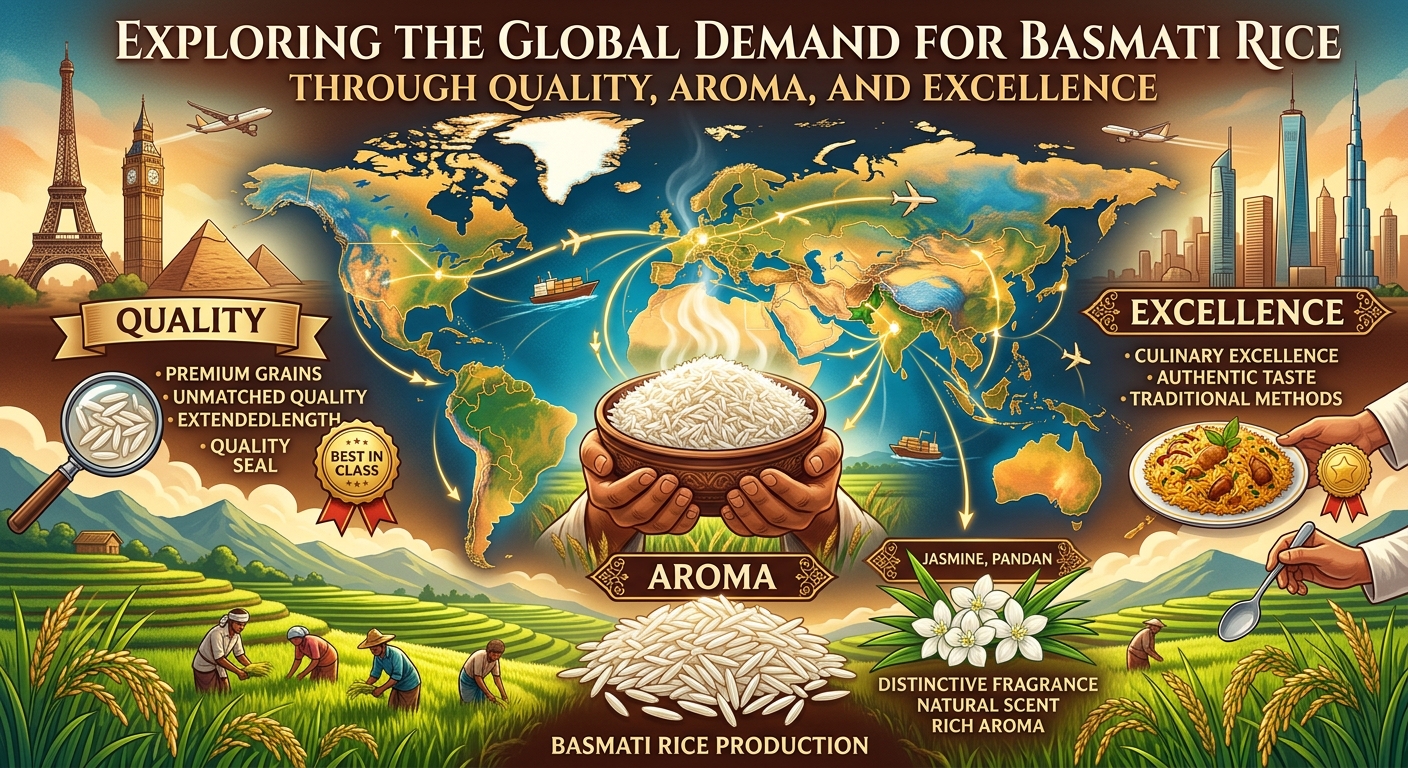
The international rice market continues to value products that combine distinctive flavor, consistent quality, and dependable supply. Among the varieties available to consumers and commercial buyers, basmati rice holds a special position because of its characteristic fragrance, elegant grain structure, and versatility in traditional and modern cuisines. For Pakistan, this demand represents an important opportunity for rice producers, processors, exporters, and suppliers seeking to serve international markets.
Pakistan has a long-established rice industry supported by agricultural expertise, rice-processing facilities, and experience in international trade. Understanding the factors that influence global demand can help businesses recognize what international buyers expect and how quality-focused production contributes to long-term competitiveness.
Understanding the Factors Behind Global Rice Demand
International demand is influenced by changing consumer preferences, food-service requirements, population growth, and the expansion of global food distribution networks. Importers are not simply looking for rice at competitive prices; they also need products that meet their customers’ expectations for taste, appearance, consistency, and preparation.
Global rice market trends increasingly make product differentiation important for suppliers competing across multiple regions. Retailers may prioritize packaging and consumer appeal, while restaurants and catering businesses often focus on cooking consistency, portion quality, and dependable availability.
For exporters, understanding these differences helps them develop products and supply arrangements that suit individual markets rather than relying on a single approach for every customer.
Pakistan’s Position in the International Rice Industry
Pakistan is recognized as an important producer and exporter of aromatic rice. Its rice sector connects agricultural communities with milling facilities, packaging operations, trading companies, and international distribution networks. This relationship creates opportunities for businesses that can maintain suitable quality standards throughout the supply process.
Rice exports from Pakistan depend on several interconnected factors, including crop quality, processing efficiency, market access, documentation, and logistics. Exporters must also understand the product specifications and regulatory requirements of their destination markets.
For international buyers, working with suppliers that communicate clearly about grades, packaging, shipment schedules, and product specifications can simplify purchasing decisions and support more reliable business relationships.
The Importance of Aroma and Grain Characteristics
Aroma is one of the most recognizable qualities associated with basmati rice. Its distinctive fragrance contributes to the sensory experience of dishes such as biryani, pulao, and other rice-based meals. However, aroma alone does not determine whether a product meets a buyer’s requirements.
Aromatic rice varieties can differ in grain appearance, fragrance intensity, cooking behavior, and suitability for particular recipes. These differences make variety selection an important consideration for both domestic consumers and commercial purchasers.
Processing and storage also matter. Poor handling, unsuitable storage conditions, or excessive moisture can affect the quality of the final product. Careful management at each stage helps preserve the characteristics that consumers value.
How Quality Standards Influence Buyer Confidence
International buyers generally require more than an attractive product description. They need clear specifications and reasonable assurance that the rice supplied will match the agreed requirements.
Rice quality assurance involves evaluating relevant characteristics such as grain uniformity, broken-grain percentage, moisture content, cleanliness, packaging integrity, and compliance with applicable food-safety requirements. The precise specifications depend on the product grade and the destination market.
Reliable inspection procedures can help identify inconsistencies before shipments leave the processing facility. Accurate labeling and appropriate documentation further support transparency between suppliers and buyers.
For exporters, maintaining consistent procedures across different production batches can strengthen credibility and reduce the likelihood of disagreements over product quality.
Meeting the Needs of International Importers
Importers operate in markets with different culinary traditions, purchasing patterns, and customer expectations. A distributor supplying supermarkets may require retail-ready packaging, whereas a food-service company may purchase larger quantities intended for commercial kitchens.
Bulk rice supply therefore requires careful coordination between production capacity, packaging arrangements, order specifications, and shipment planning. Suppliers must understand the required quantity, delivery schedule, destination requirements, and preferred product characteristics before confirming an order.
Clear communication is particularly important when managing repeat purchases. Consistent specifications and realistic delivery commitments help buyers plan their inventory and maintain continuity in their own businesses.
Packaging, Storage, and Distribution Excellence
Packaging serves several purposes beyond product presentation. It helps protect rice during handling, storage, transportation, and distribution. The appropriate packaging format depends on the intended customer, shipment conditions, and applicable market regulations.
Rice export packaging may include consumer-sized bags, larger commercial packs, or customized formats developed for distributors and private-label businesses. Packaging materials should be suitable for the product and capable of maintaining its condition throughout the supply chain.
Storage practices are equally important. Protecting rice from moisture, pests, contamination, and unsuitable environmental conditions helps preserve its quality before it reaches the final customer.
Efficient distribution planning also supports smoother international trade by helping suppliers coordinate documentation, transportation, and delivery expectations.
Building Long-Term Opportunities for Pakistani Rice Exporters
Competition in international markets requires more than offering an attractive price. Exporters need a balanced approach that combines product quality, dependable communication, operational efficiency, and an understanding of customer requirements.
Pakistani rice exporters can strengthen their market position by investing in appropriate processing methods, maintaining transparent product specifications, improving packaging practices, and developing relationships with buyers who value consistency.
Long-term partnerships are often built through reliable performance over multiple orders rather than a single successful transaction. Understanding customer feedback and adapting to changing market requirements can help suppliers remain competitive as international trade conditions evolve.
Conclusion
Global demand for basmati rice reflects the importance of distinctive aroma, dependable quality, careful processing, and reliable supply. For Pakistan’s rice industry, these factors create opportunities to serve retailers, wholesalers, food-service businesses, and international importers with products suited to their specific requirements.
By emphasizing quality assurance, suitable packaging, efficient distribution, and transparent communication, businesses can improve buyer confidence and support sustainable commercial relationships. A commitment to these principles allows Pakistan’s rice sector to build on its agricultural strengths and pursue further opportunities in the international marketplace.







Responses (0)