
Play enough different courses and you'll notice it: some are gently rolling, some have serious elevation, and some mix long routes with changing terrain between fairways.
Same 18 holes — very different experience for your equipment.
That's why terrain, surface, and route all matter when choosing an electric golf trolley. Flat fairways and climbing ground don't make the same demands on power, wheels, or handling. Photos alone won't tell you how a cart performs on either.
What terrain actually changes
The differences show up in ordinary moments, not dramatic ones. On a climb, a cart with limited power slows down noticeably, or the follow function loses its distance from you on the way up. On wet, sloping ground, traction becomes the question — a cart that handles dry flat grass perfectly can slip or drift on a damp incline. And on long routes with frequent surface changes, what gets tested isn't power at all, but battery planning: hills consume range faster than the spec-sheet number assumes.
None of these are dealbreakers. But they're exactly the situations you can't evaluate from a product photo.

What to ask before buying
So before buying a flagship model, ask the brand directly: What gradient is the cart rated for? Any specific requirements on grass, hard surfaces, or wet ground? How should it be operated on larger terrain changes? How does hill climbing affect the expected range?
Read the specs, not the slogans
The icango G5, a flagship tournament edition, runs on dual brushless motors with a UWB positioning system, supporting smart follow, remote control, cruise mode, and app control — aimed at long range, stability, and full smart features.
These are solid starting points. They don't automatically mean "suits every slope and every surface." Dual brushless motors describe the power configuration — actual climbing ability still comes down to official test data. UWB is a positioning technology — it doesn't guarantee identical follow performance on every terrain.
Asking the brand for those specifics beats trusting words like "powerful" or "precise."
If you can see the cart in person
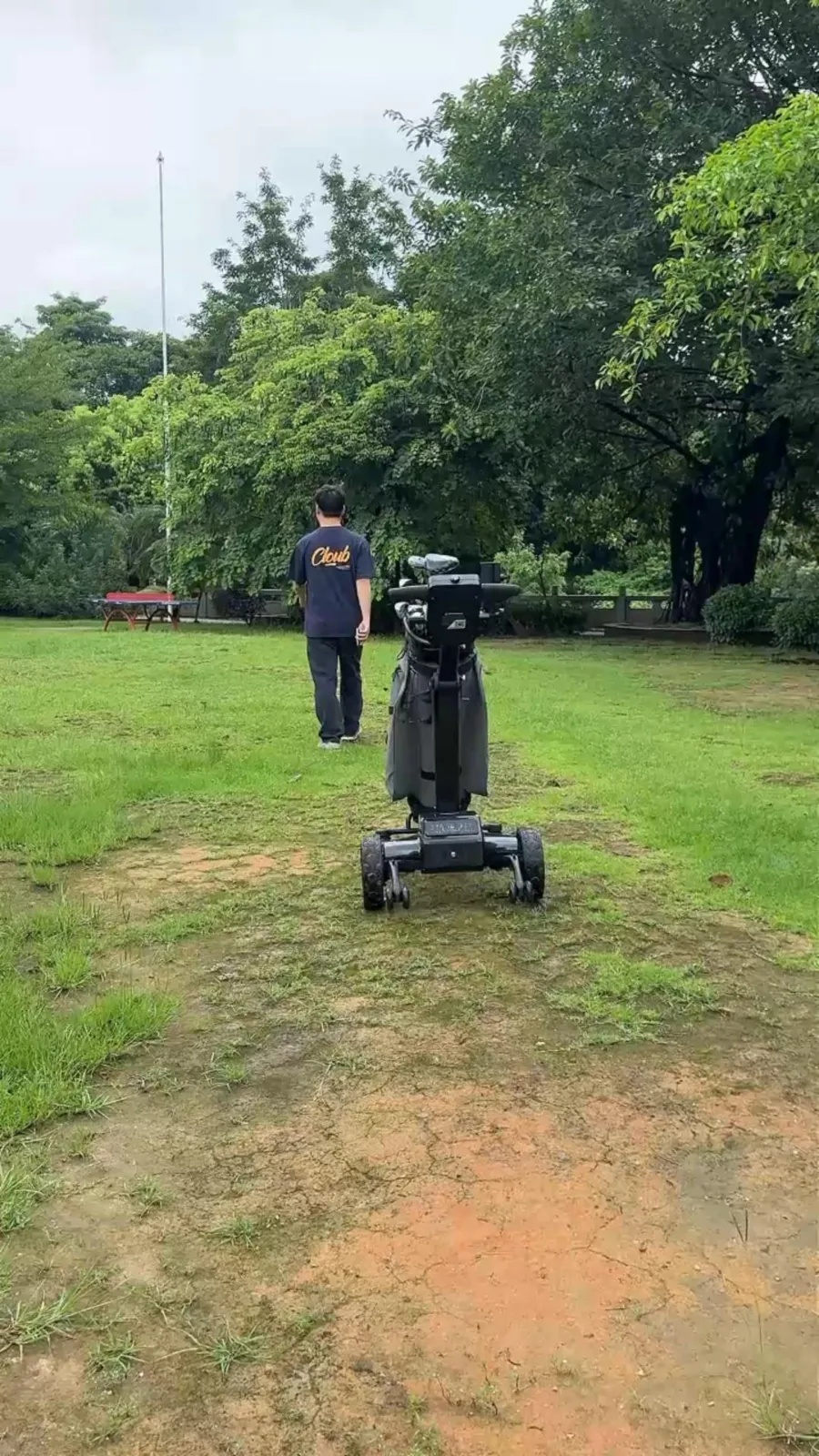
If you ever get the chance to try before buying — at a dealer, a demo day, or a friend's round — slopes are the fastest way to understand a cart. Watch three things: does it maintain steady speed going up, does the follow function keep a consistent distance on uneven ground, and how does it handle a stop-and-restart on an incline. Ten minutes on a slope tells you more than an hour of product pages.
Match the cart to your home courses
If your regular courses have obvious slopes, verify the gradient requirements first. If you often play on wet ground, look into wheel design, protection, and usage notes. And if your home course is long and rolling, treat the official range number as a starting point, not a promise.
The G5 is worth a close look for buyers prioritizing flagship specs, range, and smart features — but whether it matches your courses is a question only the official parameters can answer.
No two courses play the same. Neither should the way you choose a golf bag trolley for them.






Responses (0)