
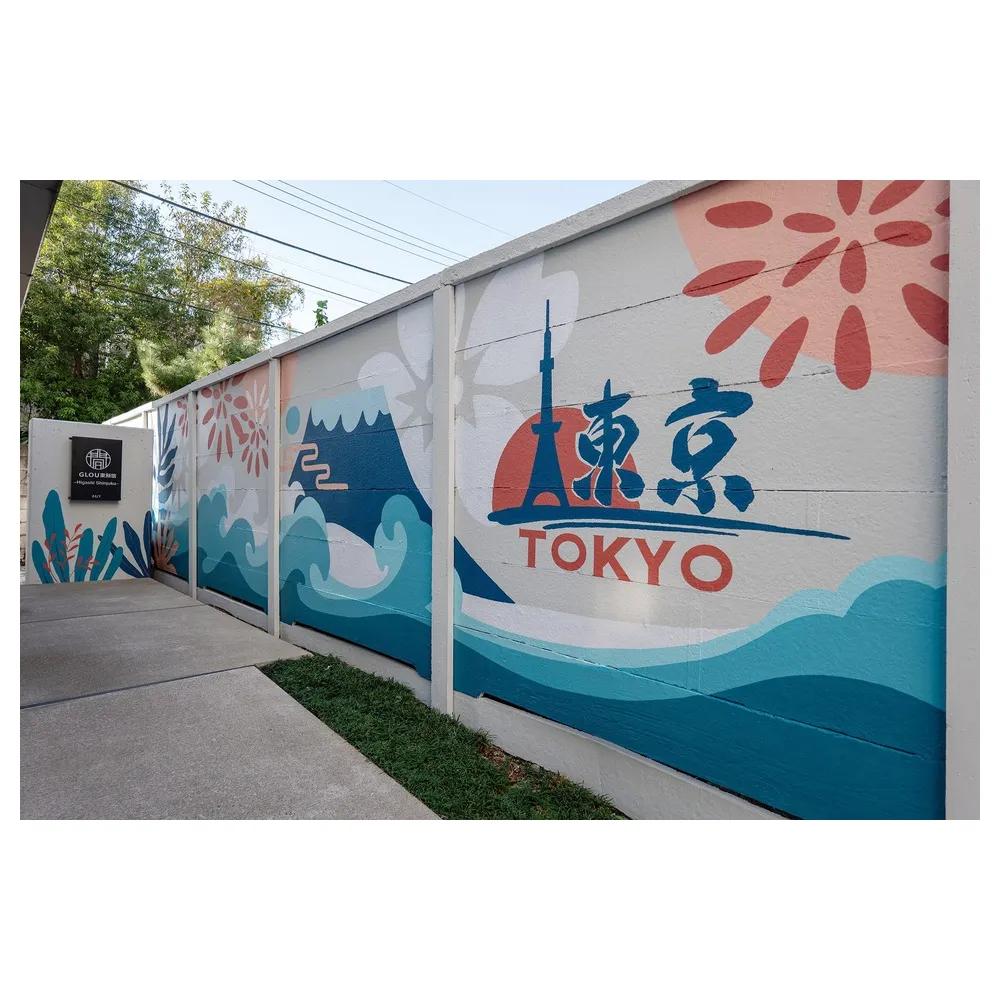
A mural brief often begins with a reference image and an available wall. The design looks exciting in a presentation, but a painter arriving on site may find a textured surface, awkward lighting or a commercial space that cannot close during working hours. For 東京壁画制作 projects, successful planning comes from connecting the artwork to the building, installation timetable and people who use the space.
Measure the wall before finalising the artwork. Record width, height, corners, doors, vents and fixtures that interrupt the composition. Photograph the area from the viewpoints that matter: the entrance, seating area or street. A detail that works beautifully on a laptop screen may be hidden behind shelving or cut in half by an emergency sign. The design should be checked against the actual sightlines rather than an empty rectangle in the proposal.
Surface preparation changes the work plan. Painted plaster, concrete, timber panels and previously coated surfaces may need different cleaning, primers or repair work. Moisture problems and loose coatings cannot be solved by painting over them. A site survey should identify whether access equipment is needed and whether existing furniture or floors must be protected. In a busy restaurant or office, preparation and masking can take a substantial share of the available installation window.
Approvals should use a clear visual reference. Agree on the main colours, lettering, scale and any fixed brand elements before the first paint is opened. Small variations in colour can be acceptable for a hand-painted piece, but that expectation needs to be explicit. If the mural includes text, check spelling and placement at final size; correcting a letter across several metres of wall is more disruptive than editing a digital mock-up. Changes after installation begins should be documented with their cost and timing consequences.
Tokyo spaces may have particular working-hour or building-management constraints. Noise, odour, deliveries and access arrangements need to be discussed with the site operator. Some projects can be painted during trading hours; others need overnight or staged work. The choice of material should account for ventilation, cleaning and the intended life of the installation. Public-facing locations may also require permissions or safety measures depending on where the mural is placed.
A site manager can help the artist by providing the correct wall access information early. A mural high above a staircase may require specific equipment and approval, not an improvised ladder arrangement. Surface protection should cover nearby signage, lighting and customer areas. If the venue remains open, discuss how the work zone will be separated from visitors. The final schedule should include preparation, painting, drying and cleanup rather than only the hours when the artist is applying colour.
For branding projects, decide who can approve revisions. If a design is approved by marketing but rejected at installation by store operations, the artist may be caught between conflicting instructions. Identify one responsible approval path and keep an agreed reference file. It is fine for artwork to evolve, but the changes should be intentional and discussed before they consume the limited time available on the wall.
Weather and humidity can affect drying conditions even inside a commercial property. Rather than inventing a universal dry time, the artist should follow the actual product guidance and evaluate conditions on site. If a wall requires several coats or a protective finish, allow for the full process in the schedule. Rushing the final handover can lead to smudging or accidental contact. A mural that survives daily use deserves more than a hurried final photograph.
Handover is more useful when it includes maintenance advice. Explain how the finished surface should be cleaned, whether touch-ups are practical and which elements are most vulnerable to abrasion. Keep an approved photograph of the completed work for future reference. A strong mural belongs to the wall and the business using it. Its success is as much about the installation experience as the initial concept.
In search listings, this topic may also be described as “東京壁画制作”. The relevant regulations and product requirements still depend on the actual use case.
Official website: isai





Responses (0)