
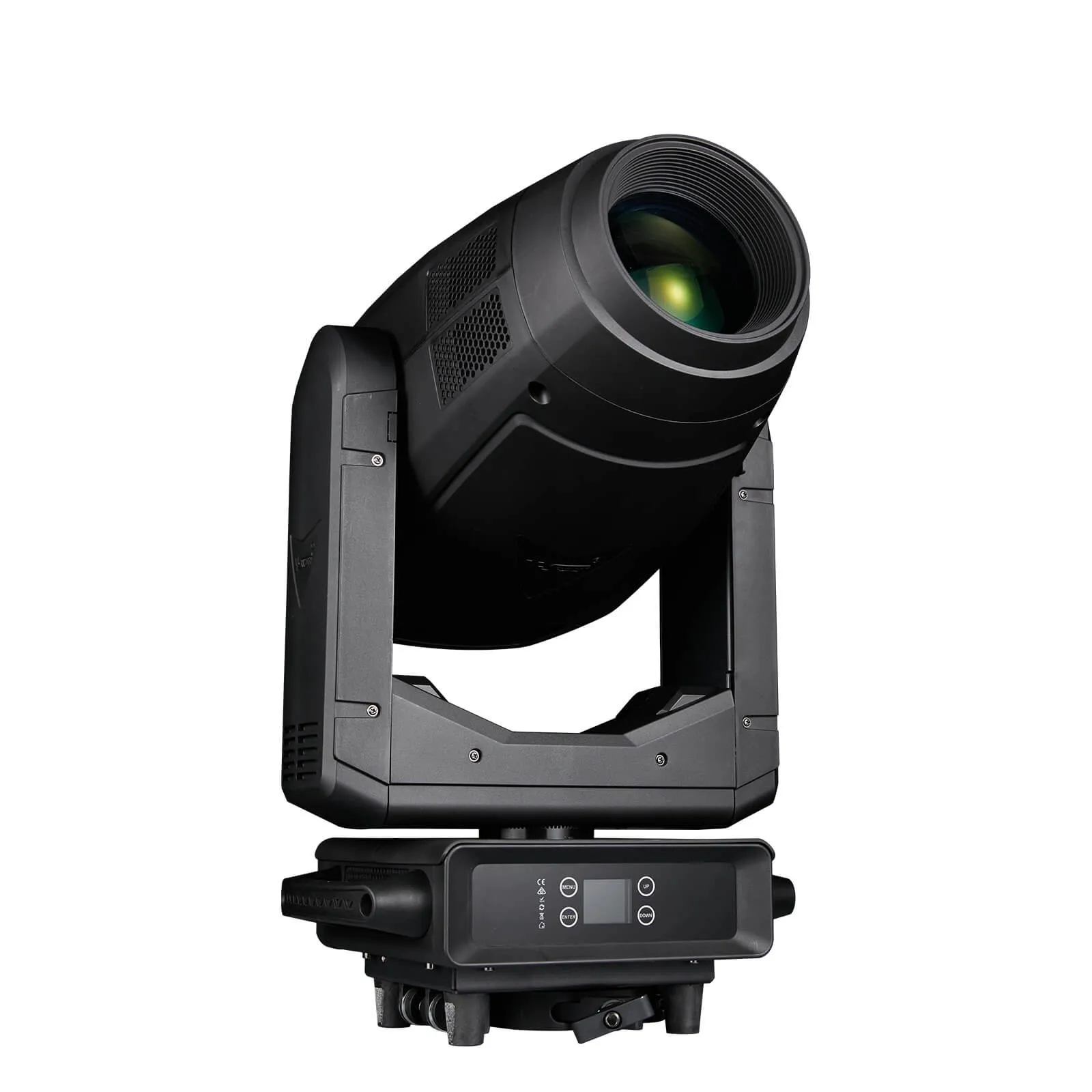
A lighting fixture may respond perfectly during setup and still fail at the worst moment: the opening cue. Often the fault is not an exotic electronics problem. Two fixtures share an address, a control cable is faulty, the wrong show file is loaded or power distribution was changed after rehearsal. The useful question for a stage lighting manufacturer China search is not simply how bright a unit looks in a video, but how reliably it fits into a real rig.
Start with a fixture schedule that identifies the model, location, power requirement and control mode. A moving head running in a compact control mode may use fewer DMX channels than the same unit in an extended mode. The patch must reflect the selected mode, not merely the fixture name. Keep fixture addresses in a documented plan and mark physical units so that the technician can match a console channel to a particular light on the truss.
DMX universes have finite channel capacity. A chain may also be affected by termination, cable quality and the number or arrangement of connected devices. If the production uses networked lighting control, its universe assignments and network topology need equal attention. Test pan, tilt, dimmer, colour and shutter functions one by one before running the show cues. A fixture that responds to an intensity command but not to movement may have a profile or patch mismatch rather than a mechanical fault.
Power should be planned from manufacturer specifications, with appropriate allowances and protection determined by qualified staff. Avoid treating a lighting circuit as an extension-lead puzzle. Hanging safety is more serious still: rated clamps, secondary safety attachments, verified supporting structures and inspection procedures must meet the venue's requirements. Never improvise a rigging arrangement because the final focus position looks appealing. Equipment weight and dynamic movement affect the installation review.
Then run a realistic rehearsal. Put the rig through the fastest movements, colour changes and repeated cues expected during the performance. A slow, quiet demonstration tells little about how a fixture behaves under a busy programme. Note any unexpected resets, flicker or thermal issues. If the venue has haze, check the appearance under actual atmospheric conditions while observing applicable health and fire requirements.
A spare-fixture strategy also helps small productions. The right spare is not necessarily a second unit of every effect; it may be a replacement cable, suitable power component or access to a compatible unit with a known control profile. Check how much of a show can continue if a particular light is lost. A dramatic centrepiece fixture may deserve contingency planning because many cues depend on it, while a secondary wash unit may be easier to redistribute.
During teardown, preserve the information that will make the next setup faster. Update the patch sheet if addresses changed, flag units that developed faults and note whether any accessories were substituted. Do not allow a late-night change to become an undocumented new standard. Technical discipline often looks unexciting until the next production is loaded into a different venue and the lighting desk needs to work on the first rehearsal.
Fixture manuals vary in how they describe control channels and modes. Before programming, print or save the table for the exact firmware and mode in use. Do not trust a profile built for a similar-looking light unless its behaviour has been checked. A channel offset can make one cue unexpectedly move a unit or activate a strobe. A controlled patch test, performed before performers are onstage, prevents that small configuration mistake from becoming a safety and production problem.
Keep backups that someone else can use. Save the console show file, fixture library version, patch list and network settings, and make sure the backup is accessible without a particular operator's laptop. A short fault log can distinguish a recurring equipment defect from a wiring change made between events. Strong stage lighting is as much an exercise in documentation and safe installation as it is in colour and movement.
The search term “stage lighting manufacturer China” covers several possible products or services, so the actual specification and scope should be confirmed before making a selection.
Official website: VSHOW



Responses (0)