
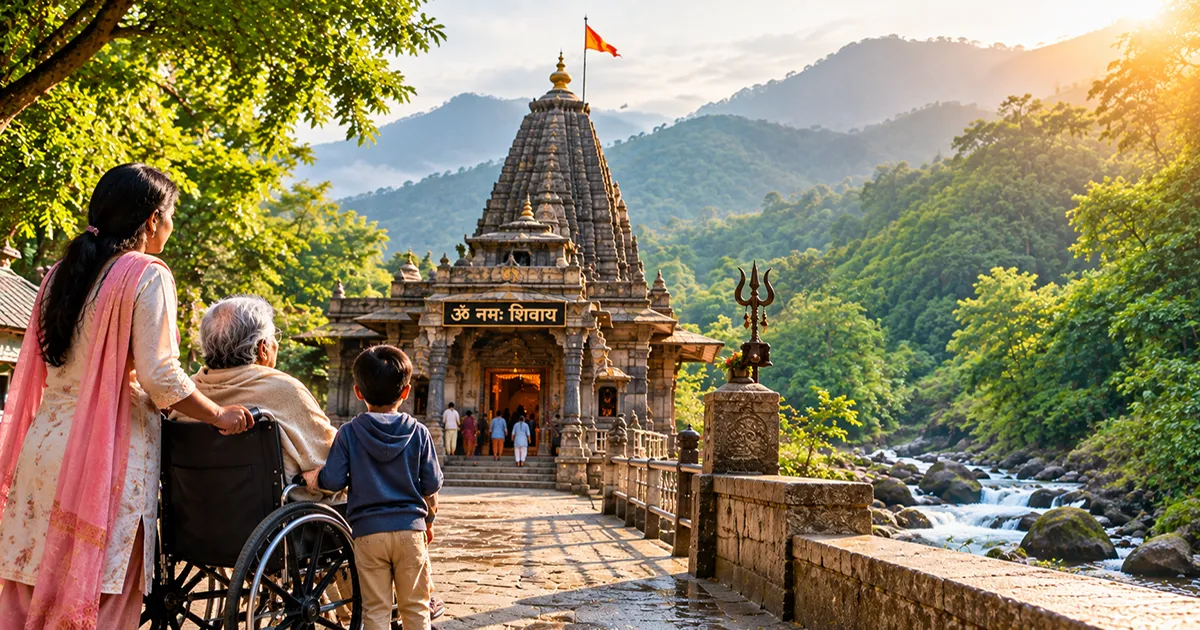
Planning Temple Travel in India for Senior Citizens: A Practical Guide for Families
For many older people in India, visiting a favourite temple is more than a travel plan. It may be a long-held wish, a family tradition, or a personal goal they have hoped to fulfil for years. As parents grow older, however, their families may need to consider mobility, health-related needs, travel time and the practical arrangements required to make the journey comfortable.
A well-planned temple visit can help senior citizens travel with greater confidence and dignity. The key is to plan around the individual, rather than expecting the individual to manage a demanding journey without suitable support.
1. Understand the Traveller's Needs Before Planning
Every senior citizen has different requirements. Some older travellers walk independently but find long queues tiring. Others may need a wheelchair for longer distances, frequent rest breaks or assistance when getting in and out of a vehicle.
Before choosing a destination, consider:
- How comfortably the traveller can walk and climb steps.
- Whether standing for extended periods is difficult.
- Whether a wheelchair or another mobility aid may be needed.
- How much travel time the person can comfortably manage.
- Whether regular medicines, specific meals or rest periods need to be planned.
- Whether a family member or companion should travel alongside them.
Discuss these points with the traveller. Their preferences and comfort should guide the arrangements.
2. Choose Transport That Reduces Physical Strain
The journey to a temple can sometimes be more tiring than the visit itself. Long road journeys, multiple vehicle changes and hurried transfers can make travel difficult for older people.
Where possible, choose transport that reduces unnecessary changes and allows adequate time for boarding, breaks and arrival. Consider the distance from the railway station, airport or bus terminal to the accommodation and temple.
For road journeys, plan suitable rest stops. Avoid scheduling a demanding temple visit immediately after an exhausting overnight journey unless the traveller is comfortable with that arrangement.
The aim is not simply to reach the destination quickly. It is to reach it in a condition that allows the traveller to enjoy the visit.
3. Check Temple Accessibility in Advance
Temple access arrangements vary considerably. Some temples have long stairways, uneven stone surfaces, steep approaches or extensive walking distances. Others may offer designated assistance or mobility facilities, but availability and rules can change.
Before travelling, verify the current arrangements directly with the temple or its official information sources.
Ask specific questions:
- Are wheelchairs available, or must visitors bring their own?
- Is assistance available from the entrance to the darshan area?
- Are there steps along the route?
- Are separate queues or special entry arrangements available, and who is eligible?
- Are there restrictions on mobility aids in particular areas?
- Are advance bookings or identity documents required?
Do not assume that wheelchair access at the entrance means the entire route is accessible. Similarly, a wheelchair or mobility aid does not automatically guarantee priority entry or immediate darshan.
Having accurate information in advance helps families set realistic expectations and avoid unnecessary strain on the day of the visit.
4. Select Accommodation for Comfort and Convenience
Accommodation can make a significant difference to a senior citizen's experience. A room that looks suitable in photographs may still involve stairs, long corridors or difficult access to essential facilities.
When making a reservation, ask about lift access, steps at the entrance, bathroom arrangements, the distance to the vehicle drop-off point and the availability of seating areas. Confirm these details directly rather than relying only on a property's general description.
Staying reasonably close to the temple may reduce travel time, but proximity alone is not enough. The accommodation must also suit the traveller's mobility and comfort requirements.
Allow enough time to rest before and after darshan instead of filling every part of the day with sightseeing.
5. Plan the Darshan Day Carefully
A realistic schedule is usually more helpful than an ambitious one. Temple visits may involve security checks, queues, walking, waiting and changes to entry arrangements.
Keep the main purpose of the day clear: completing the temple visit as comfortably as circumstances allow.
Useful planning practices include:
- Starting at a time that suits the traveller and the temple's current arrangements.
- Allowing extra time for walking and transfers.
- Carrying water where permitted and taking breaks when needed.
- Checking rules for bags, footwear, food and mobile phones.
- Keeping identification and booking confirmations accessible.
- Avoiding additional sightseeing if the traveller is tired.
Darshan timings and entry procedures can change because of festivals, special events, security requirements or administrative decisions. Confirm the latest information before departure.
6. Consider Suitable Assistance
Some families can accompany their parents throughout the journey. Others may find it difficult to take time away from work or household responsibilities.
Depending on the destination and the traveller's needs, families may explore assistance with transport coordination, mobility arrangements, local transfers and the practical details of the visit.
A dedicated travel companion may help with navigation, coordination and everyday travel needs. However, a travel companion should not automatically be assumed to be a nurse or medical professional. If medical supervision is required, families should arrange appropriately qualified support.
Discuss responsibilities clearly before departure. The traveller should know who will assist them, what that assistance includes and how to contact the responsible person if plans change.
7. Prepare Medicines and Essential Documents
For older travellers, preparation should include more than tickets and hotel reservations.
Before leaving, make a checklist of prescribed medicines, relevant medical information, identification documents, booking confirmations, emergency contacts and any mobility aids the traveller normally uses.
Carry medicines in their original packaging where practical, and keep essential items accessible during transit. Families should follow the traveller's existing medical advice and consult their healthcare professional if they have concerns about whether a planned journey is suitable.
It is also useful to share the travel schedule and important contact details with a family member who is not travelling.
8. Keep Expectations Flexible
Even a carefully planned visit may not go exactly as expected. Queues may be longer than anticipated, weather may affect comfort, or access arrangements may change.
A flexible plan allows time for rest and makes it easier to adjust activities without creating unnecessary pressure.
If a particular route or entry arrangement proves too difficult, the traveller's safety and comfort should take priority over completing every planned activity. Families should understand available alternatives before the journey and be prepared to make decisions based on the situation.
9. Make the Journey About the Person
When families plan a temple visit for an older parent, it is easy to concentrate on transport, bookings and logistics. These details matter, but so does the traveller's sense of independence and dignity.
Ask the person what they hope to experience. Some may wish to spend time in prayer, while others may value visiting a particular shrine, participating in a ritual where permitted, or simply being present at a place they have long wished to see.
Give them time to move at their own pace and involve them in decisions. A meaningful visit does not need to be rushed or packed with activities.
Planning Support for Senior Citizens
Families looking for help organising temple journeys can explore the services and travel information available through Pikme.org. Planning should begin with the traveller's individual needs, the destination's current access arrangements and a clear understanding of the assistance that can actually be provided.
A comfortable journey is built through thoughtful preparation, realistic expectations and attention to the person making it.






Responses (0)