
A manufacturing plant can have experienced employees, documented procedures and modern equipment yet still struggle with safety, quality and productivity.
When these problems keep recurring, the obvious solution is often to introduce another process, organise more training or increase supervision. But what if the real problem is deeper than what management can see?
In manufacturing, some of the most damaging operational problems are not immediately visible. They develop within everyday activities, communication gaps, inconsistent processes and decisions that are rarely questioned. Over time, these issues can affect performance across an entire plant.
This is where effective operational diagnosis becomes important.
Looking Beyond the Obvious Problems
When production targets are missed or quality issues continue to occur, it is easy to focus on the most recent failure. However, fixing individual incidents without understanding their underlying causes can lead to repeated problems.
A more useful approach is to examine the operation as a connected system.
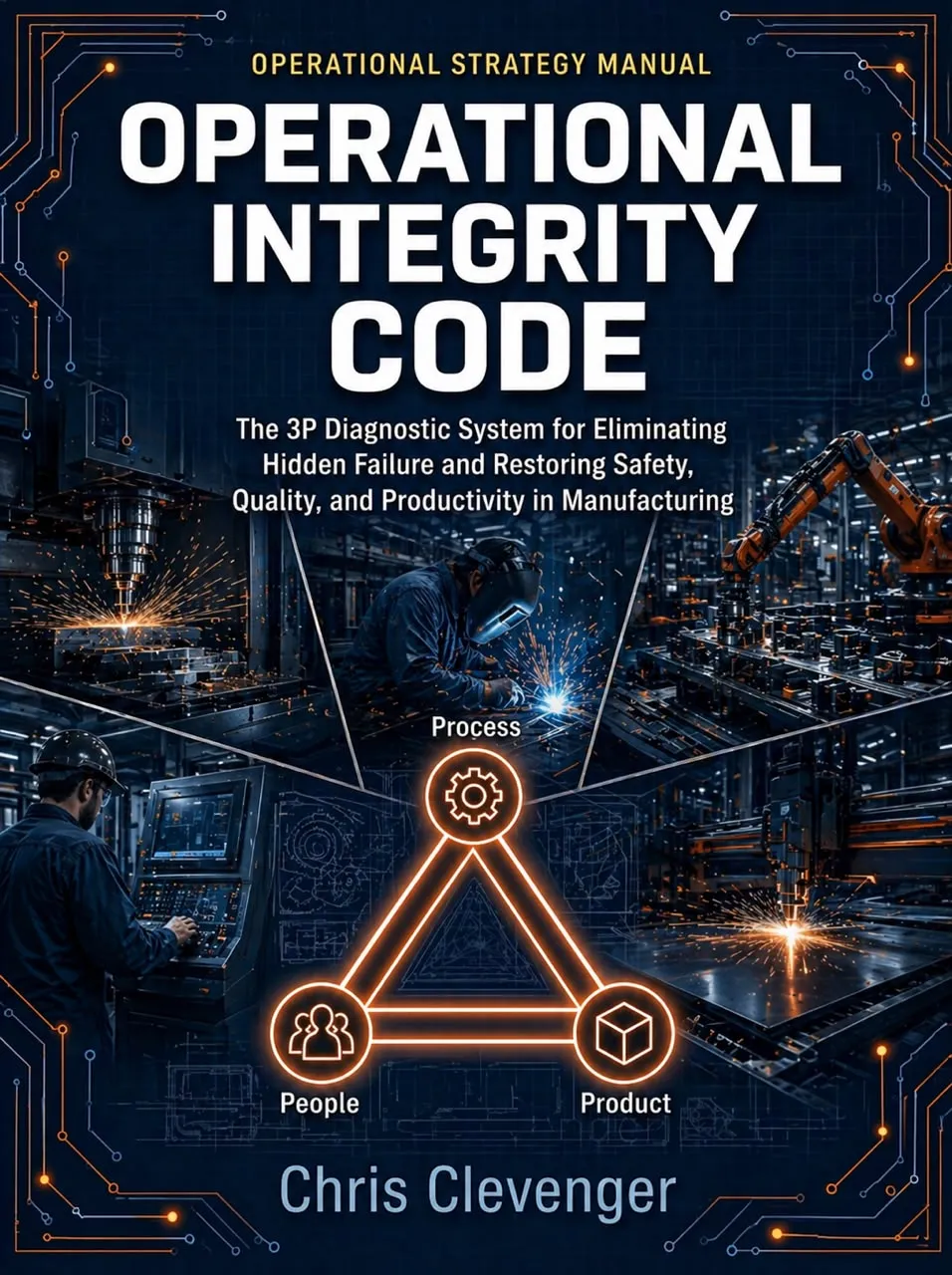
People, Process and Product are three important areas to consider. Employees need the right skills, expectations and support. Processes must work as intended in actual operating conditions. Products must consistently meet the required standards.
A weakness in one area can affect the others. For example, a production issue may appear to be an employee performance problem when the actual cause is an unclear procedure or a process that makes consistent results difficult to achieve.
Why Manufacturing Leaders Need a Better Diagnostic Approach
Operational improvement should begin with understanding what is happening on the plant floor, not simply what reports and performance indicators suggest.
Leaders need to identify where failures originate, understand how different parts of the operation influence one another and address the conditions that allow problems to continue.
Chris Clevenger explores this challenge in Operational Integrity Code: The 3P Diagnostic System for Eliminating Hidden Failure and Restoring Safety, Quality, and Productivity in Manufacturing.
You can also read the first three chapters to explore the concepts introduced in the book.
For readers interested in seeing how the concepts apply in practice, Operational Integrity in Action: A Plant Turnaround Story Using the 3P Diagnostic System presents the approach through a plant turnaround story.
Both books focus on an important question for manufacturing leaders: are you solving the problems you can see or identifying the conditions that keep creating them?
A More Practical View of Operational Excellence
Improving manufacturing performance requires more than introducing new initiatives. It requires a clear understanding of how work is actually performed and the willingness to address weaknesses at their source.
For plant managers, operations leaders and professionals responsible for safety, quality and productivity, examining the hidden causes of operational failure can be an important starting point.
Learn more about Chris Clevenger and his work.






Responses (0)