
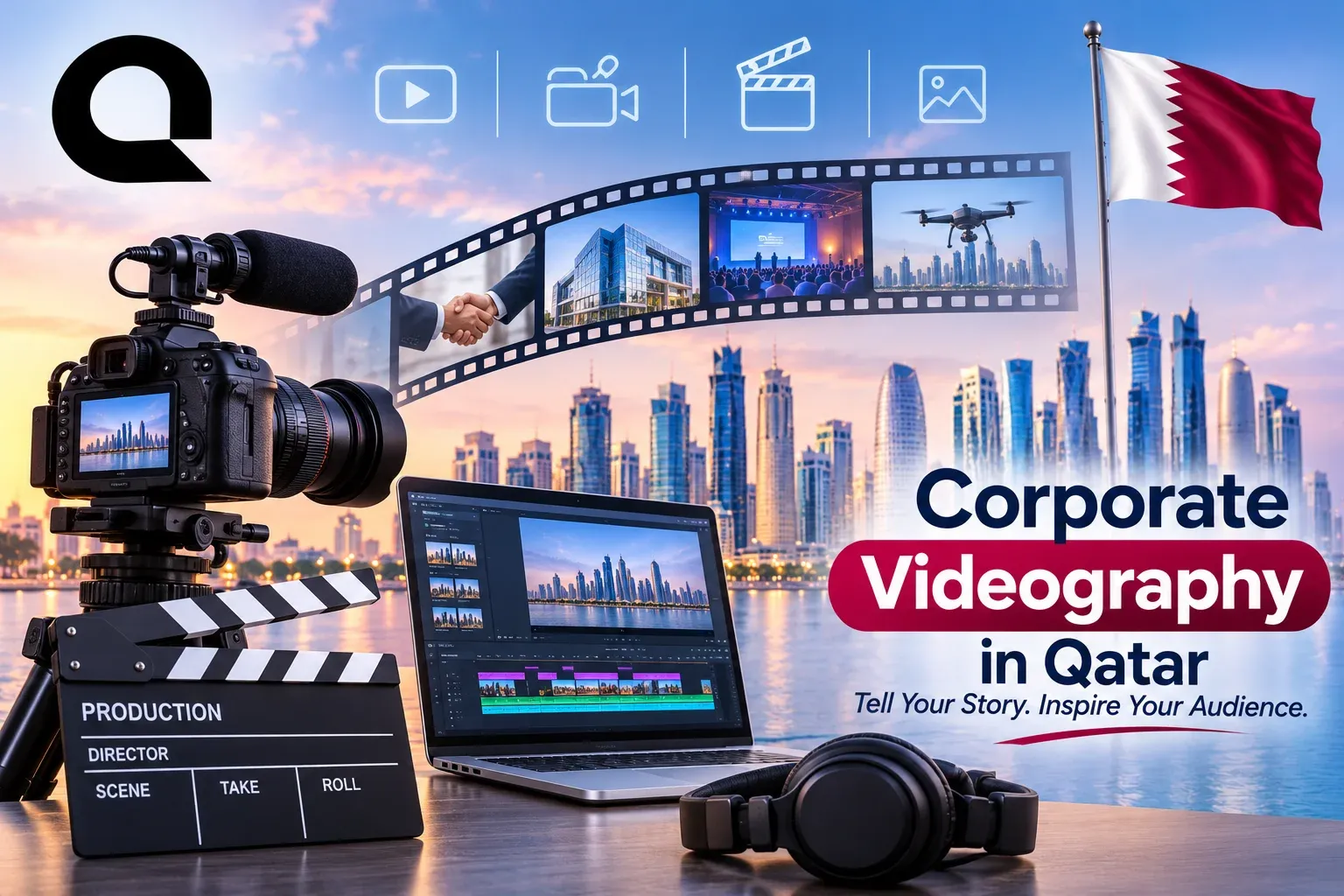
People rarely remember a list of features. They remember a story: a problem, a person, a moment where something changed. This is why the strongest business videos do not simply describe a company. They show it. Corporate videography is the craft of turning what a business does into a story that people can see, feel and share.
This guide looks at corporate videography through the lens of storytelling: what makes a business video engaging, which formats suit which goals and how to plan and reuse video so it keeps working long after it is published.
What Is Corporate Videography?
Corporate videography is the planned production of video content for business purposes. It covers everything from the idea and script to filming, editing, sound and delivery. Unlike a casual clip filmed on a phone, professional videography is built around a clear message, a defined audience and a consistent brand look.
Its value lies in what still images and text cannot do alone. Video combines movement, sound, context and emotion, so it can capture moments, show how something works and give viewers a sense of the people behind a brand.
Why Storytelling Is the Foundation
A business video that only lists services is quickly forgotten. A video that tells a story holds attention. Most effective business stories contain three simple parts:
1. A situation: who the video is about and what they need.
2. A challenge: the problem, the gap or the question that makes the story matter.
3. A result: how the product, service or team makes things better.
This structure works for a brand film, a product demo or a customer testimonial alike. The business is not the hero. The customer is, and the business is the guide that helps them succeed.
Formats and the Goals They Serve
Different goals call for different types of video. Here are the main formats and when they work best.
Corporate promos and brand films. These explain who you are, what you stand for and why you are different. They work best at the top of your website, in presentations and on social media profiles, where first impressions are formed.
Product demos and explainer videos. Product videography is especially valuable for brands and eCommerce businesses. It shows storytelling, context and moments that a still image cannot capture, such as how a product is used, how it feels in real life and what it replaces. Together, these videos work as a complete product promotional toolkit.
CEO and leadership interviews. Hearing directly from leaders adds a human voice to a company. These videos suit investor updates, recruitment, partnerships and thought leadership.
Event coverage and recaps. Conferences, launches and openings are valuable moments. A well-edited recap lets people who missed the event share in it and extends the value of the event long after it ends.
Training and onboarding videos. Internal videos keep instructions consistent, save management time and help new team members learn at their own pace.
Aerial and location-based filming. Drone footage and on-site shooting give large spaces, projects and facilities a sense of scale that ground-level filming cannot match. They suit real estate, construction, hospitality and large venues.
Industries That Benefit Most
Professional videographyhas become a major tool for brand positioning in retail, technology, hospitality and many other sectors. A retailer can show products in real use. A technology company can make a complex service easy to understand. A hotel or restaurant can let viewers experience an atmosphere before they arrive. In each case, video builds an impression that photos and descriptions struggle to match.
Planning a Video That Engages
A great video is decided long before the camera starts rolling. Use this checklist.
- Define one goal. Do you want enquiries, sales, awareness, recruitment or training? One video should serve one main purpose.
- Know your viewer. Who is watching, and what do they already know or worry about?
- Write a clear message. If you cannot say the main point in one sentence, the video will feel unfocused.
- Script and storyboard. Plan the sequence of scenes, the words and the visuals so filming time is used efficiently.
- Choose the right length. Short videos suit social media and quick explanations. Longer formats suit brand films and training.
- Plan the call to action. Tell viewers what to do next: visit, contact, subscribe or buy.
Production Quality: The Details That Show
Viewers may not know the technical details, but they notice quality instantly. Pay attention to:
- Lighting and framing: well-lit, well-composed shots signal professionalism.
- Clear sound: poor audio ruins more videos than poor pictures, so professional microphones and clean recording matter.
- Editing and pacing: Good editing keeps the story moving and removes anything unnecessary.
- Motion graphics and visual polish: titles, animations and graphics can clarify ideas and reinforce your brand.
- Voiceovers and subtitles: These make content accessible and useful for different audiences, including viewers watching without sound.
Make One Video Work Many Times
One of the biggest advantages of professional video is how many ways it can be used. A single production can be posted and reposted across different platforms, which supports a long-term return on your investment. For example:
- A full brand film on your website and presentations
- Short clips cut for social media
- Product demo segments on product pages and online stores
- Interview highlights for newsletters and recruitment
- Event recaps shared again before the next event
Planning this reuse before filming helps you capture the right footage in one session instead of paying for several separate shoots.
How Video Supports Online Advertising
Customers are drawn to product videos, and after watching, they are more encouraged to buy. Video also fits naturally into online advertising, where moving images attract more attention than static ones. When a video is built around a real story and a clear offer, advertising feels less like an interruption and more like useful information.
Choosing the Right Videography Partner
The right agency reflects directly on your credibility, because your videos represent your brand. Look for these qualities:
1. A portfolio that matches your needs, with work for similar goals or industries.
2. Storytelling ability, not just good equipment.
3. A complete process that covers script, filming, editing and delivery.
4. Brand consistency, so your videos match your website, social media and printed material.
5. Platform knowledge, including the correct formats for web, social media and broadcast.
6. Clear communication about timelines, revisions and costs.
Common Mistakes to Avoid
- Making a video without a clear goal
- Talking only about the company instead of the viewer's needs
- Ignoring sound quality
- Making videos too long for the platform
- Forgetting subtitles
- Leaving out a call to action
- Using a video once instead of reusing it across channels
Final Thoughts
Good corporate videography is not about expensive effects. It is about telling a clear, honest story that makes the viewer care. Define your goal, understand your audience, plan the message, invest in quality production and reuse your footage wisely. Do this, and video becomes one of the most effective ways to build visibility, trust and engagement.
Aamal Technology Solutionsprovides corporate videography services in Qatar, including brand films, product demos, leadership interviews, event coverage, training videos and aerial filming, designed to help businesses tell their story visually.






Responses (0)