
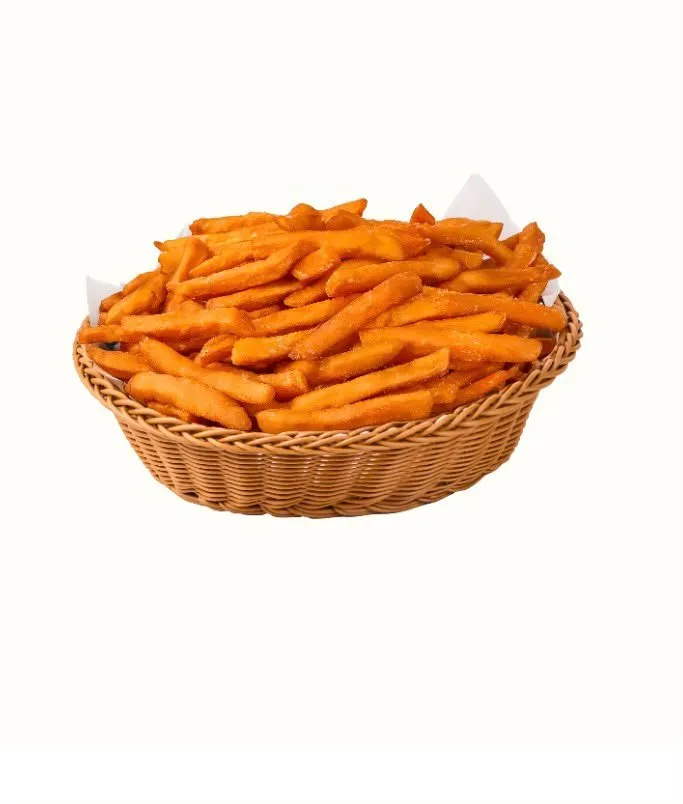
For food importers, distributors, retailers, and foodservice companies, choosing the right frozen food manufacturer can have a direct impact on product quality, supply stability, and customer satisfaction.
The decision should not depend on price alone. Buyers also need to evaluate production consistency, packaging, export readiness, cold-chain management, communication, and the supplier’s ability to support long-term demand.
Working with an experienced manufacturer such as IFCG Egypt can help buyers build a more reliable sourcing process for frozen potato and sweet potato products.
Product Quality and Consistency
Consistency is one of the most important factors in frozen food sourcing.
Buyers should make sure that products maintain similar characteristics across different orders, including:
-
Size and shape
-
Appearance
-
Texture
-
Cooking performance
-
Packaging quality
For restaurants and distributors, consistent specifications make inventory planning and customer service easier.
Manufacturing Capabilities
A reliable frozen food manufacturer should be able to support different business requirements.
Buyers may need different product formats, packaging sizes, or order volumes depending on whether they serve retail, foodservice, or distribution markets.
Understanding the manufacturer’s production capabilities can help determine whether the supplier is suitable for both current needs and future growth.
Packaging Options
Packaging plays an important role in frozen food distribution.
Foodservice businesses often require larger bulk packs, while retailers may need consumer-ready packaging.
Before placing an order, buyers should review:
-
Pack size
-
Labeling requirements
-
Storage instructions
-
Packaging durability
-
Private-label possibilities
The right packaging can improve handling and simplify distribution.
Export Experience
International frozen food supply involves more than manufacturing.
Suppliers also need to understand export documentation, shipping coordination, container planning, and delivery schedules.
For importers, working with a manufacturer familiar with international markets can reduce communication problems and help the shipping process run more smoothly.
Cold-Chain Management
Frozen products need stable temperature conditions throughout transportation and storage.
Buyers should evaluate how products are handled from production until shipment and make sure their own warehouses and distribution networks can maintain the required conditions.
Proper cold-chain management helps protect product quality and reduce unnecessary losses.
Communication and Reliability
Strong communication is essential in B2B sourcing.
A reliable supplier should provide clear information about:
-
Lead times
-
Order quantities
-
Product availability
-
Production schedules
-
Shipping dates
Fast and accurate communication helps importers plan inventory and respond to customer demand more effectively.
Consider Long-Term Supply Potential
A good manufacturer should be evaluated as a long-term business partner rather than only as a source for one shipment.
Importers should consider whether the supplier can support future growth, larger orders, new products, and changing market requirements.
A stable supply relationship can help businesses expand their frozen food portfolio with greater confidence.
Final Thoughts
Choosing a frozen food manufacturer requires careful evaluation of quality, production capacity, packaging, logistics, export experience, and communication.
By looking beyond price and focusing on long-term supply reliability, importers and distributors can reduce sourcing risks and create stronger business relationships.





Responses (0)