
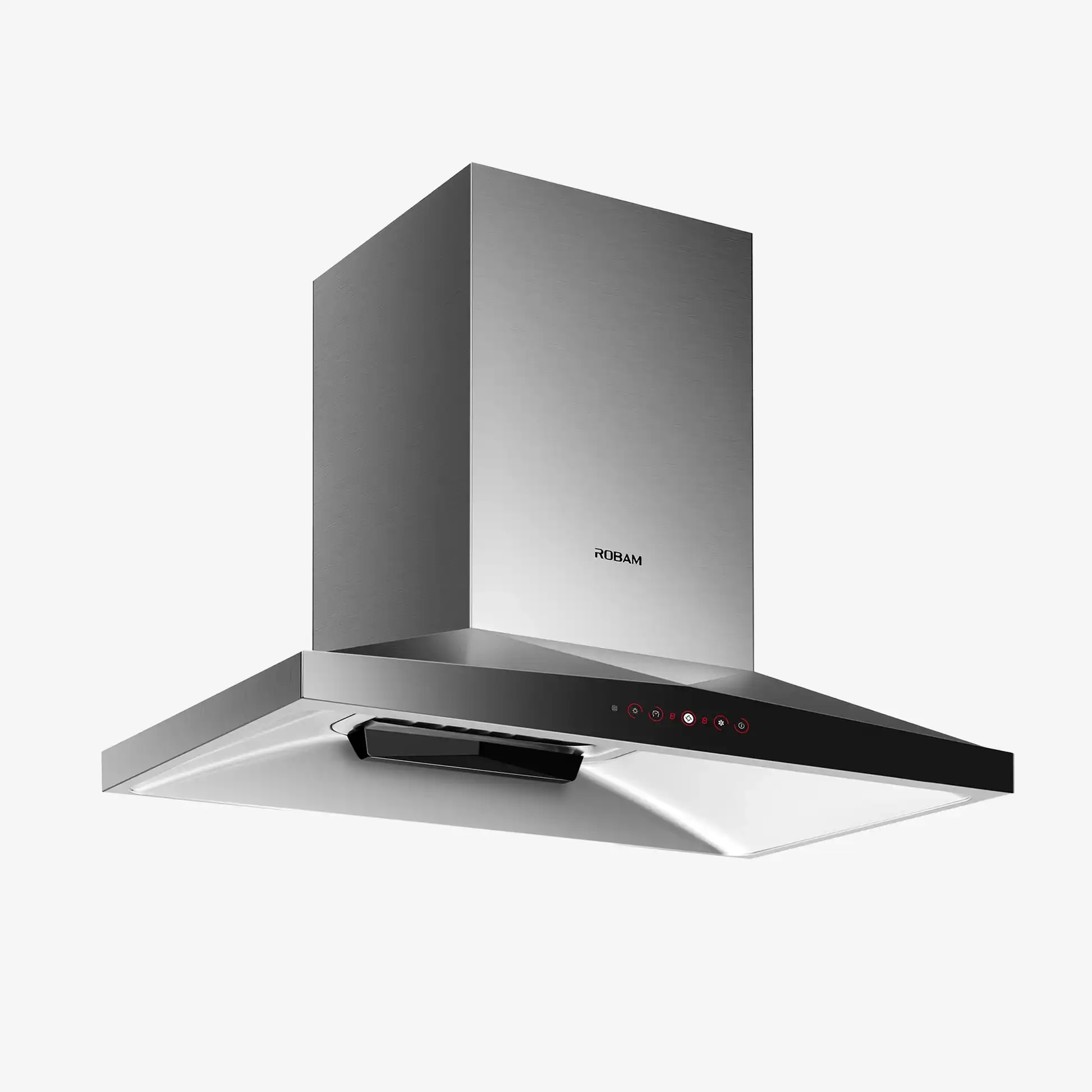
Picture a wok on the front burner of a Toronto condo. The pan is hot, the hood is running, and the first plume of smoke curls past the front edge of the canopy. The fan may be moving plenty of air. It simply has not captured the smoke before it spread into the room. This is why a Range hood Canada search should begin with the kitchen layout rather than the largest CFM figure on a product card.
Capture comes before extraction
A range hood has two jobs. Its shape and position must catch the rising plume, and its fan must then carry the contaminated air away. A shallow hood can struggle with a front burner because the smoke forms outside the capture area. High fan speed does not always compensate for poor geometry. Consider the hood width, depth, mounting height and distance between the front burners and the canopy edge.
An island installation behaves differently from a hood mounted against a wall. Cross-drafts from an open window, ceiling fan or nearby supply vent can push smoke away before it reaches the filters. Open-plan spaces often make these weaknesses more obvious because odours travel into living areas.
The duct is part of the system
A quoted airflow value may come from a laboratory setup unlike the installed kitchen. Once you add a long duct run, undersized pipe, tight elbows and an exterior termination, resistance increases. The installed airflow may be substantially lower. Before choosing a hood, sketch the route from the appliance to the outdoors. Identify the pipe diameter, total run, major bends and available exterior exit.
Avoid assuming that a flexible duct will solve awkward routing. Smooth, properly sized ductwork is generally preferable where local codes and the appliance installation instructions permit it. A recirculating unit that returns air to the room has different limitations: it may reduce some odours, but it cannot exhaust moisture and combustion by-products outdoors.
Noise matters because people actually cook
An extremely powerful setting is of limited everyday use if the noise is so unpleasant that nobody turns it on. Ask for sound data at several fan settings, not only the quietest advertised mode. If possible, hear a running model in person. In a real kitchen, a mid-range setting that gets used consistently may be more valuable than an impressive maximum setting that stays switched off.
Grease-filter access matters too. Heavy stir-frying produces residues on the baffles, mesh and surrounding surfaces. Filters that are awkward to remove tend to get cleaned less often. Check what the manufacturer says about cleaning frequency and dishwasher suitability rather than assuming every metal filter can be washed in the same way.
Canadian installation issues deserve an early conversation
Cold-weather operation and replacement air affect comfort. An exhaust fan removes indoor air, which must be replaced somehow. In a tightly sealed home, particularly one with other vented or combustion appliances, that pressure imbalance may require professional assessment. Local building rules and make-up-air requirements vary by jurisdiction and installation. A qualified installer can determine the applicable requirements.
In condos, the challenge may be even more basic: altering an exterior wall or tying into shared ventilation might not be allowed. Confirm permissions before ordering an appliance that depends on duct changes. Ask the condo board or property manager which alterations are permitted.
Choose for the way you cook
Someone who simmers soup three nights a week needs a different setup from a household that sears meat and stir-fries frequently. Compare available canopy coverage, duct compatibility, service access and tolerable noise before ranking products by CFM. Brands such as Robam Canada can be considered against those installation requirements, but the correct choice still depends on the room and the exhaust path.
Take photographs of the current stove, upper cabinets and duct exit to the installer. Include measurements. They are more useful than an argument about a single headline number.
A useful home comparison
When comparing two possible installations, put the drawings side by side. Mark the location of the front burner, the canopy edge and the proposed duct route. Also mark anything likely to divert the rising plume, such as an air-supply grille close to the cooking surface. Then compare the manufacturer's clearance requirements with what the cabinets allow. If one design requires an awkward duct reduction or a mounting height outside the permitted range, that is a genuine disadvantage, even if its catalogue airflow is higher. Installation constraints can settle an otherwise confusing product comparison without relying on subjective star ratings.
Official website: Robam

Responses (0)