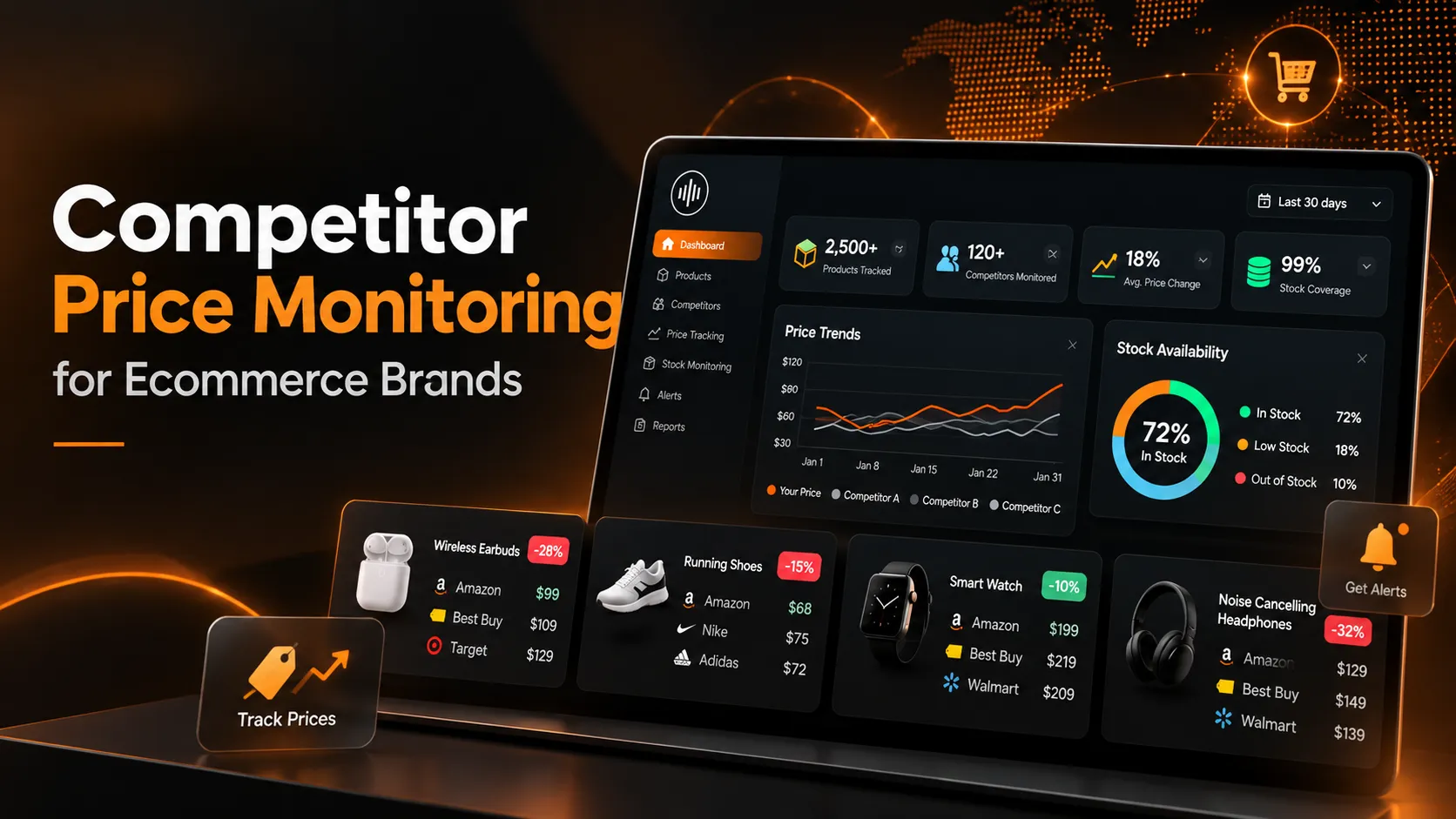
How Ecommerce Businesses Track Competitor Prices and Market Trends
The ecommerce market is becoming increasingly competitive. Thousands of online stores update their product prices, discounts, and stock availability every day. For businesses selling similar products, keeping track of these changes manually can be difficult and time-consuming.
This is where competitor price monitoring and ecommerce data intelligence become valuable.
What Is Competitor Price Monitoring?
Competitor price monitoring is the process of tracking product prices across multiple online stores and marketplaces.
For example, a retailer selling electronic accessories may want to know how competitors price similar products on Amazon, Walmart, eBay, and other ecommerce websites.
Instead of visiting each website manually, businesses can use automated data collection solutions to gather relevant product information.
This data can include:
- Product names and descriptions
- Current selling prices
- Discounts and promotional offers
- Product stock availability
- Product ratings and reviews
- Brand and category information
By analyzing these details, companies can better understand their competitive position.
Why Ecommerce Data Matters
Product pricing is only one part of ecommerce competition. Product availability, assortment, promotions, and customer preferences also influence purchasing decisions.
For example, when a competitor temporarily runs out of stock, another retailer may have an opportunity to attract customers looking for the same product.
Similarly, monitoring promotional campaigns can help businesses understand how frequently competitors offer discounts and which product categories receive the most attention.
Reliable ecommerce intelligence supports more informed business decisions.
How Web Scraping Supports Ecommerce Analytics
Web scraping is a method of collecting information from websites and organizing it into structured datasets.
When appropriate access and permissions are available, automated extraction can help businesses collect relevant product information at scale.
Collected data can be cleaned, categorized, matched across retailers, and prepared for further analysis.
Instead of working with disconnected product pages, businesses can analyze structured information in spreadsheets, databases, or interactive dashboards.
Turning Product Data Into Business Insights
Collecting data is only the beginning. Businesses need to transform raw information into meaningful insights.
Useful applications include identifying pricing changes, comparing product availability, tracking promotional activity, and monitoring product assortment across different retailers.
Historical data is particularly valuable because it helps businesses understand how pricing and availability change over time rather than relying on a single snapshot.
How NenoData Helps Businesses
NenoData provides web data extraction and ecommerce intelligence services for businesses seeking structured information from online sources.
Its solutions focus on product data collection, competitor price monitoring, marketplace intelligence, and custom data extraction projects.
Businesses interested in these capabilities can learn more about NenoData's web data solutions.
Conclusion
Understanding competitor pricing and market trends is important for ecommerce businesses operating in competitive markets.
By combining reliable product data, appropriate data collection methods, and effective analytics, companies can make better pricing decisions, identify market opportunities, and respond more efficiently to changing ecommerce conditions.



Responses (0)