
By Chari Sudarsan
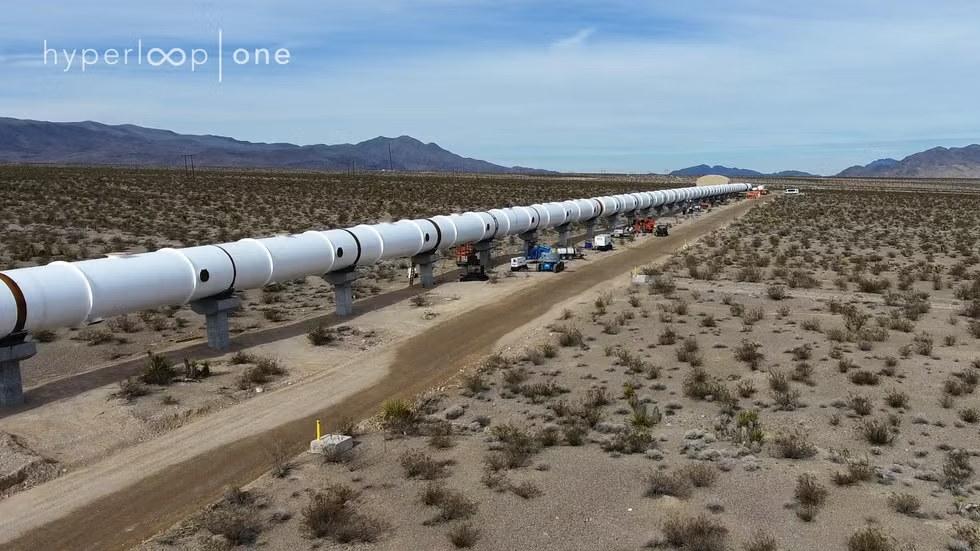
Freight is the wormhole that warps the drive to the Hyperloop we envision. A hyper route for a Hyperloop.
The futurist pitch for Hyperloop had always been the passenger pod, connecting big cities at near sonic speed. But the smarter first move is far less cinematic: freight.
Why freight goes first
Cargo bypasses the life safety certifications that human transit demands, which opens a faster path to commercialisation. Getting into service early creates a commercial breakthrough while letting engineers refine the technology in real world conditions. Freight loss, unlike loss of human life, carries a finite economic impact and is recoverable. Cargo is a lower stakes proving ground, so that by the time the system is ready for passengers it has already been validated over thousands of runs.
The number that sets the prize
India spends about 7.97 percent of its GDP on logistics, roughly Rs. 24.01 lakh crore in 2023 to 24, according to the NCAER assessment prepared for DPIIT. The same study prices freight by mode, and that is where the case sharpens. Rail moves a tonne one kilometre for about Rs. 1.96, road for Rs. 3.78, and air for about Rs. 72, close to 37 times the rail figure. Shippers pay it anyway. That premium is the price of time, and it is the gap a freight Hyperloop is built to sit in: rail level economics at air level speed.
Who actually pays for speed
Air freight carries under 1 percent of India's trade by volume but over 30 percent of it by value. That share is not coincidental. It is occupied by pharmaceuticals, semiconductor components and premium perishables, where a delayed shipment is not an operational inconvenience but a direct, measurable loss. India's pharmaceutical exports crossed 30 billion dollars in FY25, and in that trade cold chain integrity is not a preference, it is a hard operational requirement. A single temperature deviation does not merely degrade the product, it makes it unsellable.
What the surface network is losing
Rail is the cheapest mode on paper, yet it moves only about 27 percent of India's freight, which is why the National Rail Plan targets 45 percent by 2030. The shortfall is not about price, it is about speed and reliability, and the cost shows up in the fields. The NABCONS study for the Ministry of Food Processing Industries puts harvest and post harvest losses at roughly Rs. 1.53 lakh crore a year, with fruits losing 6 to 15 percent and vegetables 4.9 to 11.6 percent across the chain. Perishables command real premiums abroad, but only when they arrive intact.
Weather compounds this further. What begins as a 12 hour delay cascades into spoiled produce, missed export windows and broken supply commitments, damage no insurance clause fully recovers. These goods do not choose air freight because it is the ideal mode. They choose it because nothing else is fast enough in a time critical trade where speed draws the line between deal and deficit.
The hurdles are real
The initial setup cost is the obvious hurdle, and it should ease as the technology matures. The tougher constraints are physical. Because the tube runs at near vacuum to eliminate drag, the pod and tube cross sections have to be sized against the Kantrowitz limit. Once the pod is too large for the tube or moving too fast, the air squeezing past it chokes, the pod behaves like a piston and drag climbs sharply. The fixes are a wider tube, an onboard compressor or a lower cruise speed, and each costs something.
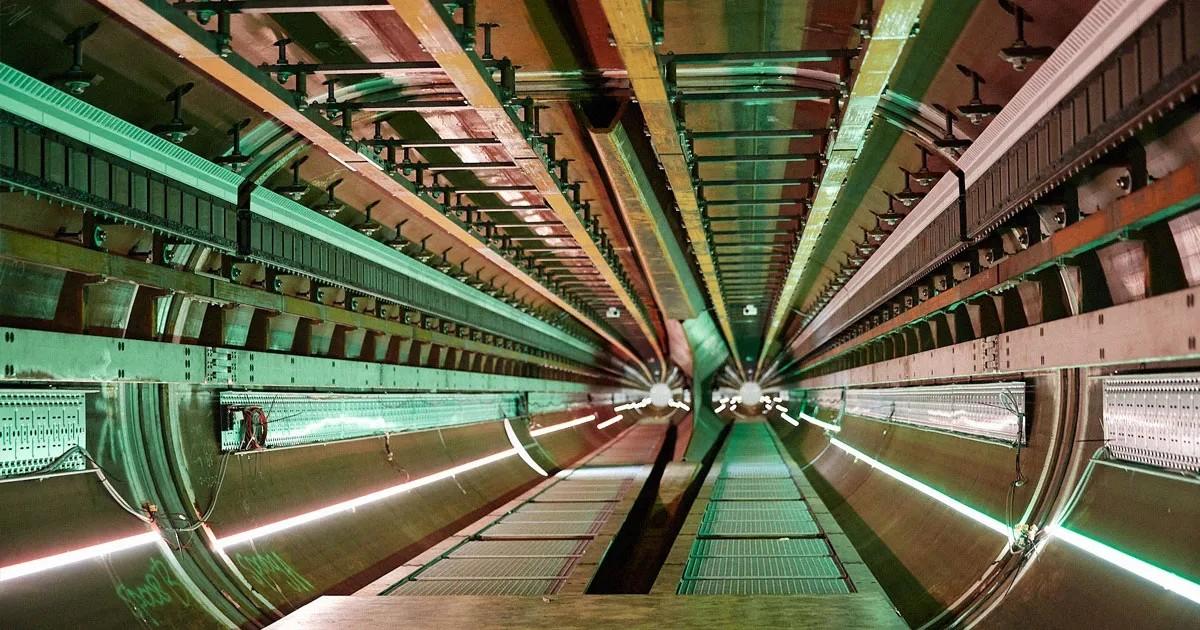
Inside the tube, where the hard problems live: blockage ratio, vacuum integrity and heat with nowhere to go.
Leaks are a separate failure mode. Losing vacuum along a section raises drag and heating where the pod is not designed for it, so leak detection and sectional isolation matter as much as the pumps. Land is the third constraint, since near sonic travel demands exceptionally straight track to keep g forces tolerable, making acquisition a geometry problem before it is a legal one. Thermal management is the fourth. A vacuum behaves like a giant thermos and removes convective cooling, so motor and battery heat must be moved by active liquid loops and phase change materials until the pod reaches a station.
The case
Freight first is the practical way to bring Hyperloop to India. It lets the technology be tested and refined while avoiding the strict safety rules human transit demands. By solving a shipping problem the market already pays for, in air freight rates and in spoiled cargo, the system can prove it works and build a solid business case long before it carries a single person.




Responses (0)