Low Blood Sugar (Hypoglycemia): Symptoms, Causes and How a CGM Can Help
Low blood sugar, medically known as hypoglycemia, is a condition in which glucose levels fall below the recommended range. It is particularly important for people with diabetes who use insulin or certain glucose-lowering medications.
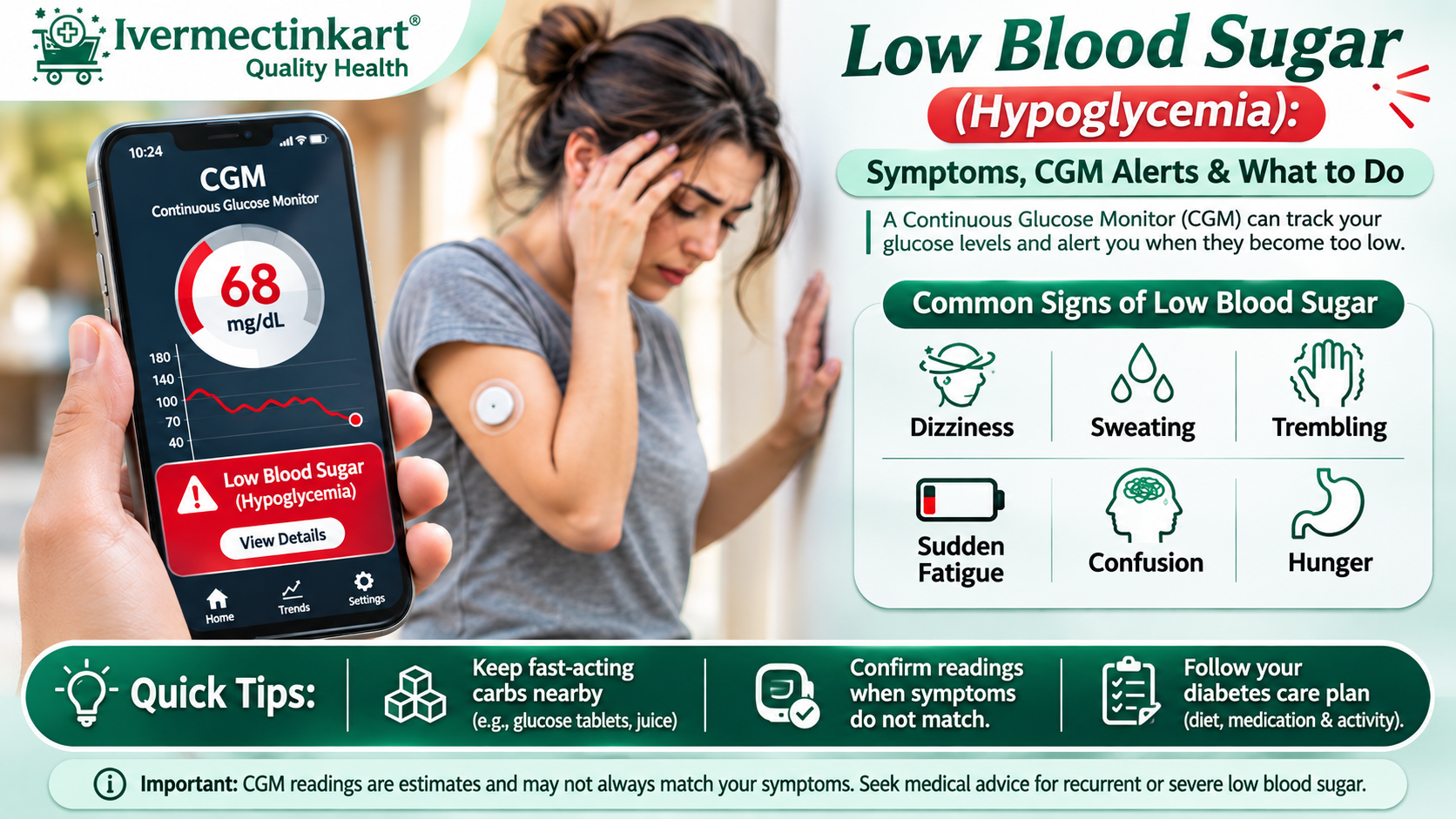
Symptoms such as dizziness, sweating, trembling, sudden fatigue, confusion, and hunger can develop when blood glucose becomes too low. Recognising these warning signs and knowing how to respond can help prevent serious complications.
A Continuous Glucose Monitor (CGM) can help people track glucose patterns and receive alerts when glucose levels become too low.
What Is Low Blood Sugar (Hypoglycemia)?
Blood glucose is the body's main source of energy. When glucose levels drop too low, the brain and other parts of the body may not receive enough energy to function normally.
For many people with diabetes, blood glucose below 70 mg/dL is considered low.
The example CGM display in our infographic shows a reading of 68 mg/dL, which is below this commonly used threshold.
Hypoglycemia can be mild, moderate, or severe. Severe episodes may cause significant confusion, seizures, or loss of consciousness and require immediate medical attention.
Common Symptoms of Low Blood Sugar
Low blood sugar symptoms can appear suddenly and may vary from person to person.
1. Dizziness
A person may feel lightheaded, weak, or unsteady when blood glucose falls below the recommended level.
2. Excessive Sweating
Sudden sweating can occur even when the surrounding temperature is normal. It is one of the body's possible warning responses to falling glucose.
3. Shaking or Trembling
Low blood glucose can activate the body's stress response, causing shaky hands, trembling, or a rapid heartbeat.
4. Sudden Fatigue
A person may experience unusual tiredness, weakness, or a sudden lack of energy.
5. Confusion
When glucose levels become too low, the brain may not receive enough energy. This can affect concentration, clear thinking, and decision-making.
6. Increased Hunger
Sudden hunger can also occur as the body responds to falling glucose levels.
Not everyone experiences noticeable warning signs. Some people with diabetes develop reduced awareness of hypoglycemia.
What Causes Low Blood Sugar?
Several factors can contribute to hypoglycemia, particularly in people with diabetes.
Common causes include:
- Diabetes medications: Insulin and certain medicines, including sulfonylureas, can sometimes lower glucose levels too much.
- Skipping meals: Missing or delaying meals can increase the risk, particularly after taking glucose-lowering medication.
- Physical activity: Exercise can lower glucose levels during activity and for several hours afterward.
- Alcohol consumption: Alcohol can increase the risk of low blood sugar, particularly when consumed without enough food.
- Illness: Eating less than usual or being unable to keep food down may affect glucose levels.
People experiencing repeated low readings should discuss their medication, food intake, and exercise patterns with a healthcare professional.
What Is a Continuous Glucose Monitor (CGM)?
A Continuous Glucose Monitor is a wearable medical device that tracks glucose levels throughout the day and night.
Most CGM systems use a small sensor inserted just under the skin, commonly on the upper arm or abdomen. The sensor measures glucose in the interstitial fluid and transmits information to a compatible smartphone, receiver, or insulin pump.
Depending on the device, CGM technology can provide:
- Regular glucose readings.
- Glucose trend graphs.
- Information about rising or falling glucose levels.
- High and low glucose alerts.
- Historical data that can be reviewed with healthcare professionals.
How Can a CGM Help Detect Low Blood Sugar?
One important benefit of CGM technology is its ability to monitor glucose trends and provide alerts when levels reach configured thresholds.
A CGM may help users in several ways.
1. Low Glucose Alerts
Compatible devices can notify users when glucose levels fall below a configured threshold. Some devices also offer predictive alerts.
2. Glucose Trend Monitoring
Trend arrows and graphs help users understand whether glucose levels are increasing, decreasing, or remaining relatively stable.
3. Overnight Monitoring
Depending on the device and alert settings, a CGM may provide low-glucose notifications during sleep.
4. Better Diabetes Management
Reviewing glucose patterns with a healthcare professional can help identify recurring low-glucose episodes and guide appropriate treatment adjustments.
However, CGMs measure glucose in interstitial fluid rather than directly in the blood. Readings can lag behind blood glucose changes, particularly when glucose levels are changing quickly.
When symptoms do not match the CGM reading, follow the device instructions and your healthcare professional's guidance about confirming the result with a blood glucose meter.
What Should You Do When Blood Sugar Is Low?
For an alert adult who can swallow safely, the commonly recommended approach is the 15-15 rule.
- Consume 15 grams of fast-acting carbohydrates, such as glucose tablets or glucose gel.
- Wait 15 minutes.
- Recheck blood glucose.
- If it remains below 70 mg/dL, repeat the treatment.
- Once glucose returns to the target range, follow your healthcare professional's advice about having a meal or snack.
Other possible sources of fast-acting carbohydrates include approximately 4 ounces (120 ml) of fruit juice or regular, non-diet soda.
High-fat foods such as chocolate are not ideal for initial treatment because they can slow glucose absorption.
Important: Children may need a different amount of carbohydrates. Follow their individual medical care plan.
What Happens During Severe Hypoglycemia?
Severe hypoglycemia can cause confusion, seizures, unconsciousness, or an inability to swallow safely.
This is a medical emergency.
- Do not give food, drinks, or glucose tablets by mouth to someone who is unconscious or unable to swallow safely.
- Administer prescribed glucagon if available and someone is trained to use it.
- Call 911 for emergency medical assistance.
- Follow the emergency instructions provided by the person's healthcare team.
Family members and caregivers should know how to recognise severe hypoglycemia and where prescribed glucagon is stored.
Practical Tips to Help Prevent Low Blood Sugar
People at risk of hypoglycemia can follow several precautions as part of their diabetes care plan.
- Keep fast-acting carbohydrates readily available.
- Monitor glucose levels as recommended by your healthcare professional.
- Avoid skipping or unnecessarily delaying meals.
- Understand how physical activity may affect your glucose levels.
- Follow your prescribed medication schedule.
- Review recurring low readings with your healthcare team.
- Make sure family members or caregivers know how to respond to a severe episode.
Never adjust insulin or other diabetes medications without professional guidance.
When Should You Consult a Healthcare Professional?
Consult a healthcare professional if you experience:
- Frequent low glucose readings.
- Repeated dizziness, sweating, or trembling.
- Low glucose episodes during sleep.
- Symptoms that do not match CGM readings.
- Difficulty managing glucose levels despite following your care plan.
Repeated hypoglycemia may indicate that your diabetes management plan needs reassessment.
Final Thoughts
Low blood sugar can affect everyday activities and may become dangerous if left untreated. Recognising symptoms such as dizziness, sweating, trembling, fatigue, confusion, and hunger is an important part of diabetes management.
Continuous Glucose Monitors can help users track glucose patterns and receive alerts when levels become too low. However, CGM readings should always be interpreted according to device instructions and individual medical guidance.
Keeping fast-acting carbohydrates available, monitoring glucose regularly, and following a personalised diabetes care plan can help reduce the risks associated with hypoglycemia.
Explore more health information at IvermectinKart.
Medical Disclaimer: This article is for educational purposes only. It does not replace professional medical advice, diagnosis, or treatment. Consult a qualified healthcare professional for individual guidance regarding blood glucose monitoring, hypoglycemia, and diabetes management.
Medical References
- CDC – Treatment of Low Blood Sugar (Hypoglycemia)
- NIDDK – Continuous Glucose Monitoring
- American Diabetes Association – Continuous Glucose Monitors
- FDA – Blood Glucose Monitoring Devices
Low Blood Sugar? How a CGM Can Help You Stay Safe
Low blood sugar (hypoglycemia) can cause dizziness, sweating, trembling, sudden fatigue, confusion, and hunger.
A Continuous Glucose Monitor (CGM) tracks glucose trends and can provide alerts when levels become too low.
Stay prepared:
- Keep fast-acting carbohydrates available.
- Monitor your glucose regularly.
- Follow your diabetes care plan.
- Discuss recurring low readings with your healthcare professional.
Understanding the warning signs and responding promptly can help reduce the risks of hypoglycemia.
#Hypoglycemia #LowBloodSugar #CGM #DiabetesCare #BloodGlucose


Responses (0)