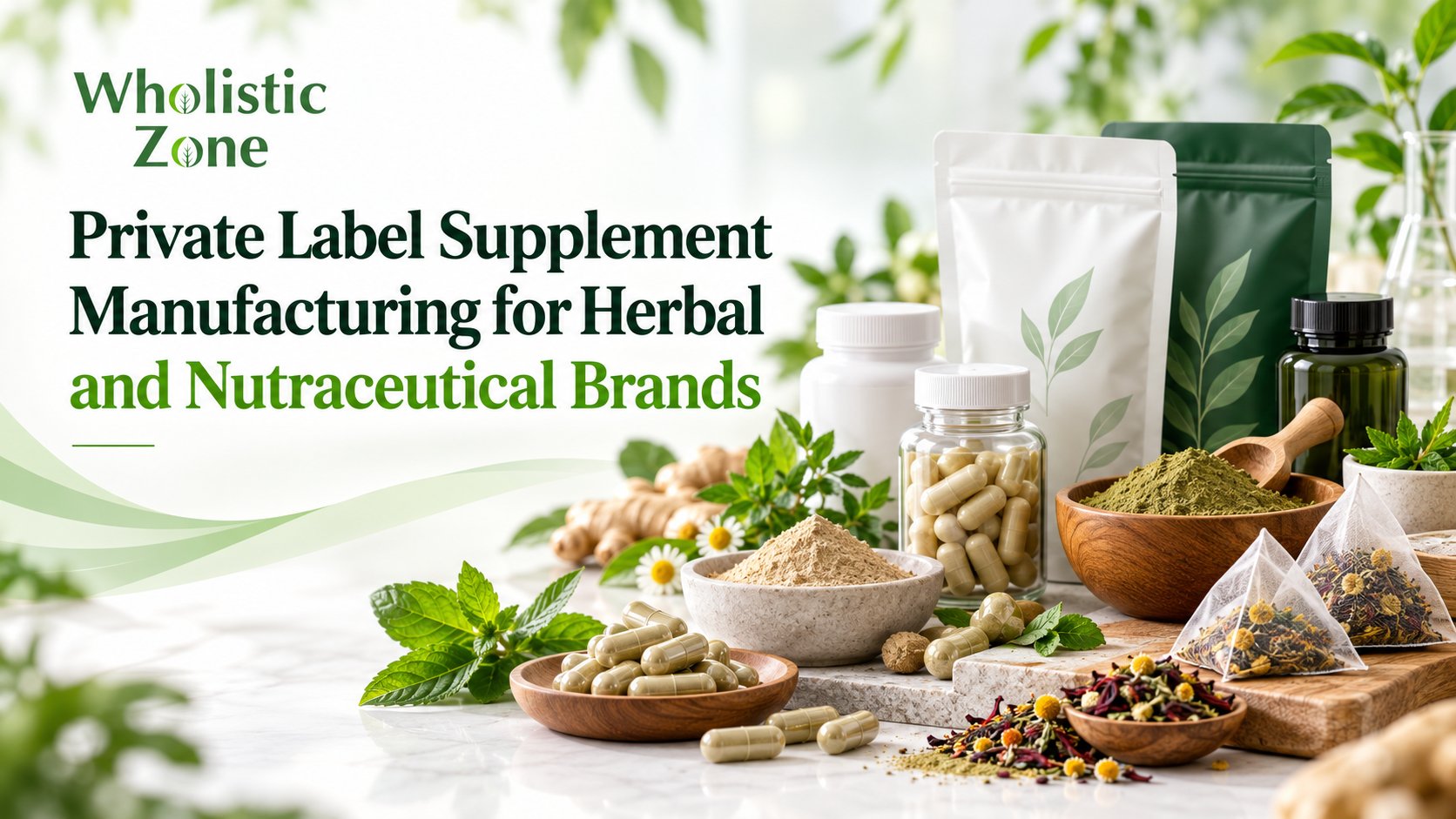
Launching a supplement brand involves more than choosing an ingredient and designing a label. A reliable manufacturing plan connects formulation, sourcing, production, testing, packaging, labeling, and fulfillment. Private label supplement manufacturing helps brands coordinate those steps without building their own production facility. For herbal and nutraceutical companies, the right partner should make technical decisions clearer while supporting product consistency, regulatory readiness, and customer trust.
What Private Label Supplement Manufacturing Actually Covers
Private label supplement manufacturing means a qualified manufacturer produces supplements sold under another company’s brand. Some businesses select an existing formula, while others request a customized blend based on their customer, dosage format, ingredient preferences, and positioning.
A project can include raw material sourcing, formula development, flavor work, blending, encapsulation, powder filling, tea blending, packaging, label support, quality checks, and shipment. The exact scope varies, so brands should confirm responsibilities before approving a quote.
Start With the Product Goal, Not the Dosage Form
Choosing a format too early can create limitations. A more appropriate beginning would be with customer need and usage.
Ask practical questions. Is the formula designed for convenient daily use? Does it require several grams of ingredients? Is taste part of the experience? Will customers prepare it with water? Does it include botanicals suited to tea?
The answers help determine whether capsules, powders, tea bags, gummies, or another format makes sense. They also influence serving size, packaging, cost, shipping weight, and customer experience.
Capsules Manufacturing for Measured, Convenient Products
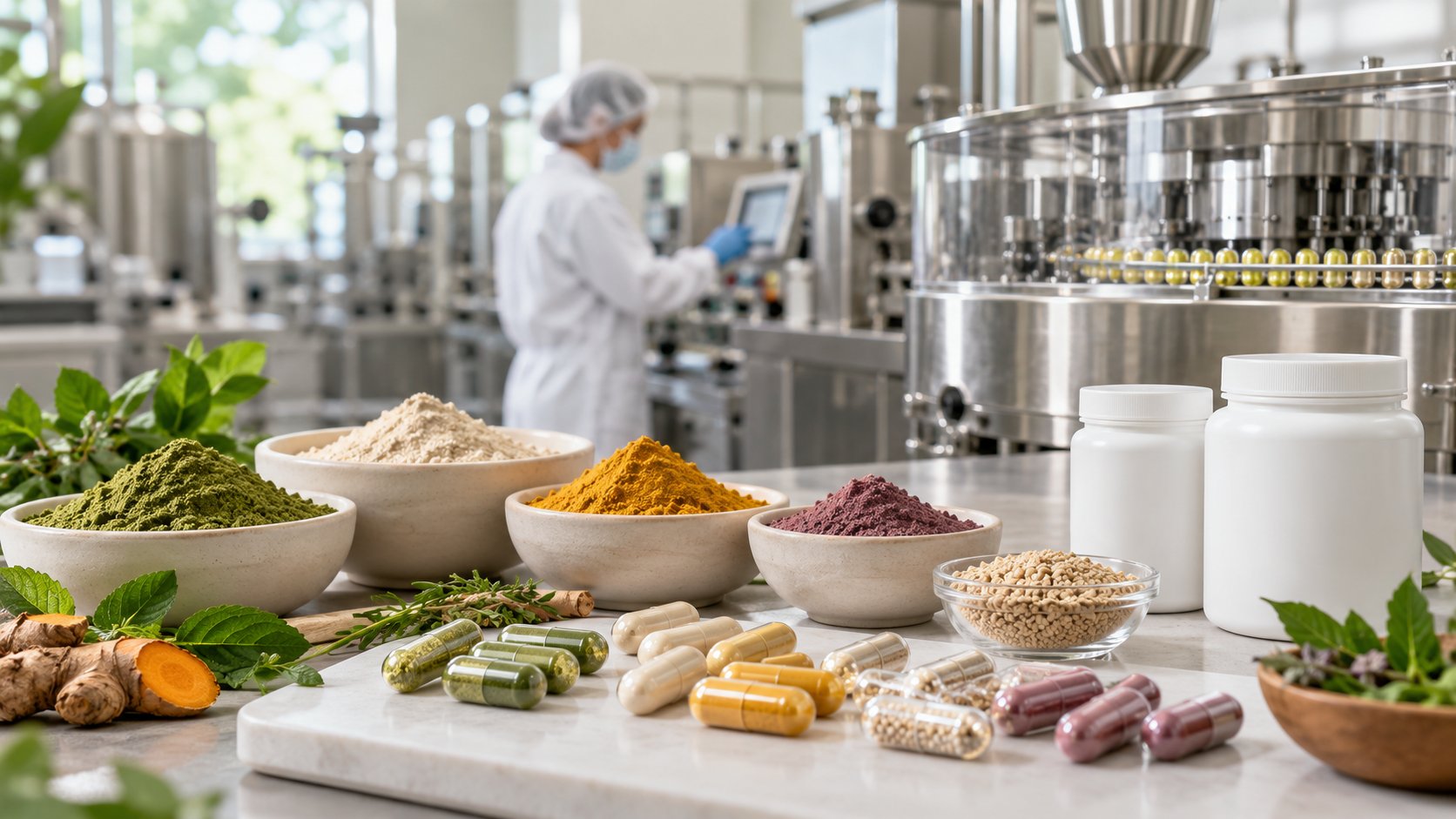
Capsules are popular because they provide a portable, premeasured format and work with many herbal and nutraceutical ingredients. Capsules manufacturing usually involves ingredient verification, sifting, blending, filling, polishing, inspection, and packaging.
Brands should ask how the manufacturer manages blend uniformity, capsule compatibility, fill weight, and inspection. It is also important to understand whether the formula fits within the intended capsule count.
A formula requiring large ingredient quantities may need several capsules per serving. In that situation, powder manufacturing may be more practical.
Powder Manufacturing for Flexible Formulas
Powders can accommodate larger ingredient quantities and are common in greens blends, protein products, herbal powders, drink mixes, and functional nutrition formulas.
Good powder manufacturing requires attention to particle size, blending consistency, moisture, flavor, sweetness, flow, and packaging. If the product is flavored, brands should evaluate samples rather than rely only on a written formula.
Tubs, jars, pouches, sachets, and stick packs create different costs and experiences. Single serve sachets improve portability, while larger pouches can reduce packaging per serving.
Tea Bag Manufacturing for Botanical Brands
Tea bag manufacturing suits brands built around herbs, flowers, spices, and traditional botanicals. It combines formulation with a sensory experience, so aroma, cut size, steeping performance, and flavor balance matter.
Manufacturers may offer pyramid bags, square bags, envelopes, cartons, or other formats. Brands should test the finished blend in the intended bag type because material, size, and leaf cut can influence infusion.
Clear brewing instructions also matter. Water temperature, steeping time, and serving guidance help customers prepare the product consistently.
Quality, Testing, and Documentation Matter
A strong private label supplement project depends on more than attractive packaging. Brands should ask how ingredients are sourced, identified, tested, and documented.
Useful questions include whether suppliers are qualified, what testing is performed, how lot numbers are tracked, and what documentation is available. Requirements vary by product type and market, so compliance should be discussed before finalizing packaging or claims.
No manufacturer replaces a brand’s responsibility to understand the rules applying to its products, labels, marketing, and sales channels.
Wholistic Zone and End to End Brand Support
Wholistic Zone positions itself as a B2B private label and contract manufacturing partner for supplements, herbal teas, nutraceuticals, beauty products, and related wellness categories. Its published services include custom formulation, capsule manufacturing, powder manufacturing, tea bag manufacturing, packaging, label design, testing, and production support.
For brands comparing partners, the useful question is not simply how many services are offered. Evaluate how well those services connect. Clear communication between formulation, sourcing, production, packaging, quality, and delivery can reduce delays and help products move smoothly from concept to inventory.
Brands considering Wholistic Zone should request current details about minimum order quantities, lead times, formulation options, testing, packaging choices, target market requirements, and pricing for their project.
How to Compare Private Label Supplement Partners
Selecting a manufacturer should not be done solely on unit price. Compare the total project.
Review formulation support, minimum order quantities, ingredient sourcing, testing, production capabilities, communication, packaging options, lead times, documentation, and scalability. Ask for a detailed quotation showing what is included and what may create additional charges.
A manufacturer should explain its process clearly. Vague answers about sourcing, quality, or testing are a reason to investigate further.
Frequently Asked Questions
How do I choose between private label and custom formulation?
Choose private label for a faster launch with an existing formula. Choose custom formulation when you need a unique ingredient blend, serving size, or product concept.
Which supplement format should a new brand choose?
Pick the format that fits customer use. Capsules offer convenience, powders suit larger servings, and tea bags work well for herbal blends and brewed products.
What should I share before requesting a quote?
Provide your product idea, ingredients, preferred format, order quantity, packaging needs, target market, and whether you want a stock or custom formula.
Build the Product Around Trust
Successful private label supplement manufacturing is not simply placing a logo on a bottle. It is a coordinated process connecting the product idea with sourcing, formulation, production, testing, packaging, and customer expectations.
Brands improve decisions by defining product purpose, choosing suitable formats, asking quality questions, and selecting transparent partners.
Whether the final product uses capsules manufacturing, powder manufacturing, or tea bag manufacturing, the goal should remain the same: create a product that is understandable, consistently produced, appropriately documented, and useful to the people who buy it.

Responses (0)