
Introduction
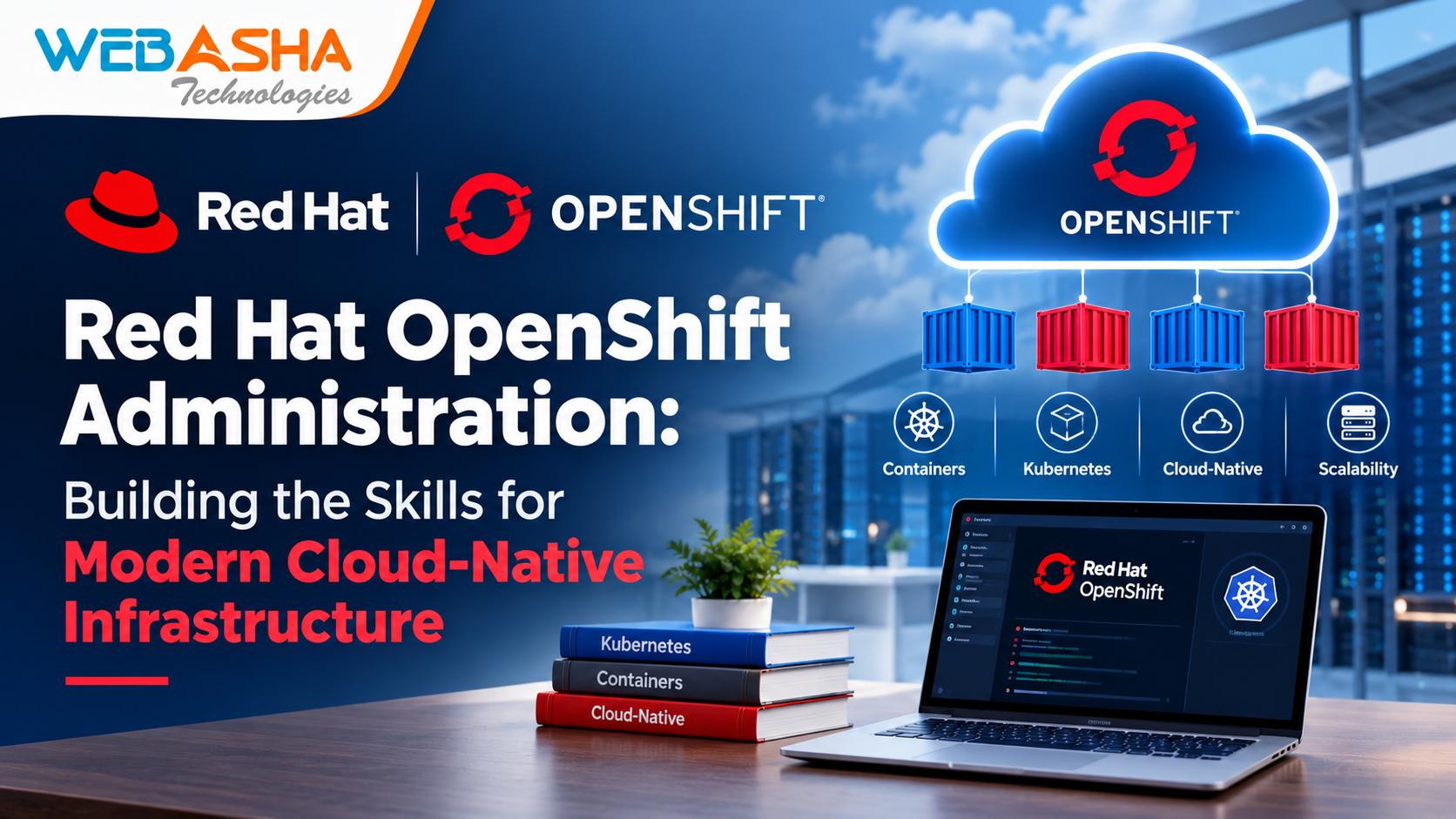
Modern applications increasingly run in containers, making container orchestration an important skill for IT professionals. Red Hat OpenShift provides an enterprise Kubernetes platform that helps teams deploy, manage, secure, and scale containerized applications.
Learning OpenShift administration gives system administrators, DevOps engineers, site reliability engineers, and platform engineers practical knowledge for managing applications and production clusters.
What Is Red Hat OpenShift?
Red Hat OpenShift is a Kubernetes-based container platform that provides tools for application deployment, cluster management, networking, security, and automation.
Kubernetes manages containerized workloads, while OpenShift adds enterprise-oriented capabilities and an integrated developer and administrator experience. Organizations use the platform to support application delivery across data centers and cloud environments.
Essential OpenShift Administration Skills
1. Managing Projects, Users, and Access
Administrators need to understand how OpenShift organizes workloads into projects and controls access through authentication and role-based access control (RBAC).
Important tasks include creating users and groups, assigning roles, managing permissions, and reviewing access policies. Proper access management helps ensure that users and applications receive only the permissions they need.
2. Deploying Applications
OpenShift administrators should know how to deploy and update applications using Kubernetes resource manifests.
YAML files describe resources such as deployments, services, pods, and configuration objects. Administrators can also work with OpenShift templates, Helm charts, and Customize to manage application configurations across different environments.
3. Networking and Routes
Networking connects applications with other services and external users. OpenShift administrators work with services, routes, ingress, and network policies.
TLS certificates help protect network communication, while network policies control traffic between workloads. Understanding these features is important when operating applications in shared cluster environments.
4. Application and Cluster Security
Security is a central part of production cluster administration. Administrators should understand service accounts, secrets, security context constraints, and permissions.
Security context constraints help control the privileges available to workloads. Administrators should also understand how to protect credentials, restrict unnecessary access, and apply suitable security policies.
5. Operators and Cluster Updates
OpenShift uses Operators to automate the installation and management of applications and platform components.
Administrators should learn how to install, update, and remove Operators, as well as monitor their status. Cluster updates also require planning and validation to reduce disruption to running workloads.
6. Resource Management and Developer Self-Service
Clusters often support multiple development teams. Resource quotas and limit ranges help control how much CPU and memory projects can consume.
Project templates and self-service capabilities allow teams to request or create resources within administrator-defined boundaries. These features help maintain consistency and manage shared infrastructure.
Why Hands-On Practice Matters
Reading about Kubernetes and OpenShift concepts is useful, but practical lab work helps learners understand how the platform behaves.
Useful exercises include:
- Deploying an application from a YAML manifest.
- Creating projects, users, groups, and role bindings.
- Configuring services and routes.
- Applying network policies and TLS certificates.
- Installing and managing an Operator.
- Setting resource quotas and limit ranges.
- Troubleshooting failed deployments and application connectivity.
- Practicing cluster maintenance and update procedures.
Working through these scenarios helps build troubleshooting skills and familiarity with everyday administrative tasks.
Preparing for the EX280 Certification
The Red Hat EX280 exam evaluates practical OpenShift administration skills. Preparation should include managing access, deploying applications, configuring networking and security, working with Operators, and performing cluster administration tasks.
Learners should have a comfortable understanding of Linux command-line operations and basic container and Kubernetes concepts before progressing to advanced OpenShift administration.
The exam is performance-based, so practicing tasks in a real or suitable lab environment is an important part of preparation.
Career Applications
OpenShift knowledge is relevant to roles such as:
- OpenShift Administrator
- Kubernetes Administrator
- DevOps Engineer
- Platform Engineer
- Site Reliability Engineer
- Cloud Infrastructure Engineer
The specific skills required vary by role and employer. Linux, networking, Kubernetes, automation, and troubleshooting knowledge can complement OpenShift expertise.
Learning OpenShift with WebAsha Technologies
Learners interested in structured OpenShift administration training can explore the DO280 | EX280 Red Hat OpenShift Administration II program offered by WebAsha Technologies.
The course page describes online and classroom learning options, practical labs, and topics including RBAC, application deployment, network security, Operators, and cluster updates.
Explore the course details: WebAsha Technologies
Conclusion
Red Hat OpenShift administration combines Kubernetes knowledge with practical skills in application deployment, access management, networking, security, and cluster operations. Building these skills through hands-on exercises can help IT professionals understand how enterprise container platforms are managed and maintained.







Responses (0)