
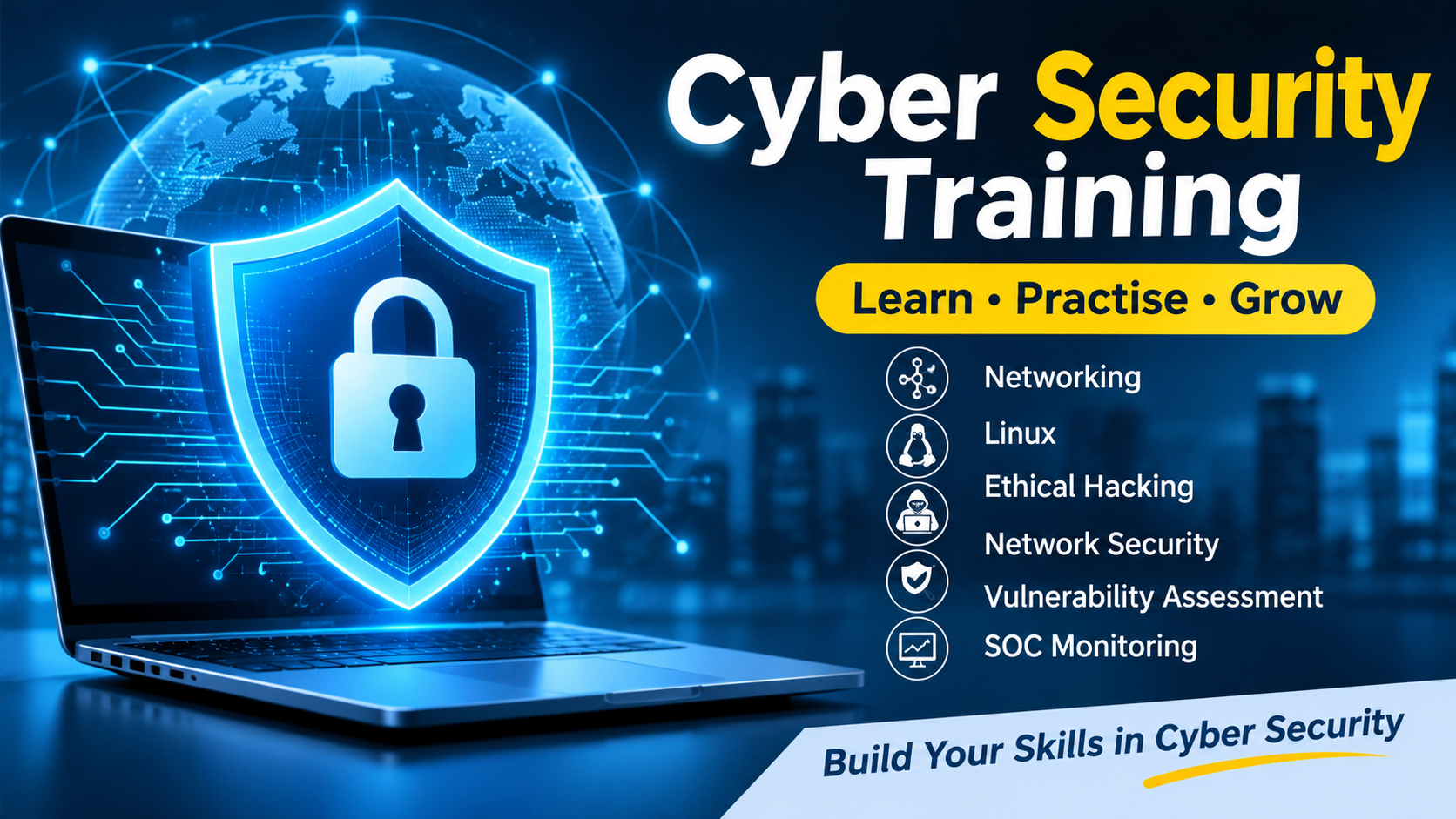
The internet makes life easier. We use it for shopping, banking, learning, and work. But online threats are also increasing.
Hackers may try to steal passwords, access private data, or damage computer systems. Cyber security helps protect people and businesses from these risks.
If you are new to this field, you can start with a few basic skills. Here are seven important topics to learn.
1. Learn Computer Networking
Networking is the first step in cyber security. It explains how computers and devices connect.
Start with basic topics such as IP addresses, DNS, ports, routers, and firewalls. These concepts help you understand how data moves across a network.
2. Understand Linux
Linux is widely used in servers and security systems. Many cyber security tools also run on Linux.
Start with simple commands. Learn how to manage files, users, and permissions. Regular practice will help you become more confident.
3. Explore Ethical Hacking
Ethical hacking means testing a system with permission. It helps find security weaknesses before attackers can misuse them.
You can learn about scanning, basic testing, and security reports. Always practice in a legal lab or on systems you are allowed to test.
4. Study Network Security
Network security protects connected devices and systems. It helps prevent unwanted access.
Learn about firewalls, strong passwords, encryption, and secure network settings. These basics are useful in many IT roles.
5. Learn Vulnerability Assessment
A vulnerability is a weakness in a computer system or application.
A vulnerability assessment helps find these weaknesses. Security teams use the results to fix problems and reduce risk.
6. Understand SOC Monitoring
SOC stands for Security Operations Centre. A SOC team watches systems for unusual activity.
Team members review alerts, check security logs, and help respond to incidents. This is an important area of modern cyber security.
7. Practise with Security Tools
Practical work helps turn theory into useful skills.
Beginners can explore tools such as:
- Wireshark: Helps study network traffic.
- Nmap: Helps scan networks and discover devices.
- Kali Linux: Provides tools for authorized security testing.
- Burp Suite: Helps test web application security.
Use these tools only in authorized labs and test environments.
How to Start Learning Cyber Security
You do not need to learn everything at once.
Start with computer basics and networking. Then learn Linux and security concepts. After that, practice with tools in a safe lab.
Build small projects and keep notes about what you learn. Regular practice can help you improve over time.
Learn with WebAsha Technologies
WebAsha Technologies offers cyber security training in Pune. Learners can explore topics such as networking, Linux, ethical hacking, and security testing.
A structured course can help beginners follow a learning path and practice important concepts.
To explore the course, visit:
Webasha Technologies Cybersecurity Course
Final Thoughts
Cyber security is a growing area of technology. It offers many topics to explore, from network protection to security monitoring.
Start with the basics, practice regularly, and keep learning. Every new skill can help you understand how to protect digital systems.
Learn. Practise. Certify. Grow.





Responses (0)