
Introduction
Energy is essential for modern life. From household appliances and transportation to manufacturing industries and large infrastructure projRenewable and Non Renewable Energy Sources in India Their Types Benefits and Future
ects, almost every activity depends on a reliable supply of electricity and fuel. As India's population, economy and industrial sector continue to develop, the demand for energy is also increasing.
However, the way energy is generated matters just as much as the amount of energy consumed. Traditional energy resources have supported economic growth for decades, while renewable technologies are creating new opportunities for cleaner and more sustainable power generation.
Understanding renewable and non-renewable energy sources helps individuals, businesses and industries make informed decisions about energy consumption. It also highlights why a balanced approach to electricity generation, energy efficiency and infrastructure development is important for India's future.
What Are Renewable Energy Sources?
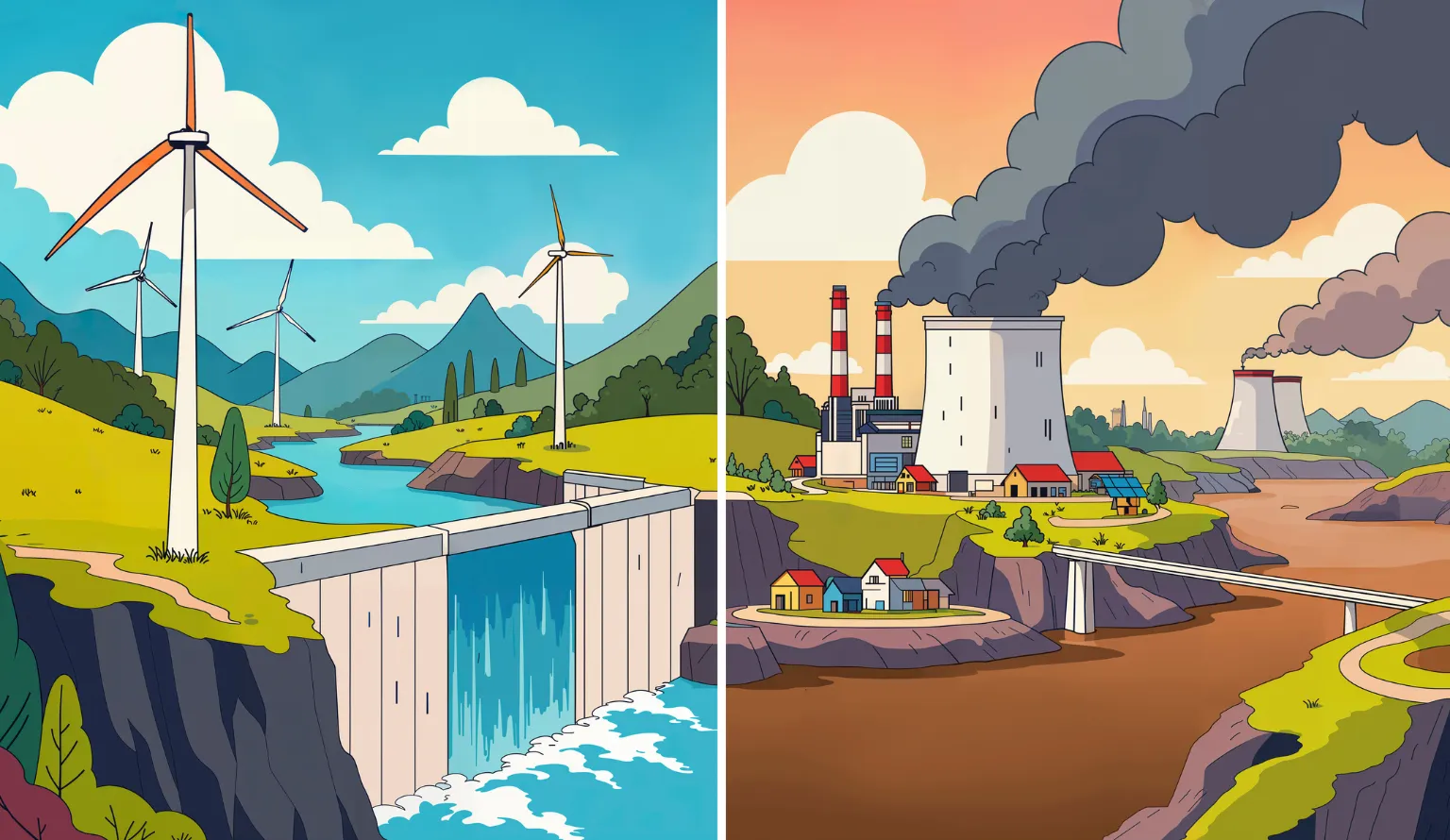
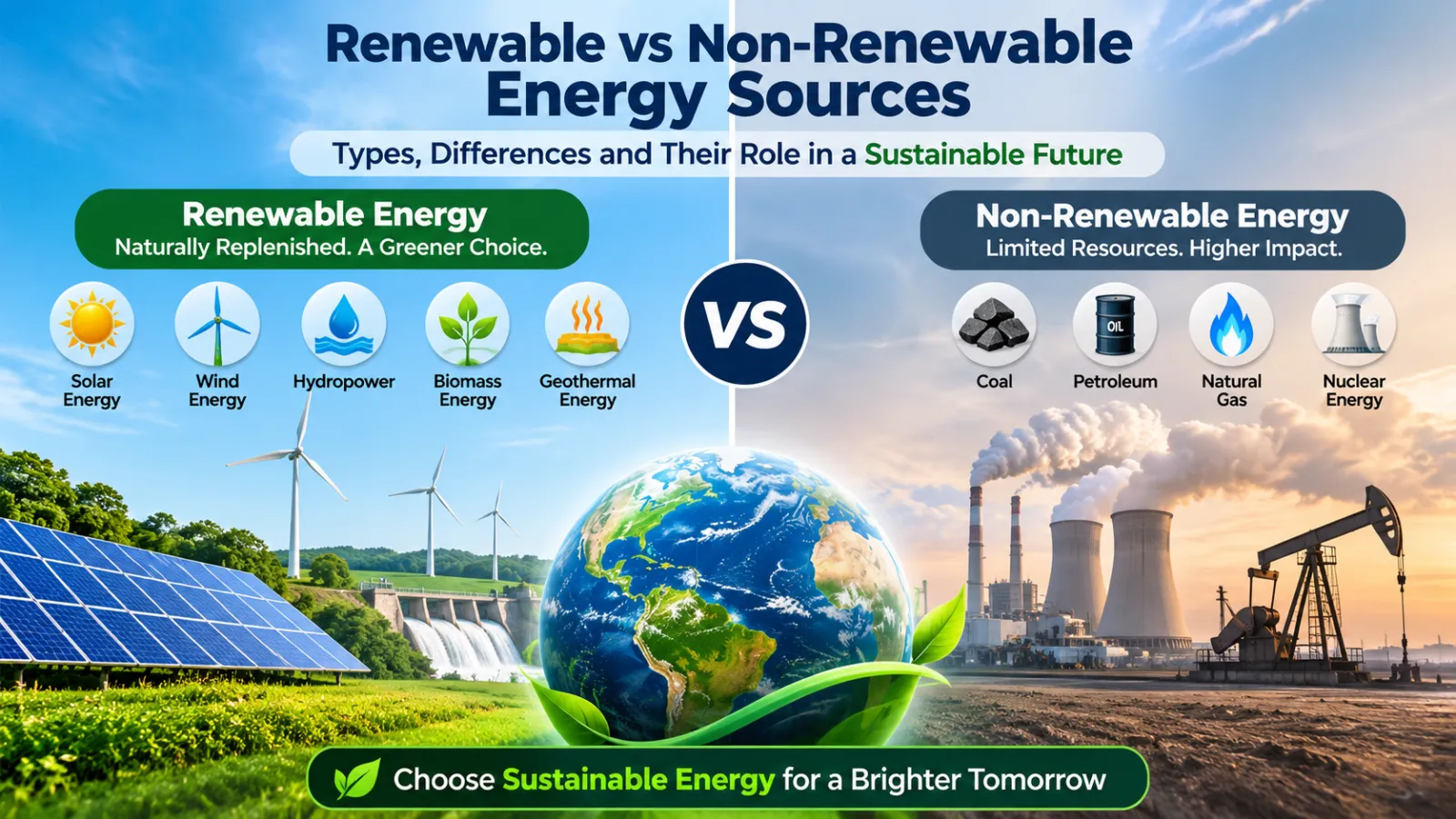
Renewable energy sources are natural resources that replenish themselves over time. They provide energy through naturally occurring processes such as sunlight, wind movement, flowing water and organic matter.
Unlike fossil fuels, renewable resources are not consumed from a limited underground reserve. Their availability depends on natural conditions, geographical location and the technology used to convert them into usable energy.
Renewable energy is becoming an important part of modern electricity systems because it can help diversify energy supply and reduce dependence on fossil fuels.
Major Types of Renewable Energy
1. Solar Energy
Solar energy is generated by capturing sunlight and converting it into electricity or heat. Solar photovoltaic panels use sunlight to produce electricity, while solar thermal technologies use solar heat for different applications.
Solar power is suitable for residential buildings, commercial establishments, industrial facilities and large-scale solar parks. In India, the availability of sunlight across many regions makes solar energy an important option for expanding clean electricity generation.
2. Wind Energy
Wind energy uses the movement of air to rotate turbine blades. These turbines drive generators that produce electricity.
Wind farms are developed in areas with suitable wind conditions. Wind power can complement solar generation because wind availability varies according to location, weather and time.
3. Hydropower
Hydropower generates electricity by using the energy of moving or stored water. Water flowing through turbines drives generators to produce electricity.
Hydropower projects can provide significant electricity generation and, in some configurations, support flexibility in power systems. Their development requires careful consideration of water availability, land use and environmental impacts.
4. Biomass Energy
Biomass energy is produced using organic materials such as agricultural residues, certain types of waste and other biological resources.
Depending on the technology, biomass can be converted into heat, electricity or biofuels. It can also create opportunities to make productive use of suitable organic waste materials.
5. Geothermal Energy
Geothermal energy uses heat from beneath the Earth's surface. This heat can be used directly for certain applications or converted into electricity where suitable geological conditions exist.
Although its use depends heavily on location, geothermal energy is another renewable technology with potential applications.
What Are Non-Renewable Energy Sources?
Non-renewable energy sources come from finite natural resources that take extremely long periods to form. They cannot be replenished at the same rate at which people consume them.
These resources have played a major role in electricity generation, transportation, industrial development and economic activity. Their established infrastructure and energy density have made them important components of energy systems around the world.
However, extracting and using many non-renewable resources creates environmental challenges, including greenhouse gas emissions, air pollution and land disturbance.
Major Types of Non-Renewable Energy
1. Coal
Coal is a fossil fuel formed from ancient plant material over geological periods. It is widely used in thermal power plants and certain industrial processes.
Coal-based power generation can provide electricity when required, but burning coal releases carbon dioxide and other pollutants. Mining can also affect land, water resources and surrounding ecosystems.
2. Petroleum or Oil
Petroleum is a liquid fossil fuel extracted from underground reservoirs. It is refined into products such as petrol, diesel, aviation fuel and other petroleum-based materials.
Oil is especially important in transportation and industrial activities. However, its combustion contributes to greenhouse gas emissions and air pollution.
3. Natural Gas
Natural gas is a fossil fuel primarily composed of methane. It is used for electricity generation, industrial heating, cooking and several manufacturing processes.
Natural gas generally produces less carbon dioxide during combustion than coal for an equivalent amount of energy, but it is still a fossil fuel. Methane leakage during production and transportation is also an important environmental concern.
4. Nuclear Energy
Nuclear power plants generate electricity through controlled nuclear reactions, commonly using uranium as fuel. These reactions release heat, which is used to produce steam and drive turbines.
Nuclear energy produces very low operational greenhouse gas emissions, but uranium is a finite resource. Radioactive waste management, safety requirements and high project costs are important considerations.
Difference Between Renewable and Non-Renewable Energy Sources
Although both categories provide energy for homes, businesses and industries, they differ in several important ways.
| Comparison factor | Renewable energy | Non-renewable energy |
|---|---|---|
| Availability | Naturally replenished | Available in finite reserves |
| Examples | Solar, wind, hydro and biomass | Coal, oil, natural gas and uranium |
| Environmental impact | Generally lower operational emissions | Fossil fuels produce significant emissions |
| Resource availability | Depends on natural conditions | Depends on reserves and extraction |
| Energy storage | Often benefits from storage solutions | Fuel can often be stored for later use |
| Long-term sustainability | Supports long-term resource availability | Resources can eventually be depleted |
| Infrastructure | Requires suitable generation and grid systems | Uses established extraction and generation infrastructure |
The main difference is that renewable resources are naturally replenished, while non-renewable resources are limited and cannot be replaced quickly after consumption.
Advantages of Renewable Energy
Renewable energy offers several advantages that make it valuable for future electricity systems.
Lower operational emissions: Solar and wind power generate electricity without directly burning fossil fuels during operation. This can help reduce the carbon intensity of electricity generation.
Diversified energy supply: Using different renewable resources can reduce dependence on a single fuel source and improve energy diversification.
Long-term resource availability: Sunlight, wind and flowing water are naturally replenished, although their availability varies by location and conditions.
Business sustainability: Businesses can explore renewable power to support environmental objectives and manage their energy requirements.
Technology development: Growth in renewable energy encourages innovation in solar modules, wind turbines, batteries, power electronics and grid management.
Challenges of Renewable Energy
Renewable energy also comes with practical challenges that need careful planning.
Solar and wind generation depend on weather and natural conditions. Their output may vary throughout the day and across seasons.
Initial project costs, land availability, transmission infrastructure and equipment maintenance can also influence project development.
Energy storage, better forecasting, grid modernisation and hybrid energy systems can help address some of these challenges. The right solution depends on local conditions and electricity demand.
Why Non-Renewable Energy Is Still Used
Non-renewable energy continues to play a role in many electricity systems because existing power plants, fuel supply networks and industrial infrastructure have been developed around these resources.
Some conventional power plants can provide electricity when renewable generation is low. Fossil fuels are also used in industrial processes and transportation where alternatives may require additional infrastructure or technological changes.
However, dependence on finite resources creates long-term concerns about fuel availability, price fluctuations, emissions and environmental impact.
This is why energy planning increasingly focuses on diversification, efficiency and the gradual adoption of cleaner technologies.
India's Transition Towards a Sustainable Energy Future
India's energy transition requires solutions that address growing electricity demand while supporting reliability, affordability and environmental responsibility.
Solar and wind power are important parts of this transition. Hydropower, bioenergy, energy storage and improvements in transmission infrastructure can also contribute to a more flexible electricity system.
Businesses and industries have an important role to play. They can review their electricity consumption, improve energy efficiency and evaluate suitable renewable power options.
For example, commercial buildings may assess rooftop solar installations, while industrial facilities may explore a combination of on-site generation, backup power and energy storage according to their operational needs.
The most effective energy strategy is not identical for every organisation. It depends on electricity consumption, location, operating hours, available infrastructure and financial considerations.
How Businesses Can Choose the Right Energy Solution
Businesses planning an energy project should begin by understanding their actual electricity requirements.
First, they should examine electricity bills and identify consumption patterns. An energy audit can help determine where electricity is being used and whether equipment or processes can be made more efficient.
Next, organisations can evaluate available technologies, including solar power, energy storage, backup generation and hybrid systems.
Important factors include installation cost, expected generation, maintenance requirements, system life, safety and the availability of technical support.
Working with experienced energy solution providers can help businesses assess suitable options and develop a practical energy strategy.
For a detailed explanation of the different energy resources, their types, benefits and limitations, explore Jakson's guide: Renewable and Non-Renewable Energy Sources: Types and Differences.
Read the complete guide here: https://www.jakson.com/blogs/renewable-and-non-renewable-energy-sources-types-guide/
Frequently Asked Questions
1. What is the main difference between renewable and non-renewable energy?
Renewable energy comes from naturally replenished resources such as sunlight, wind and water. Non-renewable energy comes from finite resources such as coal, petroleum, natural gas and uranium.
2. What are five examples of renewable energy sources?
Five examples are solar energy, wind energy, hydropower, biomass energy and geothermal energy.
3. What are the four main non-renewable energy sources?
The commonly discussed non-renewable energy sources are coal, petroleum, natural gas and nuclear fuel such as uranium.
4. Why is renewable energy important for India?
Renewable energy can diversify India's electricity supply, support lower-emission power generation and reduce dependence on fossil fuels. Its effective use also requires suitable storage, grid infrastructure and planning.
5. Is solar energy better than fossil fuels?
Solar energy generally has lower operational emissions and uses a naturally replenished resource. However, the most suitable energy source depends on electricity demand, location, cost, reliability requirements and available infrastructure.
6. Can renewable energy provide electricity throughout the day?
Solar and wind generation vary with natural conditions. Combining different renewable sources with energy storage, grid power and other suitable generation technologies can help provide a more balanced electricity supply.
7. What role does energy storage play in renewable power generation?
Energy storage systems can store electricity when generation is available and release it when needed. They help manage variations in renewable generation and can support grid flexibility and selected backup applications.
Conclusion
Renewable and non-renewable energy sources have both influenced the development of modern energy systems. While conventional resources continue to support many existing operations, renewable technologies are creating opportunities for cleaner and more diversified electricity generation.
For India, the transition towards a sustainable energy future will require a balanced combination of renewable power, energy storage, efficient infrastructure and reliable electricity solutions.
Understanding the types, advantages and limitations of different energy resources is the first step towards making better energy decisions. As technology develops and energy requirements evolve, informed planning will remain essential for homes, businesses and industries.
https://www.jakson.com/blogs/renewable-and-non-renewable-energy-sources-types-guide/






Responses (0)