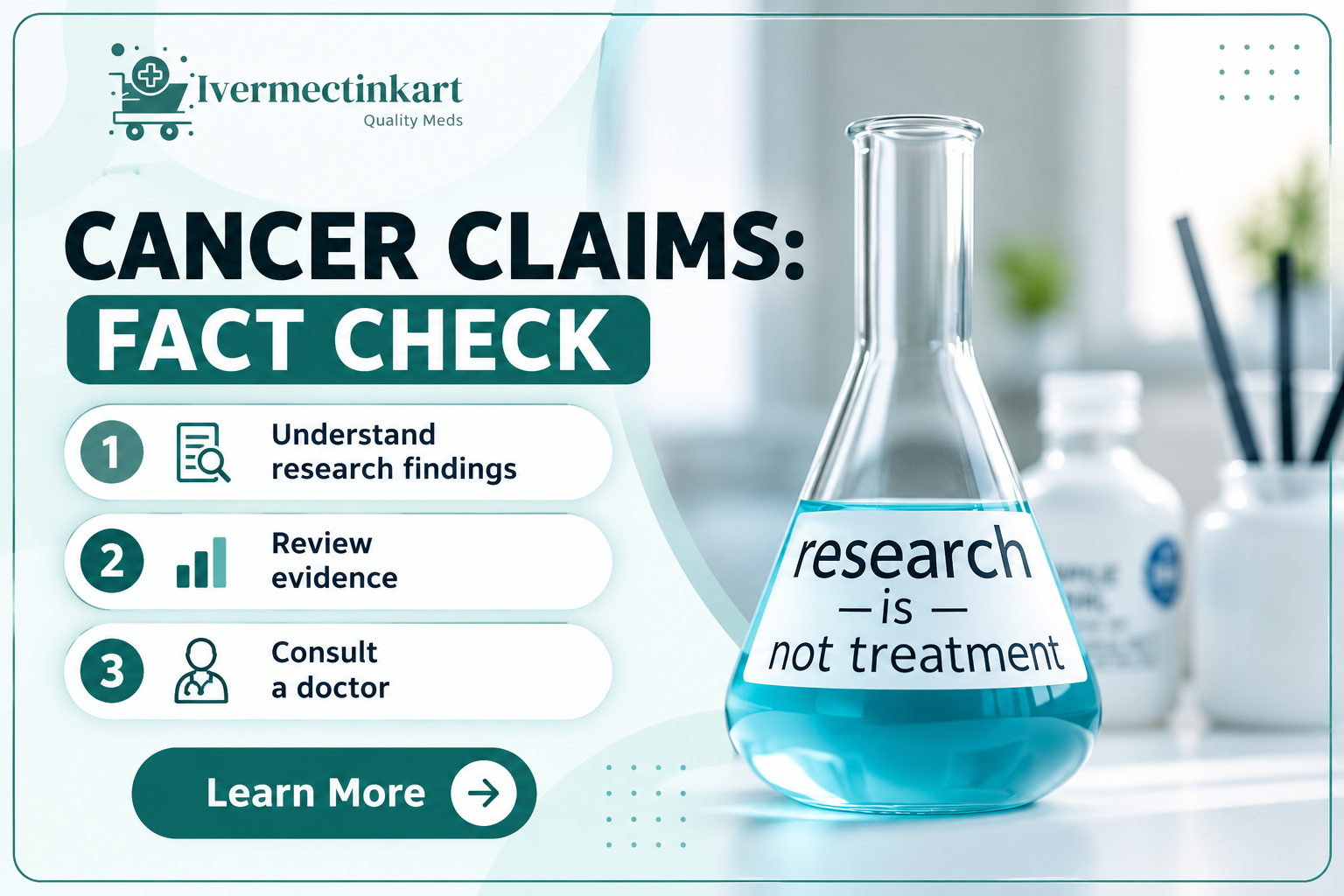
Cancer-related health claims can spread quickly online, making it essential to distinguish scientific evidence from misinformation. Understanding the difference between laboratory research, clinical trials, and established medical treatments helps people make informed healthcare decisions.
1. Understand Research Findings
Early laboratory studies may identify promising areas for further investigation. However, results from laboratory experiments do not automatically establish that a substance can safely or effectively treat cancer in humans.
2. Review the Scientific Evidence
Reliable cancer treatment recommendations are based on carefully conducted clinical trials, evidence reviews, and guidance from recognized medical organizations. Be cautious of products advertised as miracle cures or treatments that promise guaranteed results without credible clinical evidence.
3. Consult a Qualified Healthcare Professional
Cancer treatment depends on the cancer type, stage, and individual medical circumstances. Discuss treatment options with an oncologist before starting, stopping, or replacing any prescribed therapy with an alternative product.
Conclusion
Research is essential for medical progress, but promising findings are not the same as proven treatments. Always verify cancer-related claims using credible scientific sources and seek professional medical advice.
Why Reliable Medical Information Matters
When researching cancer treatments, always look for trustworthy information from established medical organizations and qualified healthcare professionals. Scientific studies should be evaluated based on their methodology, results, limitations, and relevance to human health.
Be careful with online claims that promise instant results or guaranteed cancer cures. Personal testimonials and preliminary laboratory findings are not sufficient evidence that a treatment works safely in people.
Patients should discuss potential benefits, risks, side effects, and approved treatment options with their oncology team. Never stop prescribed cancer treatment or replace it with an unproven remedy without medical guidance.
Making healthcare decisions based on credible scientific evidence can help patients avoid misinformation and understand their available options. Reliable information supports informed discussions between patients and healthcare professionals.
Medical Disclaimer: This article is for educational purposes only and does not replace professional medical advice, diagnosis, or treatment.
Website:https://ivermectinkart.com/






Responses (0)