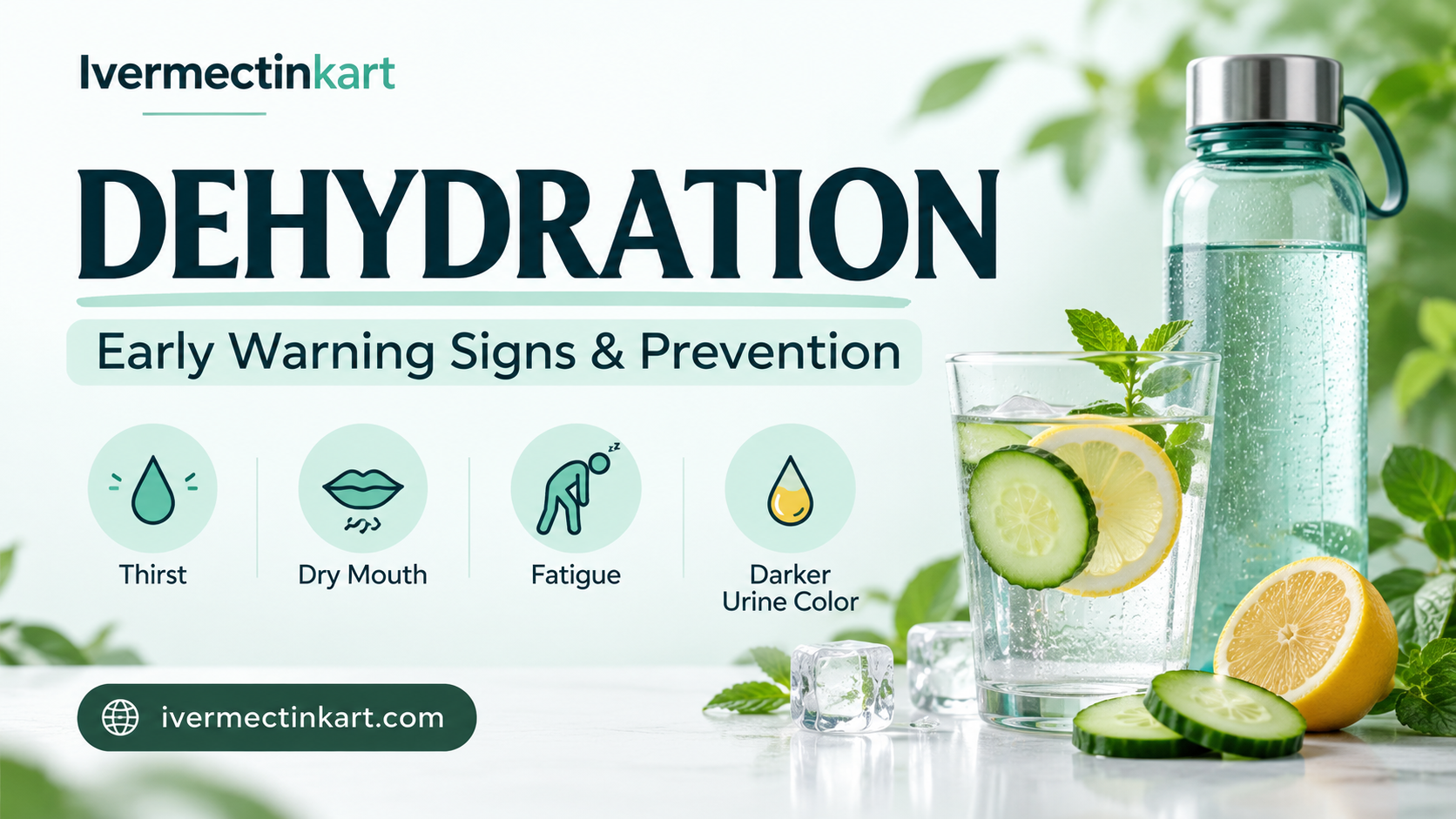
What Is Dehydration?
Dehydration happens when your body loses more fluid than it takes in. Water is essential for regulating body temperature, supporting circulation, and helping the body function normally. Dehydration can develop during hot weather, exercise, illness, or when you do not drink enough fluids.
Early Warning Signs of Dehydration
Common signs may include:
- Thirst: Feeling thirsty can be an early signal that your body needs fluids.
- Dry mouth: Your mouth or tongue may feel dry or sticky.
- Fatigue: You may feel unusually tired, weak, or less energetic.
- Darker urine: Urine may appear darker yellow than usual. Urine color can be affected by other factors, so it is not a perfect measure of hydration.
- Dizziness: Some people may feel lightheaded, particularly when standing up.
Symptoms can vary depending on age, activity level, weather, and overall health.
Common Causes
Dehydration may occur when you do not drink enough fluids or lose more fluid than usual. Common causes include sweating heavily, prolonged physical activity, hot environments, fever, vomiting, and diarrhea.
Older adults, young children, and people who are ill may need extra attention because dehydration can develop more easily in these groups.
Everyday Ways to Prevent Dehydration
1. Drink fluids regularly. Drink water throughout the day rather than waiting until you feel very thirsty.
2. Increase fluid intake when needed. Hot weather, exercise, fever, vomiting, and diarrhea can increase fluid requirements.
3. Eat water-rich foods. Foods such as watermelon, cucumber, oranges, and soups can contribute to daily fluid intake.
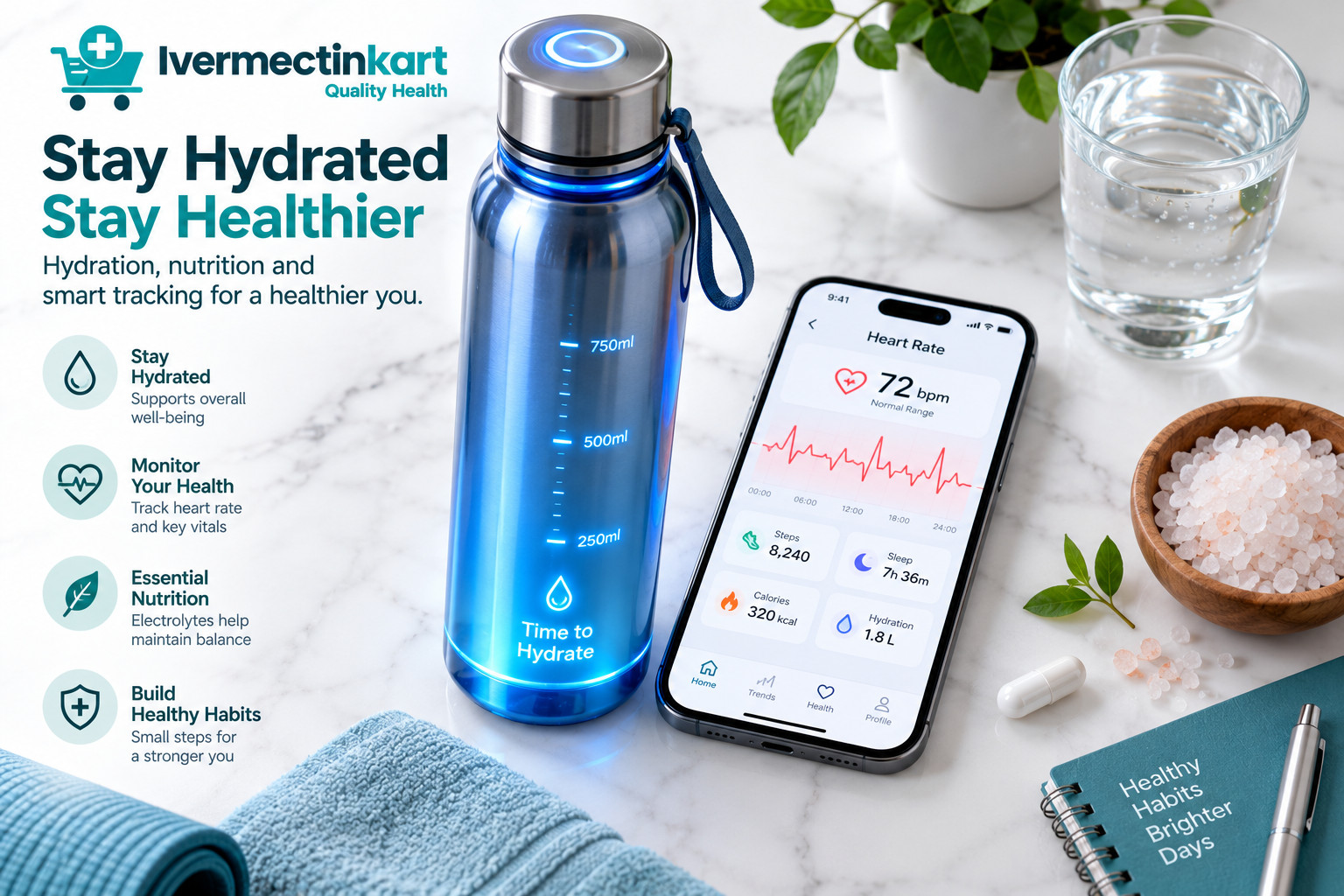
4. Carry a reusable water bottle. Keeping water nearby can make regular drinking easier.
5. Pay attention to your body. Thirst, changes in urination, and unusual tiredness may be useful signals to consider alongside your activity and environment.
6. Replace fluids during illness. Vomiting or diarrhea can cause significant fluid and electrolyte loss. An oral rehydration solution may be appropriate in these situations; follow product instructions or professional medical advice.
When to Seek Medical Help
Seek urgent medical attention for signs of severe dehydration, such as confusion, fainting, extreme weakness, or difficulty staying awake. Very little or no urination, persistent vomiting, or an inability to keep fluids down also warrants prompt medical assessment.
Infants, older adults, and people with chronic health conditions may require earlier medical attention. People who have been advised to restrict fluids because of a heart or kidney condition should follow their clinician’s guidance rather than increasing fluid intake without advice.
Final Thoughts
Recognizing early warning signs and maintaining regular fluid intake can help reduce the risk of dehydration. Needs vary with activity, climate, age, and health, so pay attention to changes in your body and seek medical advice when symptoms are concerning.
Health information only: This article is educational and does not replace individualized medical advice.
For more general health information, visit https://ivermectinkart.com/.


Responses (0)