
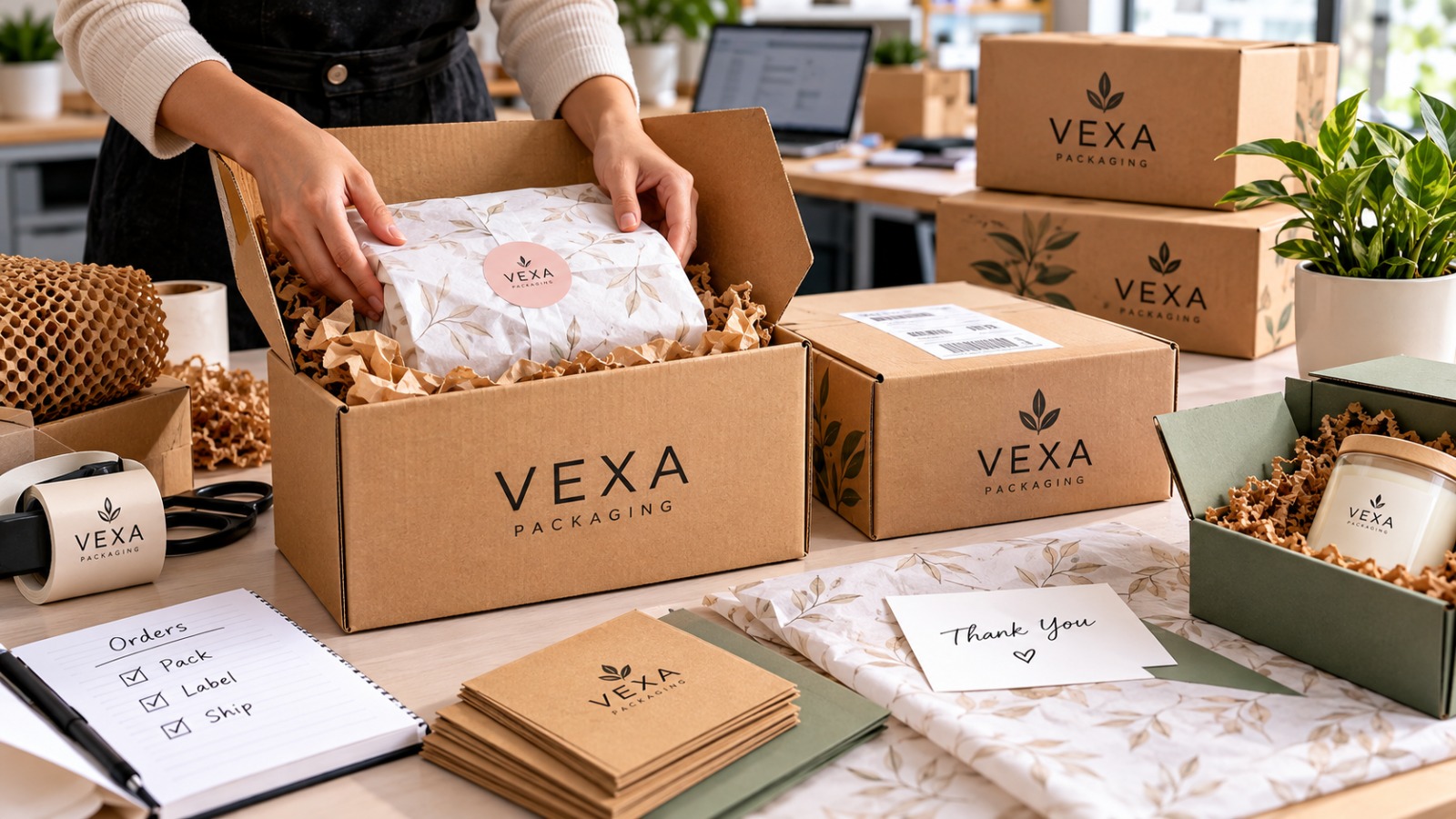
For an online business, delivering a product safely is just as important as selling it. Customers expect their orders to arrive in good condition, with the correct items and packaging that reflects the care put into preparing their purchase.
However, products can experience movement, pressure, vibration, and repeated handling during transportation. Packaging that looks attractive but does not provide sufficient protection can lead to damaged goods, customer complaints, and additional replacement costs.
Choosing the right packaging requires balancing protection, size, material, presentation, and shipping expenses.
Here are seven practical considerations that can help e-commerce businesses make better packaging decisions.
1. Understand the Product's Protection Requirements
Every product has different packaging needs. A lightweight clothing item does not require the same level of protection as a glass container, electronic accessory, or fragile decorative object.
Before selecting a box or mailer, consider:
- The product's weight and dimensions
- Whether it can break, bend, leak, or scratch
- Its sensitivity to moisture or temperature
- Whether it contains multiple components
- The conditions it may encounter during delivery
Fragile products may require cushioning, internal dividers, or protective inserts. Products that can be scratched may benefit from suitable wrapping or separation from other items.
The goal is to select protection according to the actual risks associated with the product rather than using the same packaging for every order.
2. Choose the Right Box Size
Using a box that is too large can allow the product to move during transportation. An oversized package may also require additional filling material and take up more space during shipping.
On the other hand, a box that is too small may place unnecessary pressure on the product or leave insufficient room for protective materials.
To choose a suitable size:
1. Measure the product accurately.
2. Account for any protective wrapping or inserts.
3. Allow appropriate clearance based on the product's fragility.
4. Check that the product remains secure when the package is closed.
5. Test the packaging with the actual product before ordering in bulk.
The correct size depends on the box construction, material thickness, and the level of protection required.
Businesses should also check their courier's size and weight rules before finalizing packaging dimensions.
3. Select Materials That Match the Shipping Conditions
Packaging materials influence durability, weight, cost, and the level of protection available.
Corrugated cardboard boxes are commonly used for shipping because their layered construction can provide cushioning and resistance to handling forces. However, performance varies according to board construction, flute type, and other specifications.
Other materials may be suitable for particular products.
For example:
- Corrugated boxes: Useful for many shipping and distribution applications.
- Paper mailers: Suitable for certain lightweight, non-fragile products.
- Protective paper or cushioning: Helps limit movement and protect surfaces when selected appropriately.
- Custom inserts: Can help hold products in position inside a package.
- Protective sleeves or wraps: May reduce scratches and surface damage.
There is no single material that works best for every product. Consider the product's characteristics, transportation conditions, and packaging budget before making a decision.
4. Prevent Unnecessary Movement Inside the Package
A product can become damaged if it moves freely inside its packaging during transportation.
Internal protection helps keep items in position and reduces contact with the package walls or other products.
Depending on the application, businesses may use paper cushioning, cardboard dividers, molded inserts, or other suitable protective materials.
For products sold in sets, dividers can also help separate individual items and prevent them from rubbing against one another.
Before shipping an order, gently check whether the product shifts excessively inside the closed package. This simple inspection can help identify obvious fit problems, although it does not replace appropriate shipping tests for fragile or high-value products.
5. Balance Packaging Protection With Shipping Costs
Packaging costs involve more than the price of the box itself.
Businesses may also need to account for protective materials, printing, assembly, storage, shipping dimensions, and the financial impact of damaged orders.
A larger package can increase shipping expenses depending on the courier's pricing model. However, reducing package size without considering protection can create other costs if products arrive damaged.
A practical approach is to compare the total cost of packaging options rather than focusing only on the unit price.
Consider these questions:
- Does the package provide adequate protection?
- Can unnecessary empty space be reduced?
- Are protective materials being used efficiently?
- Does the package meet the courier's requirements?
- Will the packaging be easy to store and assemble?
Testing a few packaging configurations can help businesses identify a suitable balance between protection and cost.
6. Consider the Customer's Unboxing Experience
Protective packaging does not have to look plain or careless.
For many e-commerce businesses, the package is the first physical interaction customers have with the brand. A clean, organized presentation can help create a positive impression while keeping the product secure.
Businesses can consider branded boxes, printed tissue paper, simple inserts, or carefully arranged products when these additions suit their budget and customer expectations.
However, decoration should not interfere with protection. A beautiful package that arrives damaged will not deliver the intended experience.
The best approach combines functional packaging with an appropriate level of visual presentation.
7. Test Packaging Before Scaling Up
A packaging solution that works in theory may behave differently during actual shipping.
Before placing a large order, test the packaging with the real product and intended packing process.
Review the following:
- Whether the product fits securely
- Whether the package closes properly
- Whether internal materials remain in place
- Whether the outer box shows signs of weakness
- Whether the product remains protected after suitable handling tests
For fragile, heavy, or high-value products, more formal testing may be appropriate. Depending on the shipping risks, businesses can investigate recognized distribution-testing methods and consult qualified packaging specialists.
Testing early can reveal problems before they affect a larger number of customer orders.
How Custom Packaging Can Help Online Businesses
As an online business grows, its packaging requirements may change. A company that initially ships a few products may eventually need standardized box sizes, improved internal protection, or packaging designed for a wider product range.
Custom packaging can help businesses select dimensions, materials, and presentation elements that suit their products and fulfillment processes.
Companies exploring these options can visit Vexa Packaging to learn more about packaging solutions and consider what may suit their business requirements.
Before selecting a solution, businesses should communicate their product dimensions, shipping conditions, expected order volumes, and protection requirements to their packaging supplier.
The appropriate choice depends on the product and the conditions it will encounter during delivery.
Final Thoughts
Choosing shipping packaging is an important operational decision for e-commerce businesses. The right solution can help protect products, manage packaging expenses, and deliver a more consistent customer experience.
Start by understanding the product's risks, selecting suitable materials, choosing the correct dimensions, and preventing unnecessary movement inside the package.
Then test the complete packaging configuration before scaling up production.
Packaging should not simply look good when an order leaves the warehouse. It should be designed to help the product reach its destination safely.
**What packaging challenge is most common for your online business: product damage, shipping costs, choosing materials, or creating a better unboxing experience? Share your thoughts in the comments.**




Responses (0)