
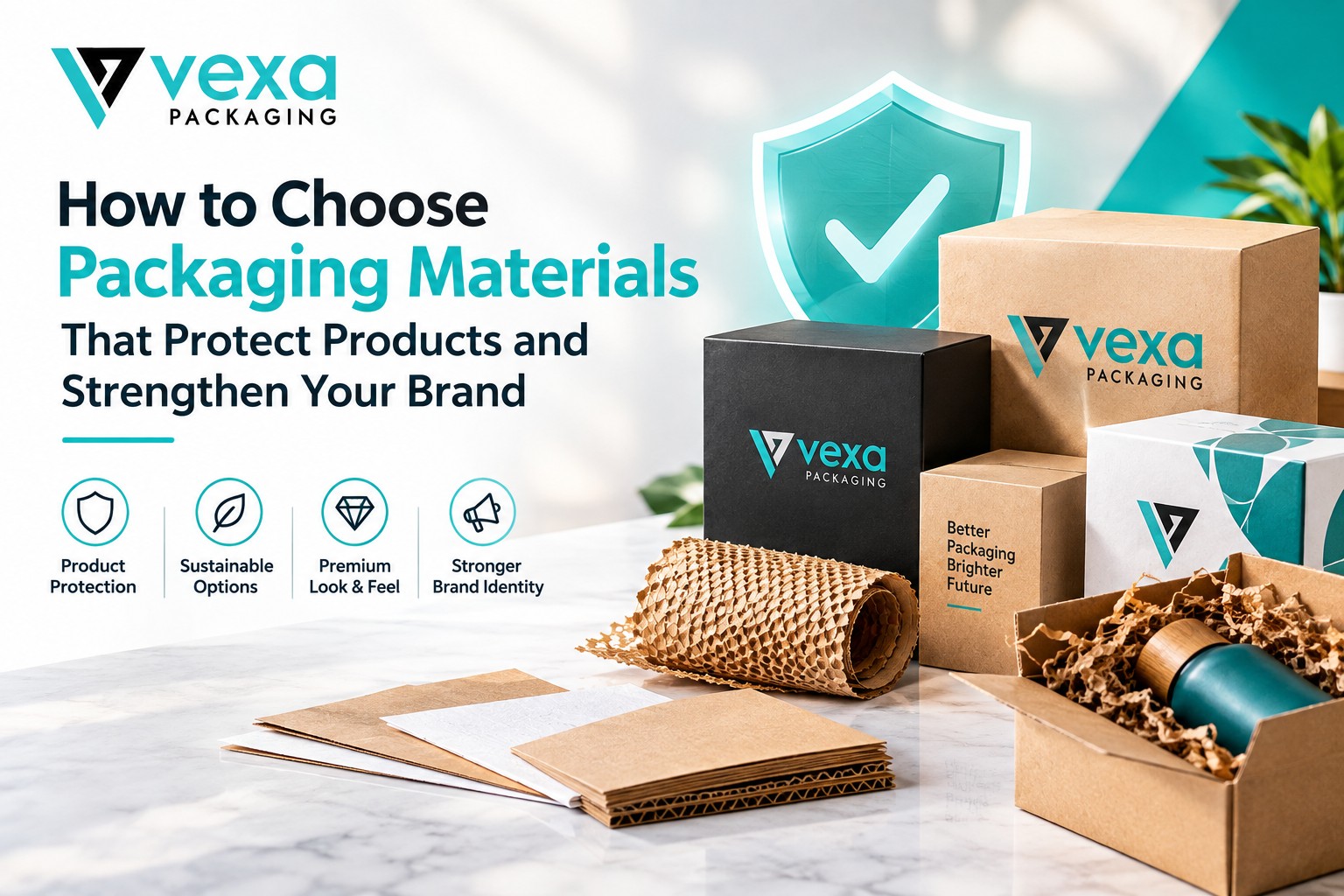
Packaging does more than hold a product. It protects items during storage and shipping, communicates a brand's identity, and influences how customers perceive a business. For small businesses and growing e-commerce brands, choosing the right packaging materials is an important decision that affects product safety, customer satisfaction, and operating costs.
The best packaging is not necessarily the most expensive or the most elaborate. It is the packaging that fits the product, shipping conditions, customer expectations, and business budget.
1. Start With the Product's Protection Needs
Before choosing a material, consider the product's size, weight, shape, and fragility. Glass products, cosmetics, candles, electronics, and clothing all have different packaging requirements.
Fragile products may need sturdy corrugated boxes, protective inserts, or cushioning materials. Lightweight products might require smaller, flexible packaging that keeps shipping dimensions manageable. Products that can be affected by moisture may also need suitable moisture-resistant protection.
The goal is to reduce the risk of damage without adding unnecessary packaging.
2. Consider the Entire Shipping Journey
A package may pass through several handling stages before reaching the customer. It can be stacked in a warehouse, moved between vehicles, exposed to changing weather, and handled multiple times during delivery.
Choose packaging that can withstand the conditions your products are likely to encounter. Make sure boxes are appropriately sized, closures are secure, and internal protection prevents products from shifting.
Testing packaging with sample shipments can help businesses identify weak points before sending large numbers of orders.
3. Make Packaging Consistent With Your Brand
Packaging is often one of the first physical interactions customers have with an online business. A well-organized package can make a purchase feel more professional and memorable.
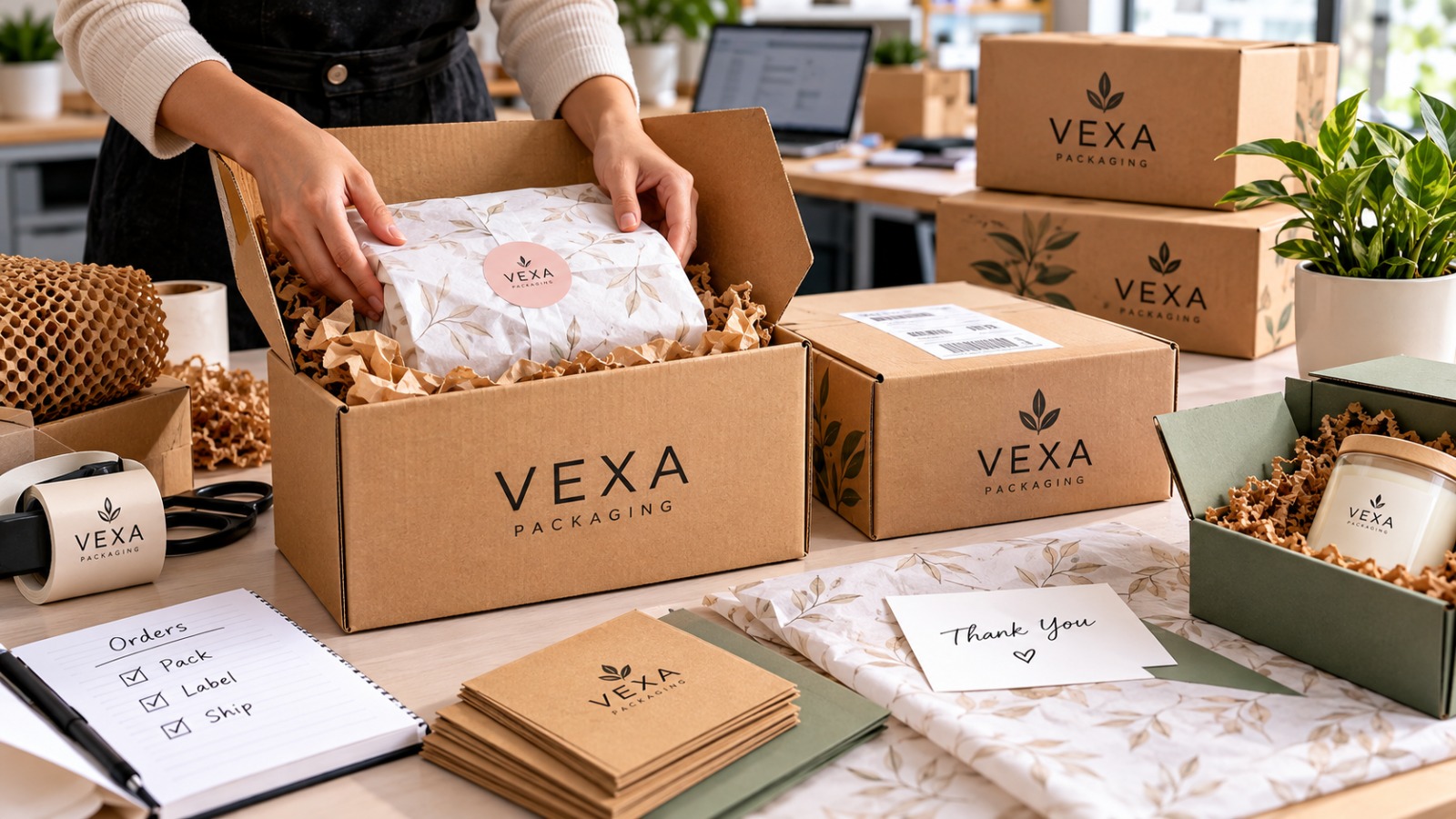
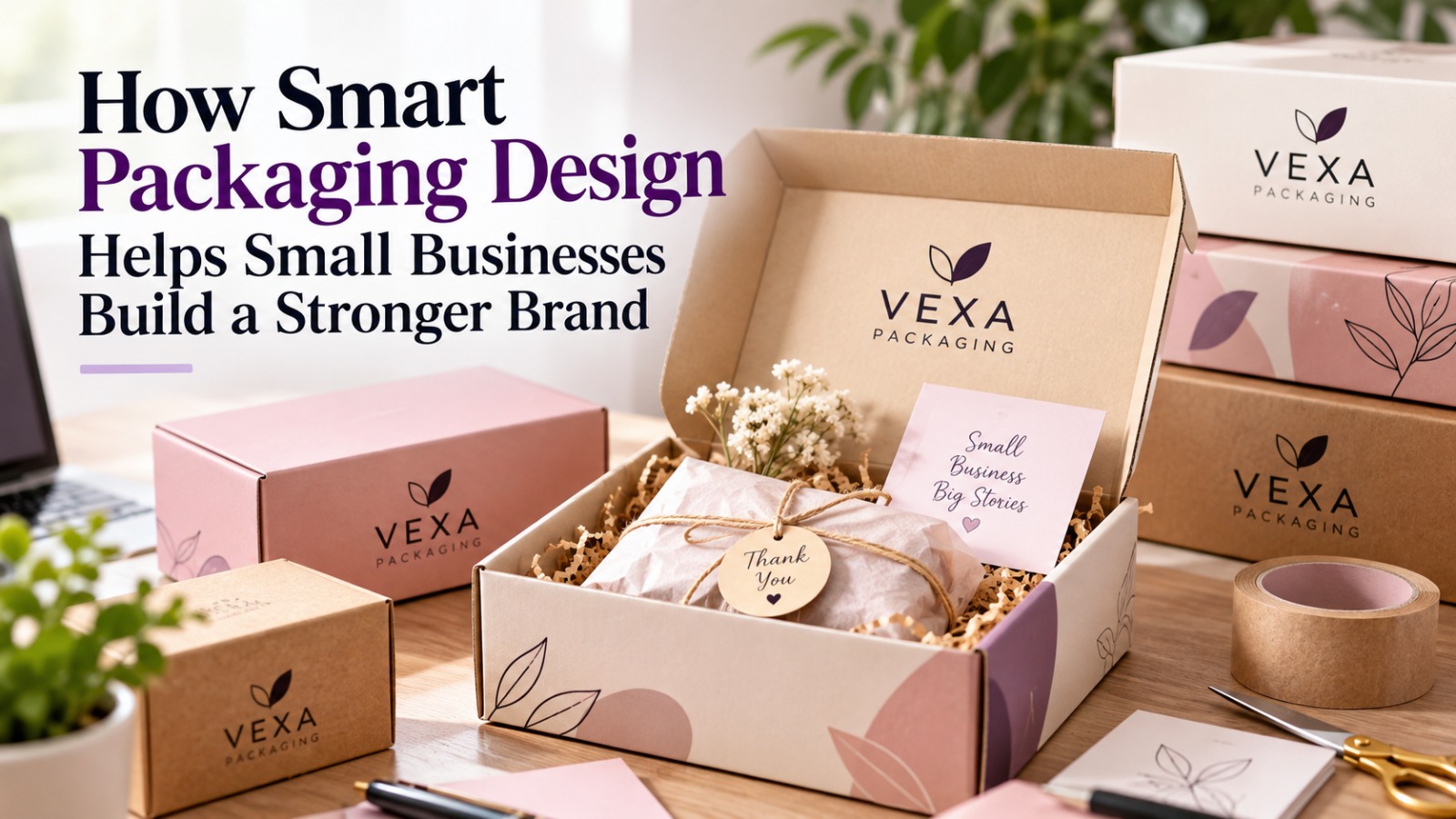
Branding can be introduced through printed boxes, labels, color choices, tissue paper, stickers, or thank-you cards. These details do not have to be complicated. Even a simple, consistent design can help customers recognize a brand and create a more polished presentation.
For ideas and customized packaging options, businesses can explore Vexa Packaging and consider how packaging design can support their product and brand identity.
4. Balance Cost With Quality
Packaging costs include more than the price of the box. Businesses should also consider printing, protective inserts, storage space, packing time, shipping dimensions, and potential product replacements caused by damage.
Oversized packaging can increase shipping costs and waste materials. Packaging that is too weak, however, may lead to damaged orders and dissatisfied customers.
Compare suppliers, request samples, and test different sizes before placing a large order. The right choice balances protection, presentation, and total cost rather than focusing on the lowest unit price alone.
5. Think About Material Use and Waste
Customers and businesses are paying greater attention to packaging waste. Where practical, choose materials that are appropriately sized, recyclable in the customer's local waste system, or reusable.
Avoid adding unnecessary layers and oversized fillers. If using sustainability claims, make sure they accurately describe the material and the disposal options available. Not every material labelled biodegradable or recyclable is accepted by every local recycling facility.
Practical improvements can reduce waste while keeping products protected.
6. Test Before Scaling Up
Before ordering packaging in bulk, run a small trial. Check whether the product fits securely, the package is easy to open, branding appears as intended, and the materials hold up during handling.
Gather feedback from customers and packing staff. Monitor damage reports, returns, packaging costs, and customer comments. These measures can reveal whether a packaging change is actually improving the delivery experience.
Conclusion
Choosing the right packaging materials requires a balance of product protection, shipping requirements, brand presentation, cost, and responsible material use. Businesses do not need the most elaborate packaging to make a positive impression; they need a solution designed around their products and customers.
By testing materials, reviewing total costs, and maintaining consistent branding, businesses can create packaging that protects their products and supports a stronger customer experience.



Responses (0)