
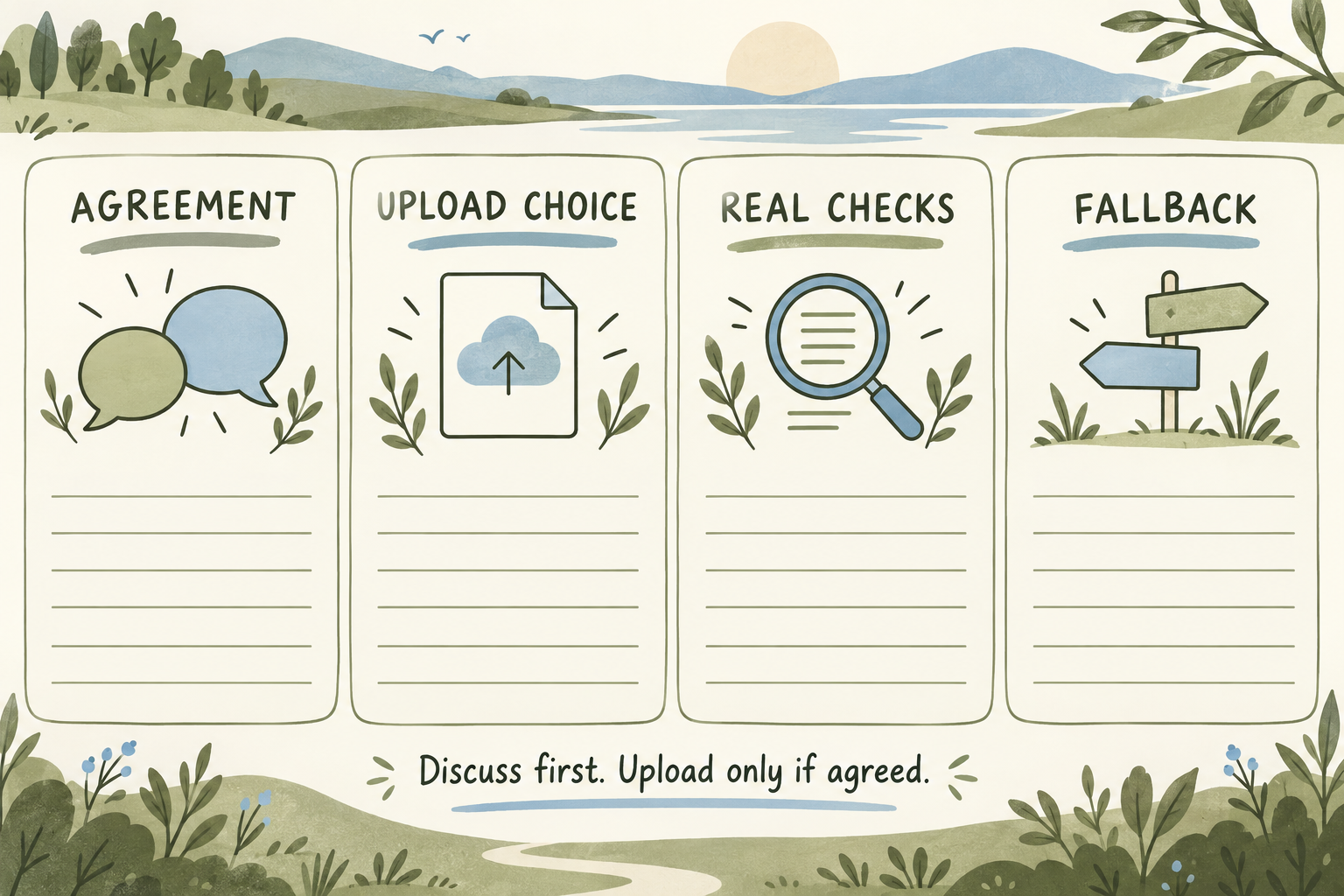
A shared portrait plan can sound simple: choose a nice outdoor setting, decide what to wear, and make a picture together. The friction often appears earlier, when one person is already choosing reference photos and the other has not decided whether they want an AI-generated image at all.
I would treat agreement as part of the creative work, not as a checkbox after the image is finished. You need a clear understanding of the proposed photo, the upload destination and the intended audience before the process becomes difficult to reverse.
Here is a practical planning conversation for two adults. The examples are imagined, not reports of a real trip, consent process or product trial. This is a communication checklist, not legal advice or an assessment of any provider's data-handling practices.
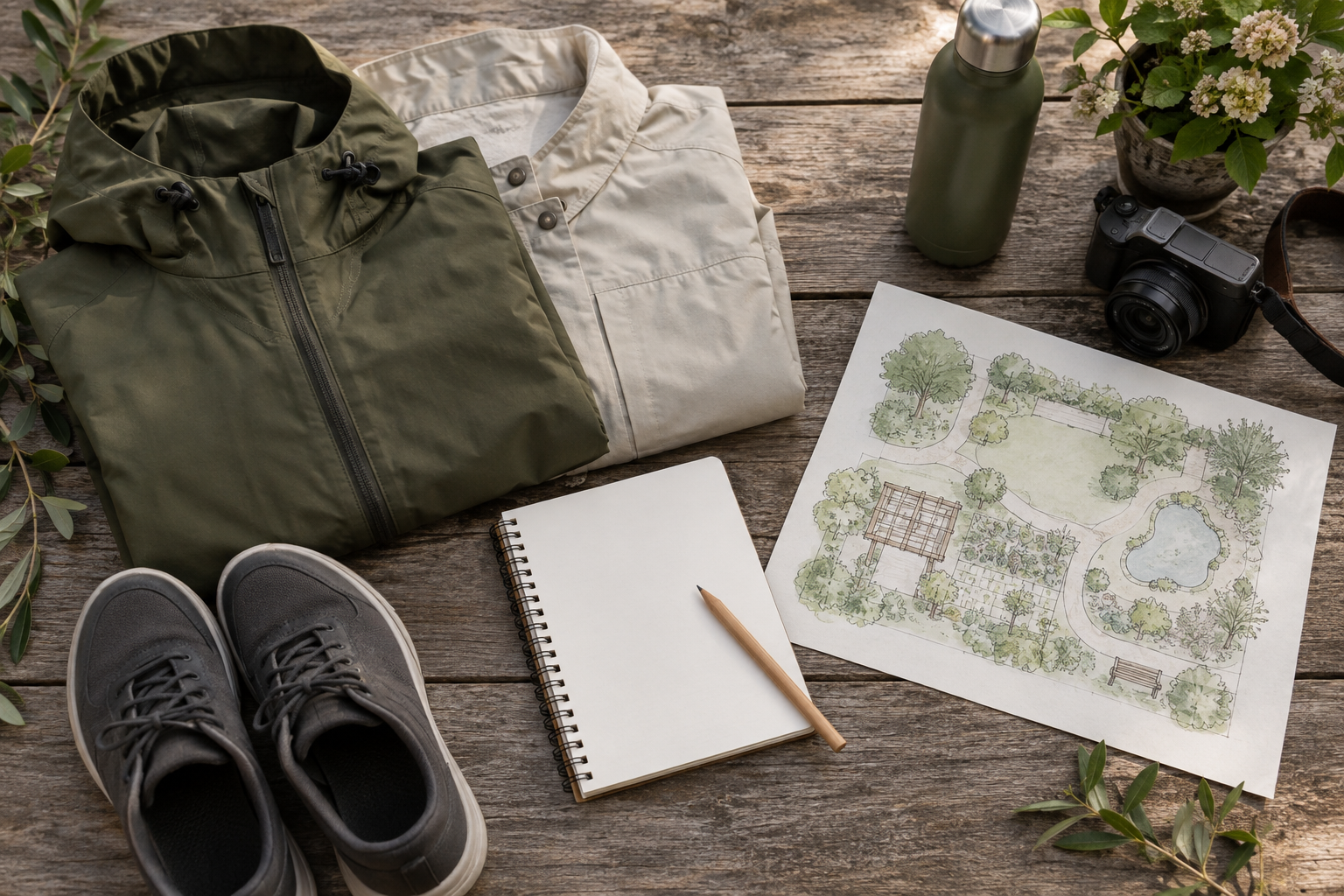
AI-generated concept illustration. No real participants, outdoor test or customer session is depicted.
1 Agree on the activity before discussing the picture
Start by describing what you intend to do in ordinary language. “We would like to explore a picture idea for a short walk in a public garden” is clearer than “Let's try this AI thing.”
Ask whether the aim is a generated concept, a real outdoor photograph, or simply a moodboard. These are different activities. Someone may be happy to plan a real session but not want their reference photo uploaded to an online tool.
For an imagined pair, the answer might be: “We want a brief for an actual afternoon photo, and we might use a concept image only if both of us find it useful.” That leaves the tool optional and puts the real activity first.
Do not make participation depend on accepting a specific app. A written description, a rough sketch or photographs of your own garments may be enough. If the plan only works when one person gives up a preference they have clearly expressed, revise the plan.
2 Separate permission to use, edit, upload and share
A single “yes” can hide several different decisions. Permission to keep a photo in a private chat does not automatically answer whether it may be edited, uploaded to a service, or published elsewhere.
Have a separate conversation about each proposed use. Identify the exact reference image rather than saying “one of your photos.” Explain the change you want to explore, the service you would use, and who would receive the resulting image.
Keep the discussion concrete. An adult might agree to a fully clothed outfit concept for a private planning conversation but not to a public promotional post. Respect that boundary without trying to persuade them that the difference is unimportant.
If you cannot describe the intended edit clearly, you are not ready to request agreement. Write a short description first. Let the other person ask questions, decline, or suggest a different reference.
If your plan changes substantially, return to the conversation. A new public audience or a different edit is not merely a technical update to the original request.
3 Check the upload destination before selecting a reference
Look at the current requirements of the service you are considering. Account access, credits, accepted files and privacy information can affect whether you want to use it. Do not rely on a remembered marketing phrase or assume that an upload will stay private because the task feels personal.
If you want to explore a shared portrait direction, Imya provides reference-photo and style controls on its couple-photo page. That is a possible concept tool, not a requirement for agreeing on the plan. This guide does not verify its deletion practices, promise likeness accuracy, or report a tested generation.
Give each adult the opportunity to read the relevant current information themselves. Do not upload their image while they are still deciding. A familiar face in a photo is not a substitute for permission.
Where permission or the provider's conditions remain unclear, use the tool-free route. You can describe a seated pose, a quiet background and coordinated clothing without sending a portrait anywhere.
4 Make outdoor practicality a separate checklist
An appealing concept does not tell you whether the planned location and clothes will work on the day. Keep the outdoor checklist separate from the image discussion.
Consider the actual walking distance, the surface where you expect to stand, the availability of a comfortable place to pause, and the weather information you will check before leaving. Use current information about the real location rather than drawing conclusions from a generated background.
This is not wilderness or protective-equipment guidance. For a simple portrait outing, the useful principle is to match the plan to what both people can comfortably do. If you need specialised safety advice, a visual concept cannot provide it.
In the hypothetical example, one adult likes a formal-looking shoe direction but prefers comfortable shoes for the walk. The plan can accommodate both: discuss the photographic preference separately, then decide what is genuinely practical to wear. Do not label one person “uncooperative” for bringing up a real constraint.
Write down a fallback. If the location becomes unsuitable, choose a different setting or postpone. The concept does not obligate you to recreate it.
5 Use clothing concepts only for a visual question
An outfit preview can be an optional way to discuss colour balance or the overall impression of a garment. It is not a physical wearing test.
Tryonr offers subject-photo, garment-reference and prompt inputs on its clothes-changer page. Before using it, check the current account and credit requirements, read the relevant privacy information, and confirm permission for the specific image and proposed clothing edit.
Ask a limited question: “Would a less patterned jacket make the composition feel calmer?” Do not ask an image to answer whether a jacket is warm enough, a shoe has suitable grip, or a garment has the right size. Those decisions require information about the actual item and the real conditions.
Keep the original clothing photographs available. If a generated result changes garment details or introduces an implausible shape, mark that uncertainty rather than treating the polished image as stronger evidence than the source material.
6 Write a small agreement sheet
You do not need an elaborate form for a planning conversation. A short shared note can make the agreed scope easier to remember.
Include the activity, the exact references approved, the intended edit, the upload destination if any, the planned audience, and the practical checks still open. Add an option to stop or choose the written-brief route before any upload takes place.
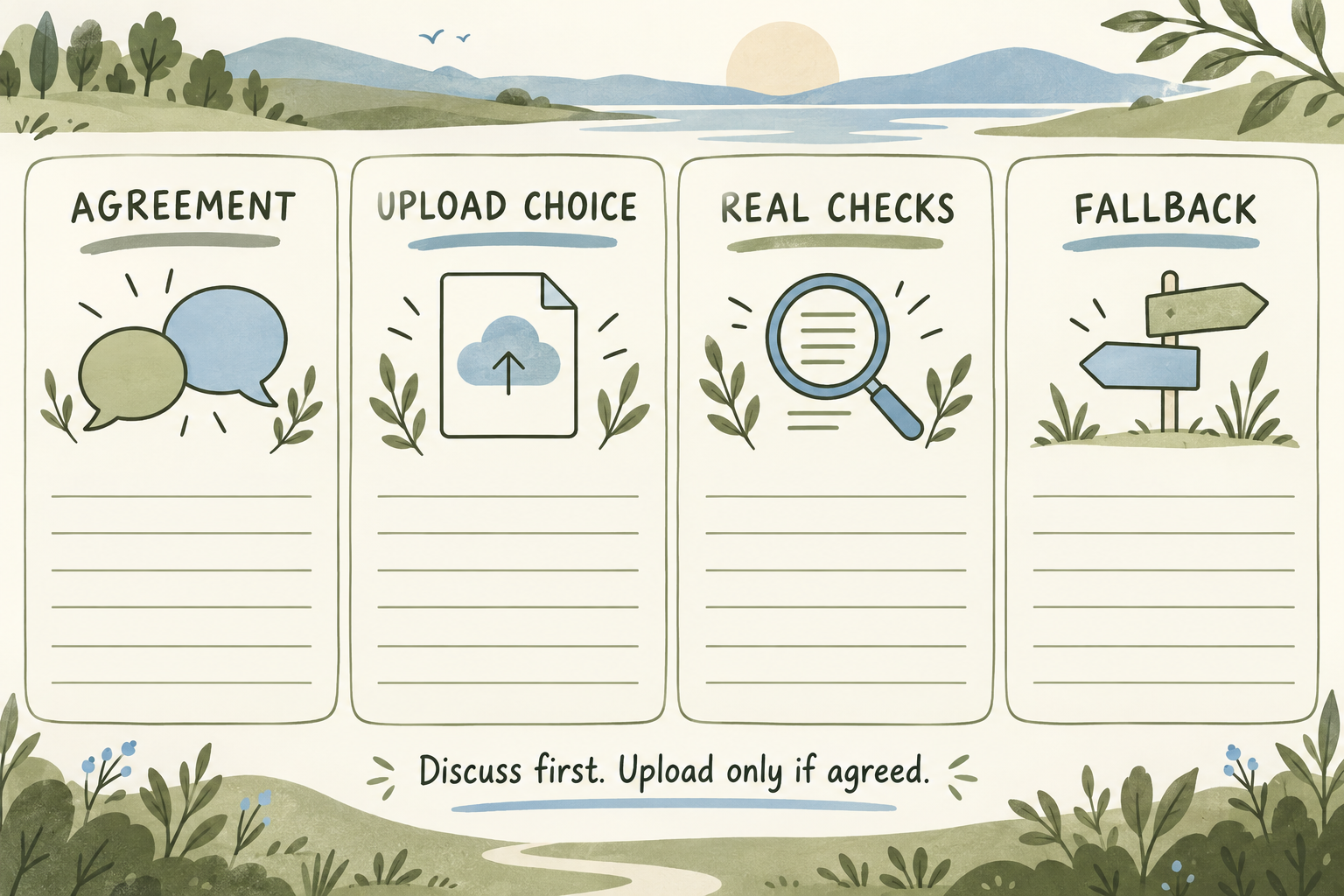
AI-generated communication worksheet. It does not establish legal consent or certify an outdoor plan.
For the imagined pair, the note might read: “Private concept discussion only. No public sharing is agreed. Use a written scene description until both people choose their own reference files. Check the actual location and clothing separately.”
The note should describe the agreement you genuinely reached, not pressure someone into approving a broader version. Leave unresolved fields visibly unresolved.
Assign a next action to each unresolved practical question. One person might check the location information; the other might photograph the actual clothes they want to wear. Neither action requires uploading a face. Agree on when you will revisit the plan, and keep the task small enough to complete without a new app or purchase.
If the discussion reveals different expectations, do not treat the checklist as a way to force agreement. One person may prefer a private real photograph while the other enjoys a generated concept. You can keep those as separate activities or choose the shared option both people genuinely want. A useful plan preserves that choice.
The Bottom Line
Before you upload, agree on the activity, the reference, the edit, the destination and the audience. Then make a separate plan for the actual location and clothes.
Start with the conversation. If either person is uncomfortable or the conditions are unclear, a tool-free brief remains a useful outcome.
Disclosure: Written for the Imya and Tryonr team using AI-generated text and illustrations. The examples are hypothetical. No real consent process, outdoor session, clothing test or product generation was performed.




Responses (0)