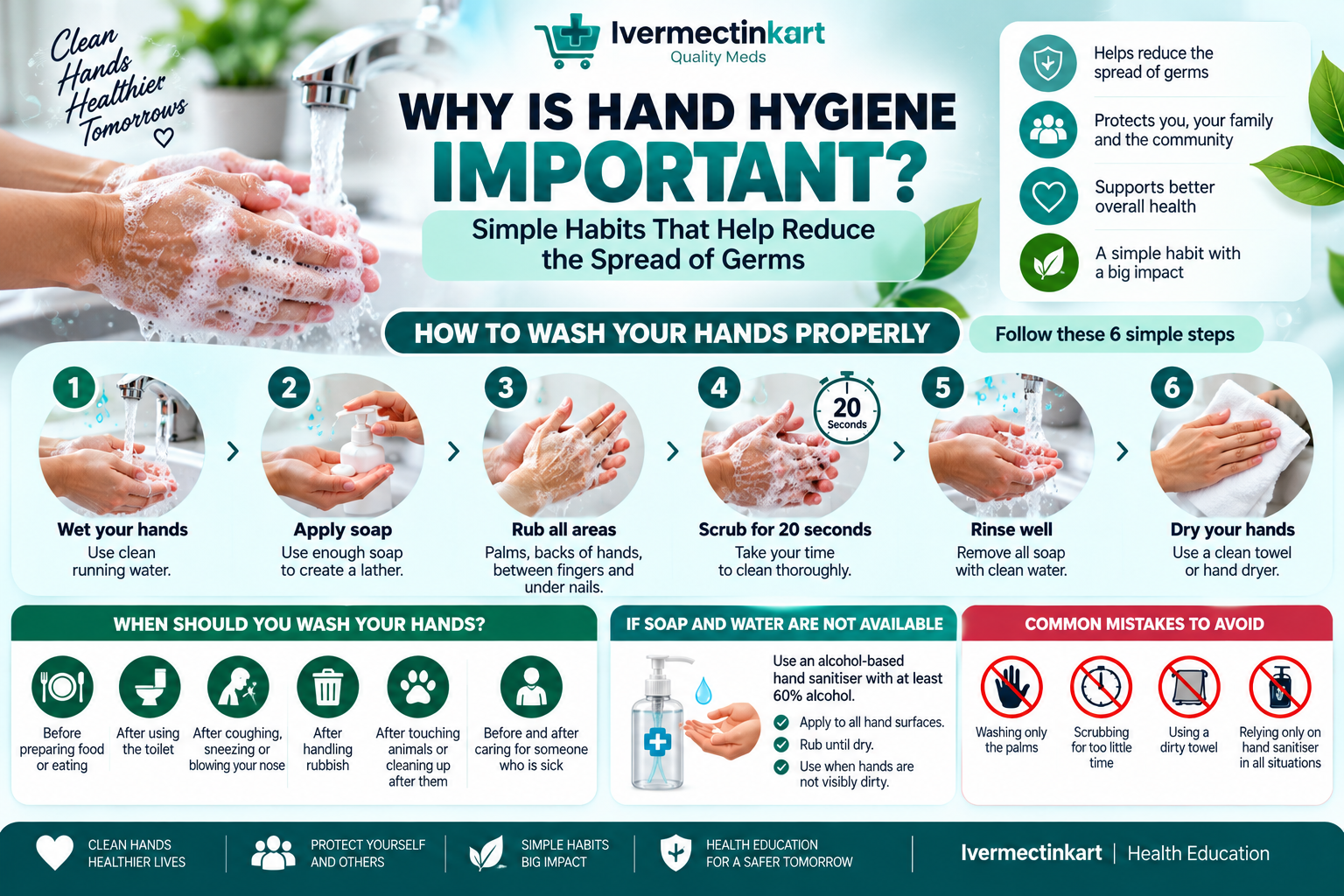
Hand hygiene is one of the simplest everyday habits that supports personal and public health. Our hands regularly touch phones, door handles, keyboards, shopping carts, and many other shared surfaces. Germs can sometimes transfer from these surfaces to our eyes, nose, mouth, or food.
The good news is that a few practical habits can help reduce the spread of many germs.
How Can Germs Spread Through Our Hands?
Hands frequently come into contact with objects and surfaces used by other people. Touching the face or handling food with unclean hands can transfer germs and increase the risk of certain infections.
Hand hygiene does not eliminate every health risk, but it is an important part of everyday infection prevention.
When Should You Wash Your Hands?
Make handwashing part of your daily routine, particularly at these times:
- Before preparing food or eating.
- After using the toilet.
- After coughing, sneezing, or blowing your nose.
- After handling rubbish.
- After touching animals or cleaning up after them.
- When your hands are visibly dirty.
- Before and after caring for someone who is sick, when appropriate.
These small actions can make hand hygiene more consistent at home, school, and work.
How to Wash Your Hands Properly
Follow these simple steps:
- Wet your hands with clean running water.
- Apply soap and create a lather.
- Rub your palms, the backs of your hands, between your fingers, and under your nails.
- Continue scrubbing for at least 20 seconds.
- Rinse thoroughly under clean running water.
- Dry your hands with a clean towel or an appropriate hand dryer.
Do not rush through the process. Cleaning all areas of your hands is important.
What If Soap and Water Are Not Available?
An alcohol-based hand sanitiser containing at least 60% alcohol can be a useful alternative when your hands are not visibly dirty. Apply it according to the product instructions and rub it over all hand surfaces until dry.
However, soap and water are preferable when hands are visibly dirty or greasy. Hand sanitiser should also be kept away from children unless an adult is supervising its use.
Common Hand Hygiene Mistakes
Some everyday mistakes can reduce the effectiveness of hand hygiene:
- Washing only the palms and missing the backs of the hands.
- Skipping the spaces between fingers and around the nails.
- Rinsing before scrubbing for long enough.
- Drying hands on a dirty towel.
- Assuming hand sanitiser works equally well in every situation.
Building a consistent routine is more useful than relying on occasional handwashing.
Make Hand Hygiene an Everyday Habit
Keep soap available near sinks, teach children proper handwashing techniques, and wash your hands at key moments throughout the day. At work, clean hands before handling food or providing appropriate personal care.
Hand hygiene works best alongside other preventive measures, such as staying home when ill when possible, cleaning frequently touched surfaces, and following relevant healthcare advice.
Final Thoughts
Clean hands are a simple but valuable part of everyday health protection. By washing with soap and water at the right times and using hand sanitiser appropriately when needed, you can help reduce the spread of many germs.
Disclaimer: This article provides general health education and is not a substitute for professional medical advice.
Health education content by IvermectinKart.





Responses (0)