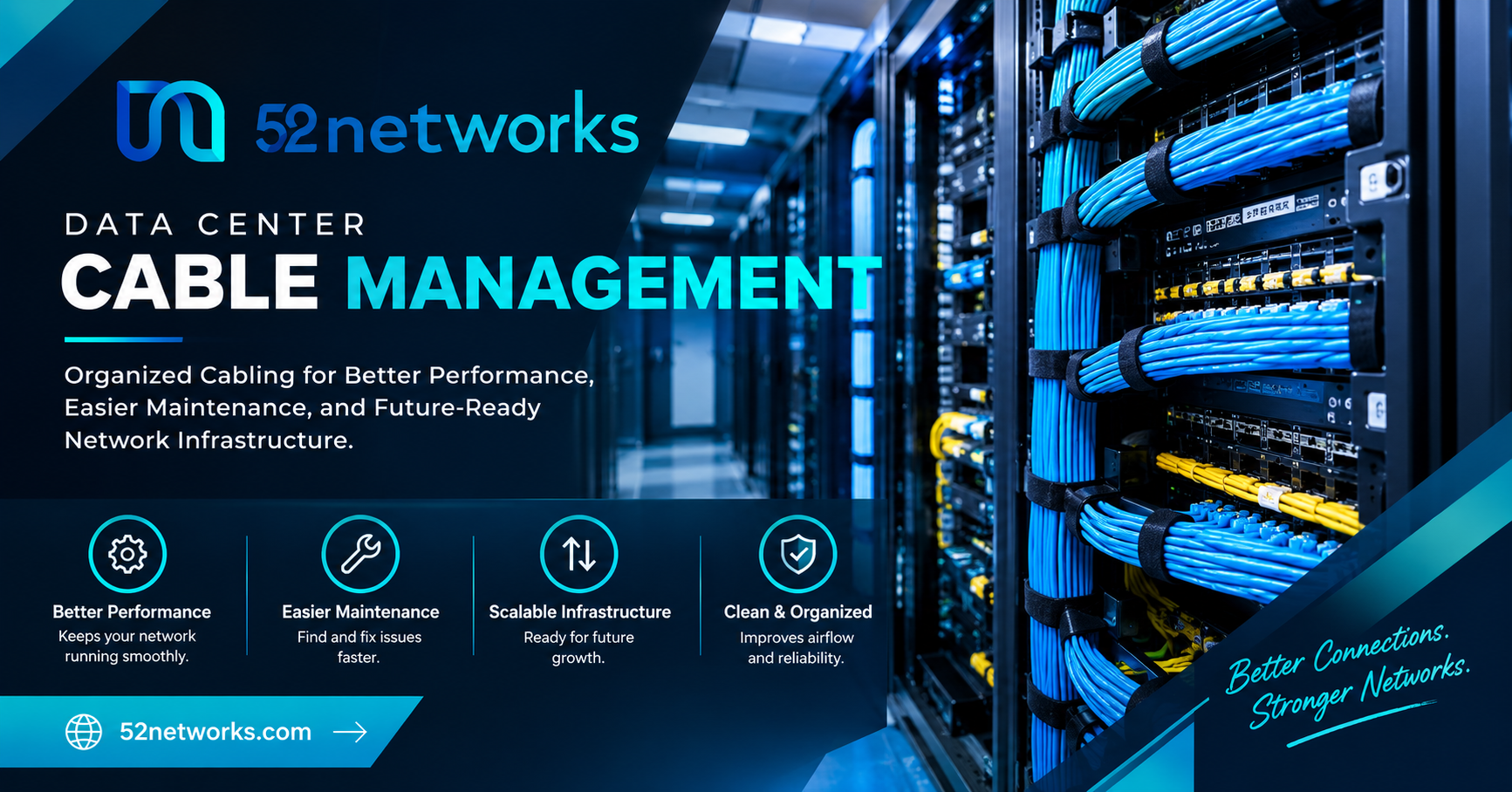
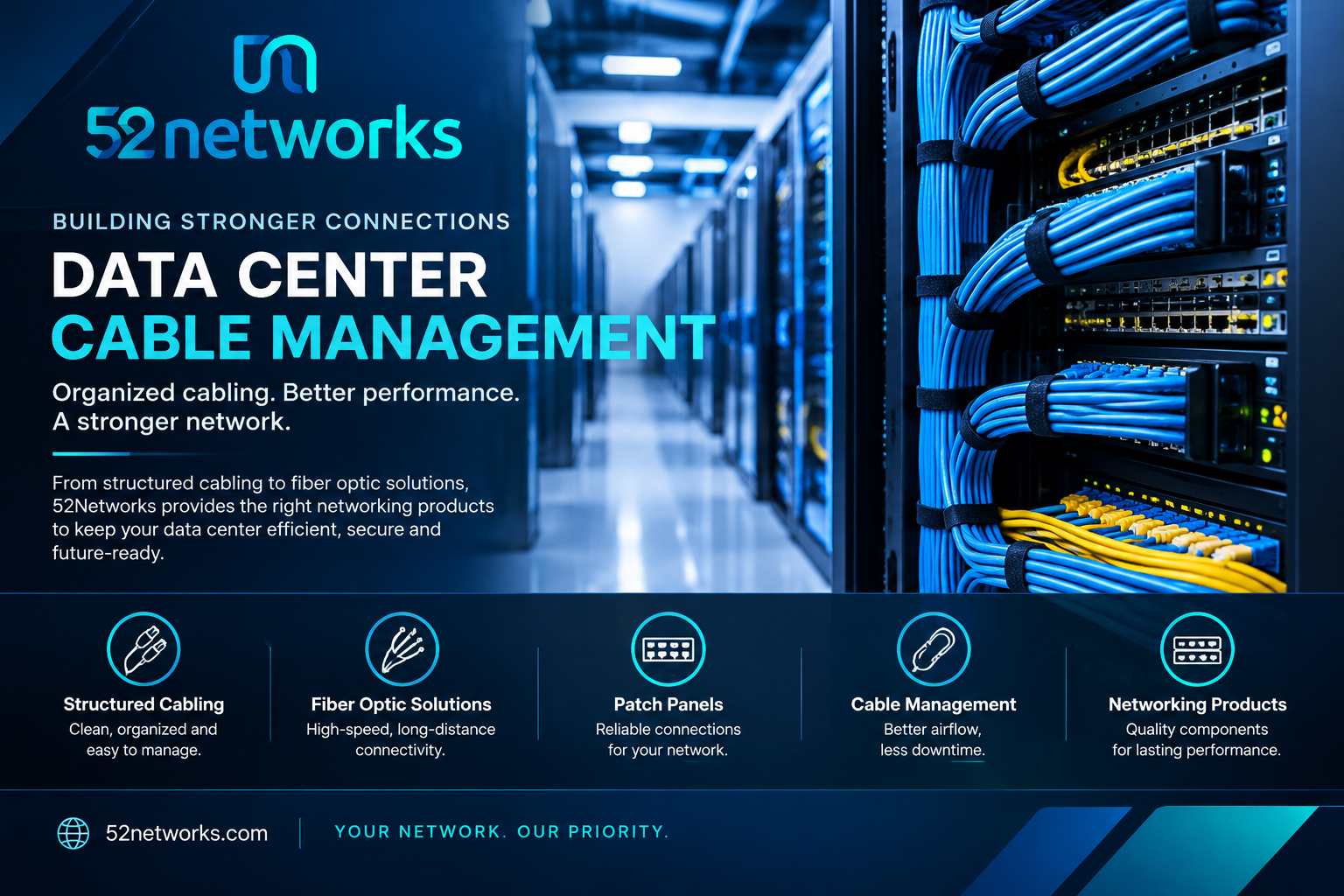
Behind every efficient data center is a carefully organized network of cables, connections, and equipment. Servers may handle the computing workload, but the cabling infrastructure connects the systems that businesses depend on every day.

As data centers expand to support cloud platforms, enterprise applications, and growing volumes of information, managing this infrastructure becomes increasingly important. Poorly organized cables can make maintenance difficult, complicate troubleshooting, and slow down equipment upgrades.

Professional cable management is therefore more than an aesthetic improvement. It is an essential part of building a maintainable, scalable, and well-documented data center.

Why Cable Organization Matters

A data center can contain thousands of connections between servers, switches, storage systems, and network distribution equipment. Without a consistent organization strategy, identifying individual links becomes challenging.

Clear cable routing and accurate labeling help technicians trace connections, isolate faults, and replace equipment with less confusion. Organized infrastructure can also make planned maintenance easier by reducing the likelihood of disturbing unrelated connections.

For growing facilities, these benefits become particularly valuable as racks fill up and new equipment is introduced.

Start with a Structured Cabling Plan

Effective cable management begins before the first cable is installed. Network designers should map out rack layouts, equipment locations, cable pathways, and the connections required between systems.

A structured plan should identify where copper Ethernet links are appropriate and where fiber optic connections may be needed. It should also account for rack capacity, access to equipment, expected expansion, and applicable installation requirements.

Separating cable routes logically can make the installation easier to understand. For example, organizing connections by rack, equipment type, or network function can help technicians locate the correct cable during maintenance.

The goal is to create a consistent system that remains understandable as the facility grows.

Choose the Right Cables and Connectivity Components

Different data center applications require different connectivity solutions. Selecting suitable cables and accessories helps ensure that the physical infrastructure matches the network's technical requirements.

Ethernet Cables

Cat6 and Cat6A Ethernet cables are used in many commercial and data center environments, depending on link speed, distance, and equipment requirements. Cat6A supports 10 Gigabit Ethernet over compliant channels up to 100 meters, while Cat6 performance depends on the specific application and channel conditions.

Fiber Optic Cables

Fiber optic connectivity is widely used for high-speed links, network backbones, and connections between equipment where longer distances or high bandwidth are required. Single-mode and multimode fiber serve different applications, so compatibility with the optical equipment is essential.

Patch Panels and Patch Cords

Patch panels provide organized connection points for structured cabling, while patch cords connect equipment to the required network ports. Using suitable lengths and a consistent labeling approach helps prevent unnecessary cable congestion.

Cable Management Accessories

Horizontal and vertical cable managers, hook-and-loop straps, and appropriate routing accessories help keep cable paths organized. These components should be selected according to the rack design, cable type, and maintenance requirements.

Improve Airflow and Equipment Accessibility

Data center equipment generates heat, making airflow an important part of facility planning. Poorly routed cables can obstruct access to equipment and interfere with carefully designed airflow arrangements.

Cables should be routed through appropriate pathways without blocking ventilation openings or placing unnecessary strain on connectors. Maintaining reasonable bundle sizes and following equipment and cable manufacturers' recommendations can also help control heat-related risks.

Cable management alone cannot guarantee better cooling, but a well-planned installation supports orderly equipment layouts and makes it easier to maintain the intended airflow design.

Use a Consistent Cable Labeling System

One of the most useful improvements a data center team can make is implementing a consistent labeling standard.

Labels should be readable, durable, and applied consistently at both ends of a connection. Depending on the facility, they may identify rack numbers, equipment names, port numbers, or connection destinations.

Labels should also match the network documentation. When technicians can compare a physical connection with an accurate port map, they can identify the correct link more efficiently.

This becomes especially important during equipment replacements, network expansions, and fault investigations.

Make Future Upgrades Easier

Data center requirements change as businesses introduce new servers, increase storage capacity, and upgrade network speeds. An installation that is easy to maintain today should also allow for reasonable future expansion.

Leaving suitable capacity in cable pathways, organizing connections by function, and documenting spare ports can reduce the complexity of future work.

It is also helpful to review the cabling layout whenever significant equipment changes are planned. Small improvements made during routine maintenance can prevent larger organizational problems later.

Common Cable Management Mistakes to Avoid

Even experienced teams can encounter problems when installation practices are inconsistent.

Using excessively long patch cords that create unnecessary congestion.

Applying tight cable ties that place pressure on cables or connectors.

Ignoring bend-radius requirements for copper and fiber optic cables.

Leaving connections unlabeled or failing to update documentation.

Blocking equipment access or ventilation paths with poorly routed cables.

Adding new connections without reviewing existing pathways and rack capacity.

Following installation guidance and maintaining a documented standard helps avoid these issues.

How 52Networks Fits into Network Infrastructure Planning

A well-organized data center depends on compatible connectivity products, appropriate cable selection, and reliable installation practices. Ethernet cabling, fiber optic products, patch panels, and networking accessories all contribute to the physical infrastructure that supports modern IT operations.

At 52Networks, professionals can explore networking and connectivity products for different infrastructure requirements.

When planning a new installation or upgrading an existing facility, network teams should evaluate product specifications, equipment compatibility, cable routing requirements, and expected future capacity before making purchasing decisions.

Final Thoughts

Data center cable management plays an important role in maintaining organized, accessible, and scalable network infrastructure. Thoughtful cable routing, accurate labeling, appropriate component selection, and reliable documentation help make daily operations and future upgrades easier to manage.

A professional data center is not defined only by the equipment it contains. The quality of its physical connections also matters.

By treating cable management as part of the overall network design, organizations can create a more maintainable foundation for their evolving technology requirements.

Explore networking and connectivity products at https://52networks.com/.




Responses (0)